
Last updated October 16, 2026
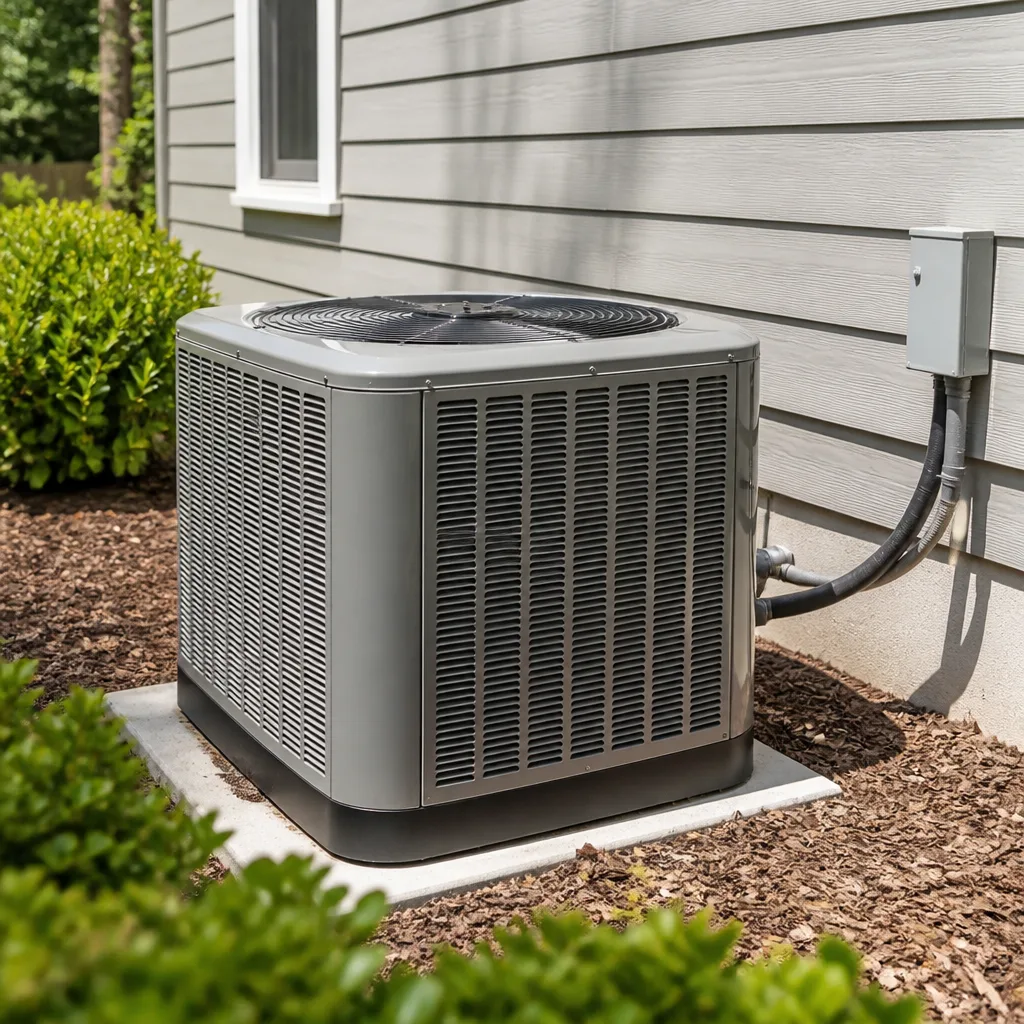 AC repair
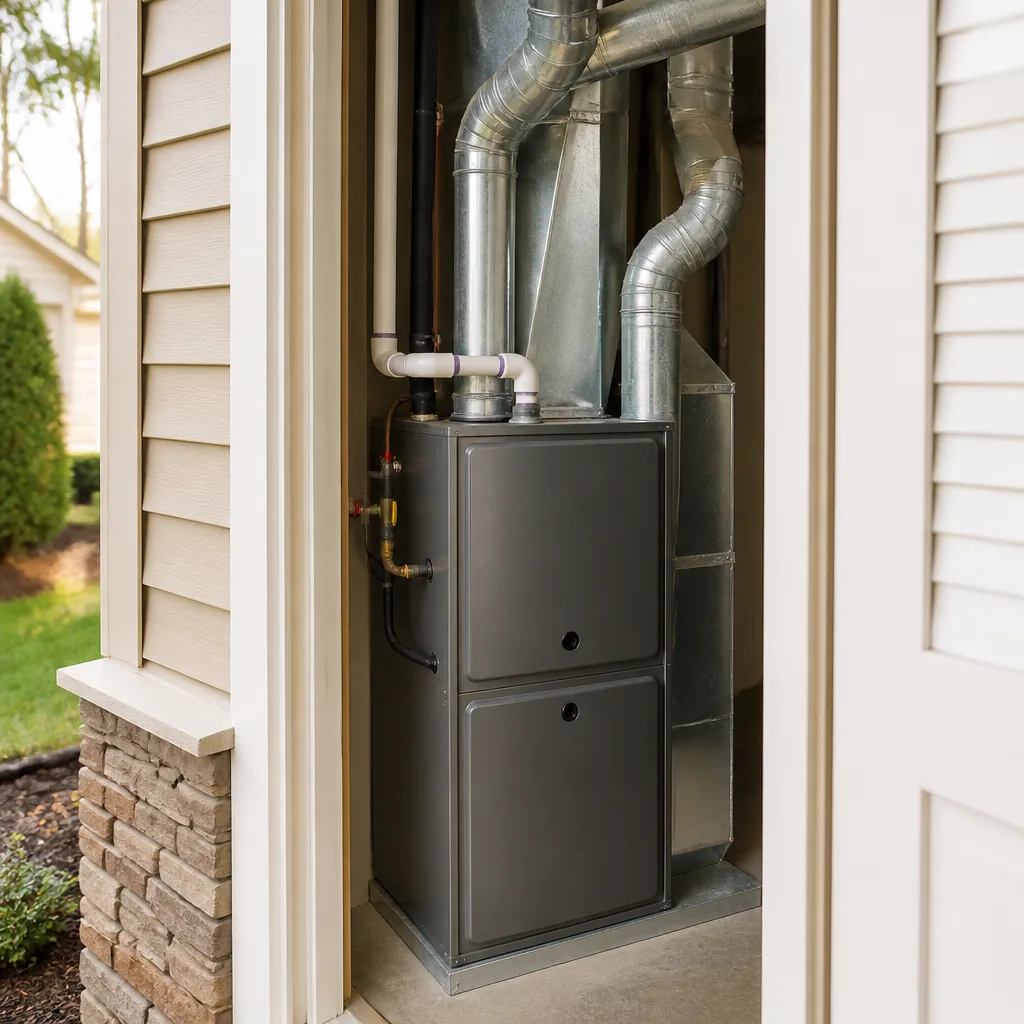 Furnace & heating
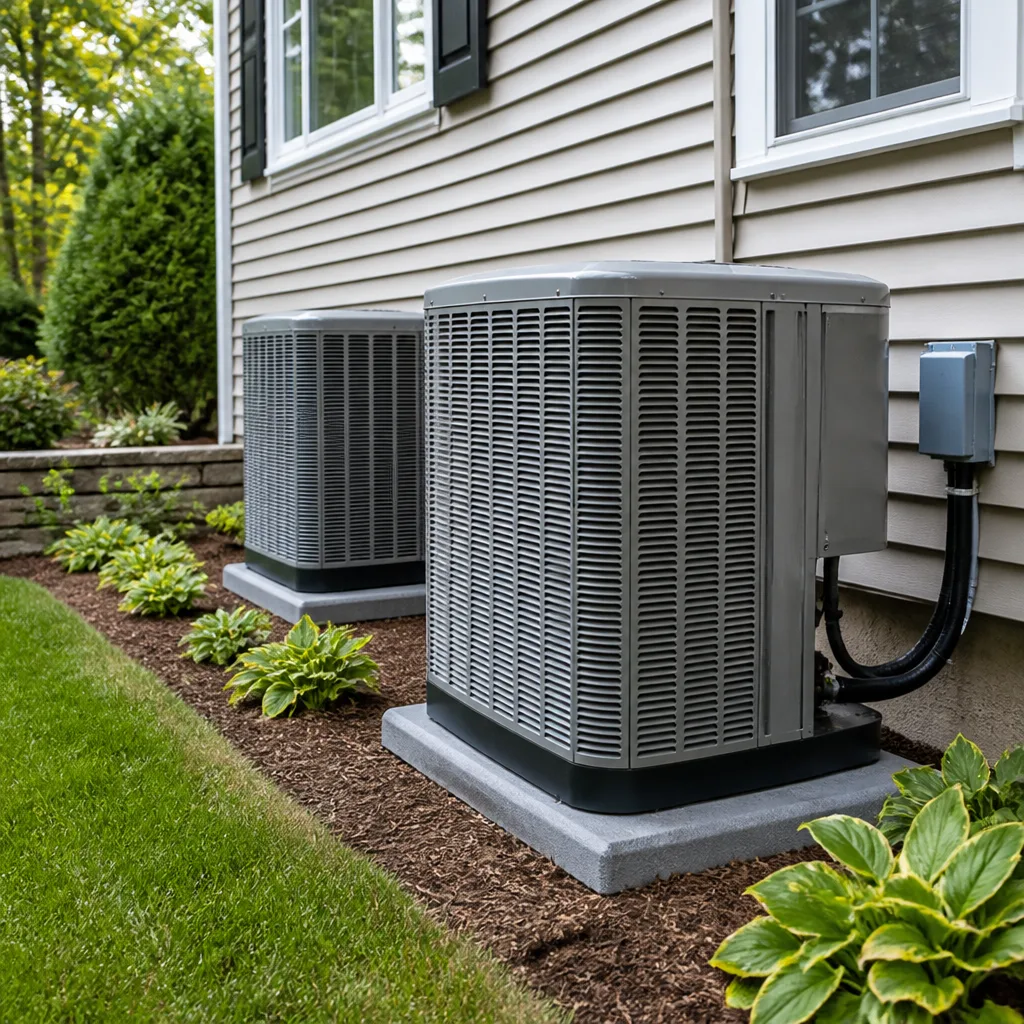 Heat pumps
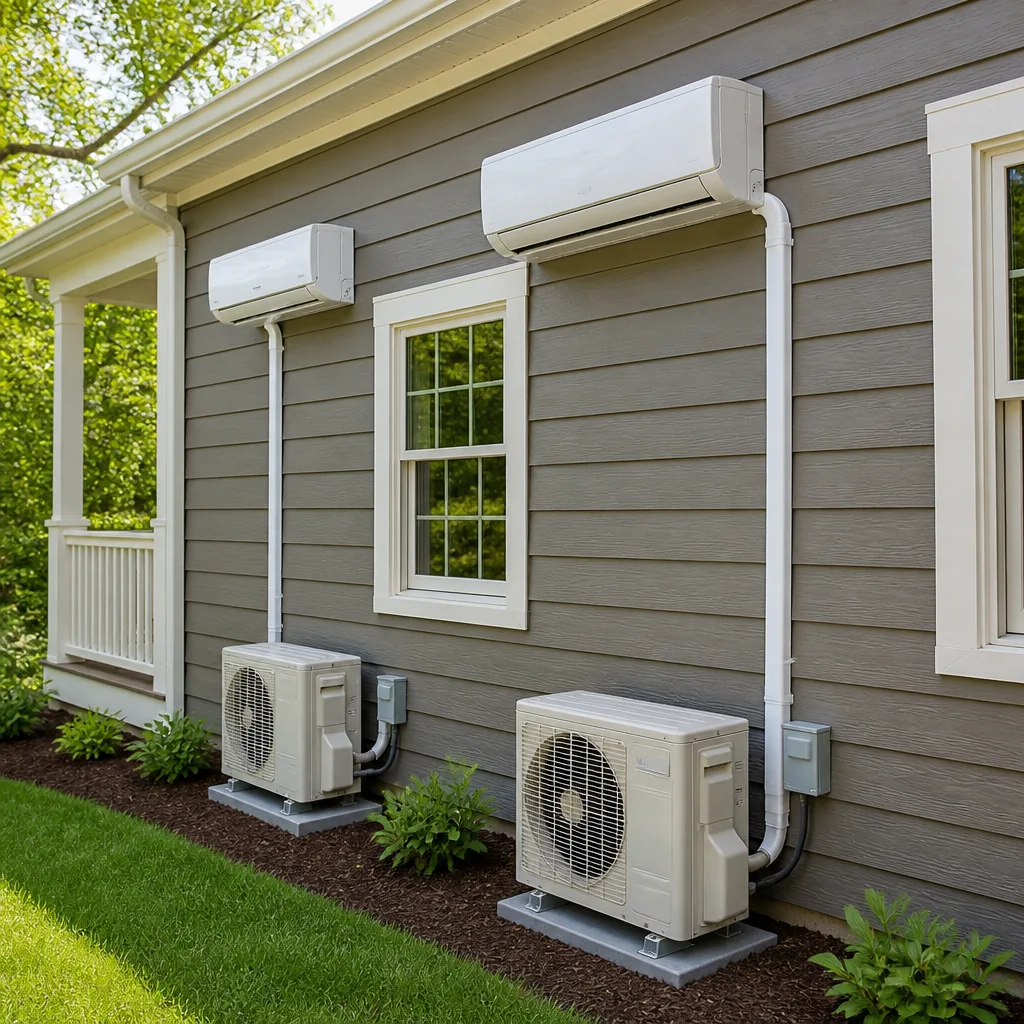 Ductless mini splits
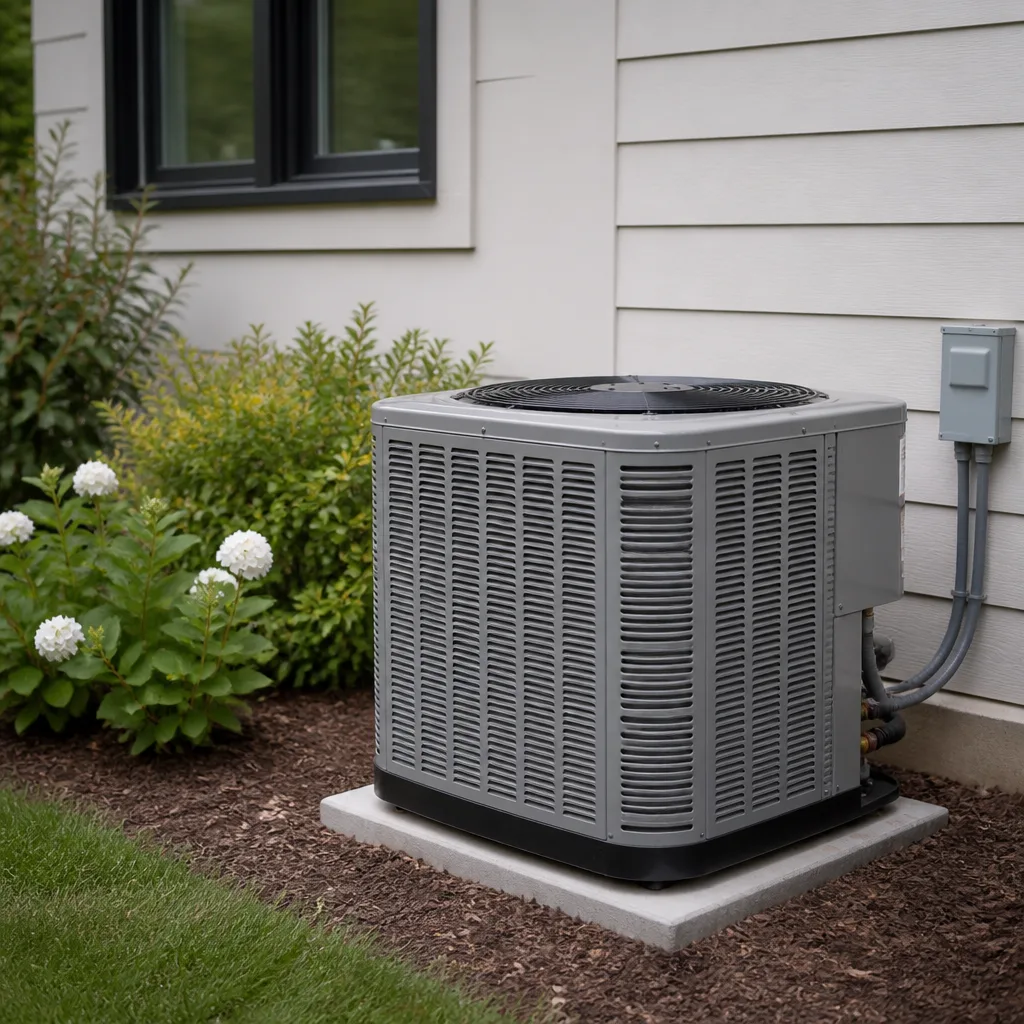 Carrier
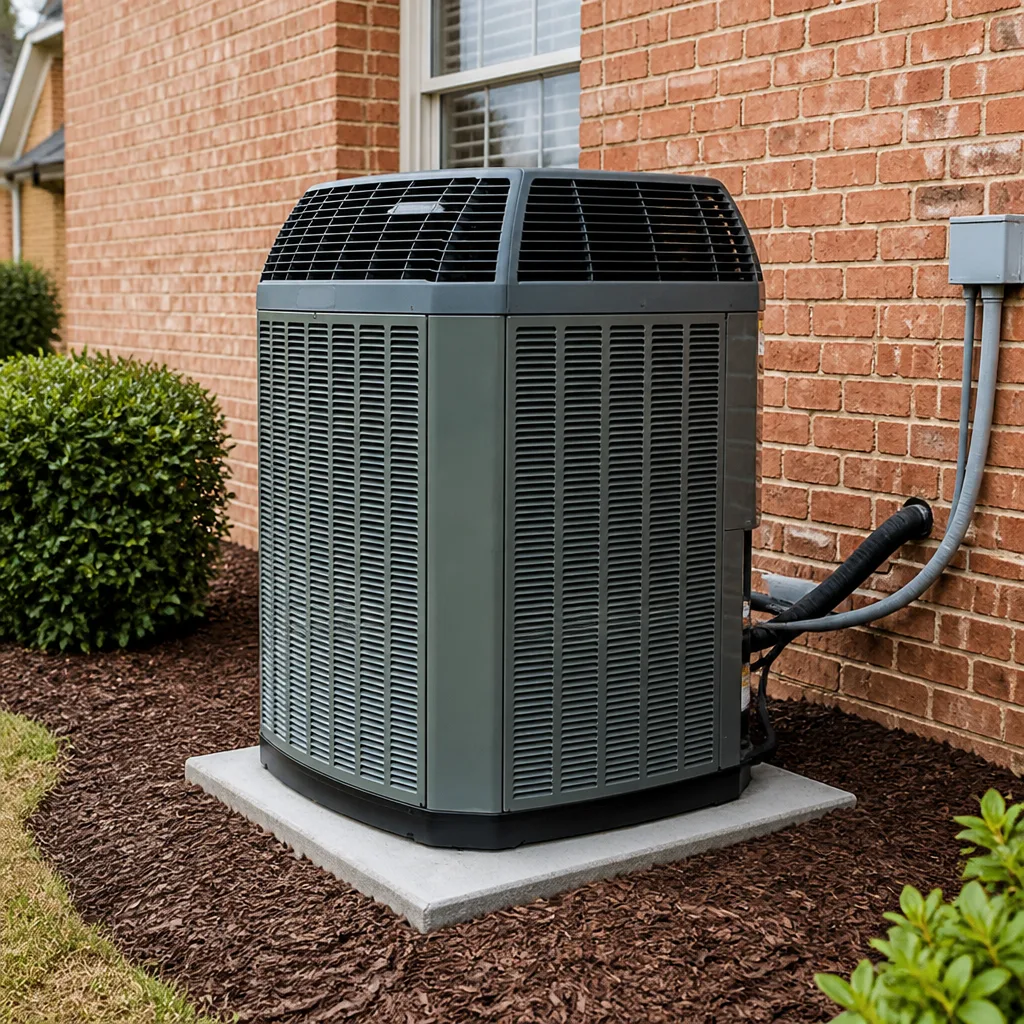 Trane
Trane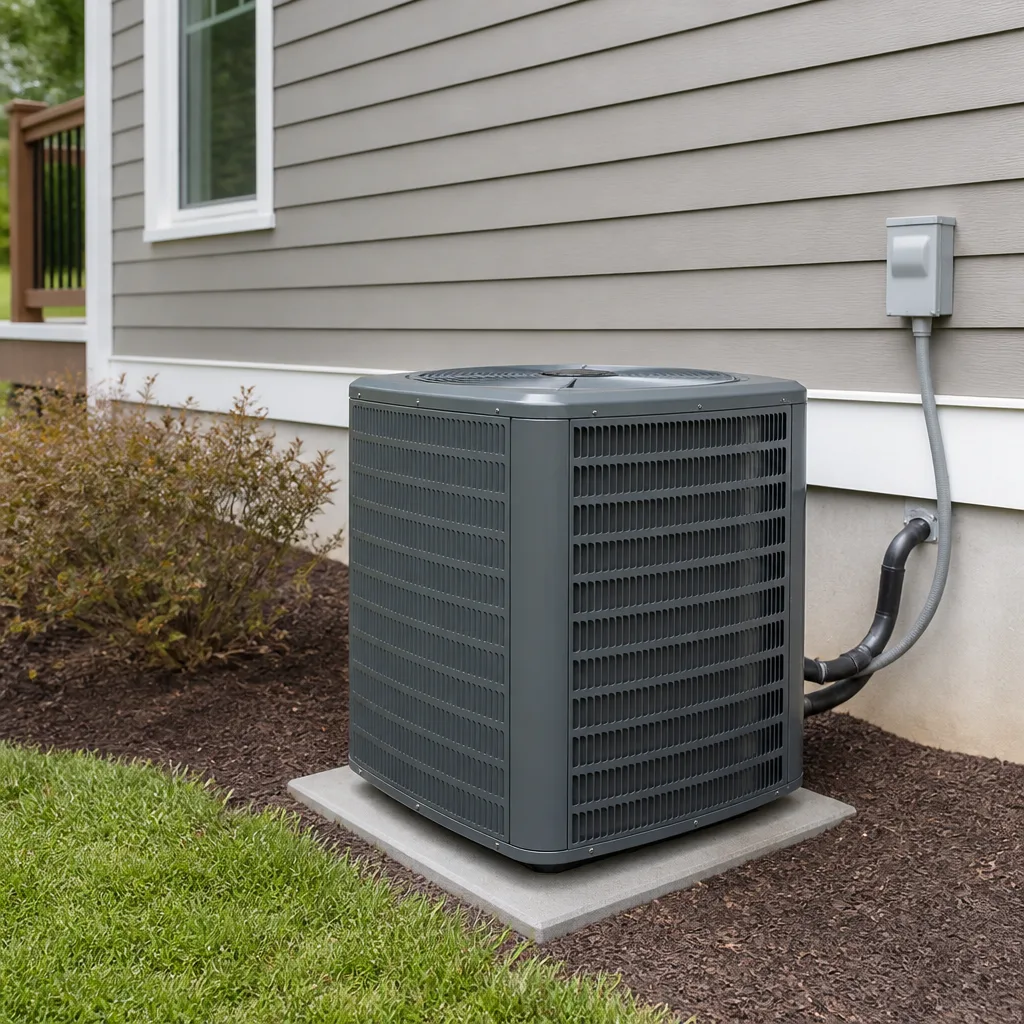 Goodman
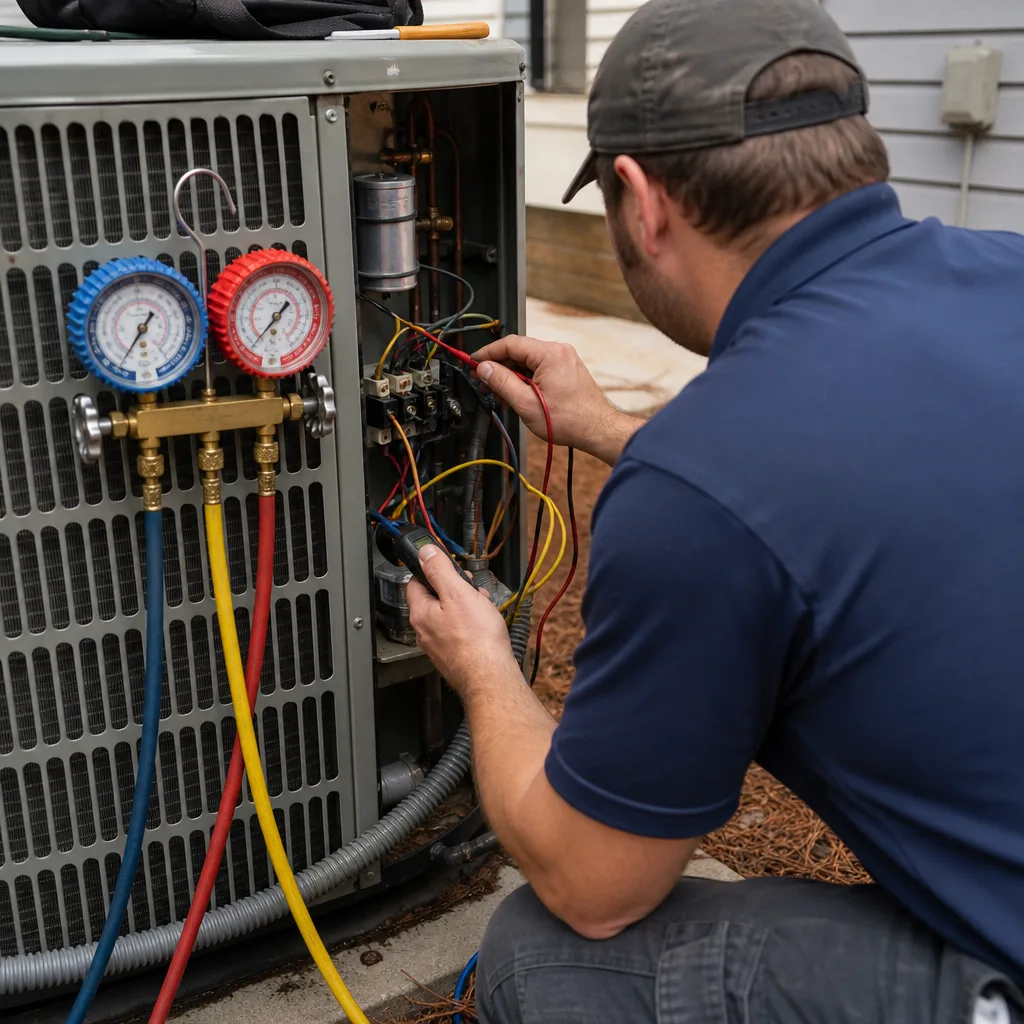
Seasonal tune-up and full diagnostic on your Carrier, Trane, or Goodman system - readings shown to you before any repair is proposed
Diagnosis first, numbers second - you approve the repair price before a single part goes in.
Get your free estimateHow to Hire a HVAC Contractor in Marietta: A Step-by-Step Guide
A Marietta homeowner who gets three HVAC bids and picks the middle one has done the easy part. The hard part, which most guides skip, is knowing what four things need to be in writing before you hand over a deposit. That’s because “we’ll stand behind our work” is not a guarantee. It’s a sentence. And in Marietta, where summer attic temperatures hit 140 degrees and a failed AC turns a house into a health hazard by dinner, the difference between a spoken promise and a written one is the difference between a fixed system and a second repair bill in August. This guide walks through exactly how to hire a contractor who will put the important stuff on paper, before a single tool comes out of the truck, and points you to more guides & resources for protecting your home.
Styles & brands we work with
Quick Answer
Hiring an HVAC contractor in Marietta comes down to four written commitments: a price before the work starts, a firm arrival window, a clean job site, and a repair guarantee with a specific time period attached, in writing. Verify the Georgia contractor license online before you call, require an itemized written quote after a site visit, and insist on a one-year repair guarantee that specifies exactly what happens if the first repair doesn’t hold. A contractor who will not put these four things on paper is not someone you want inside your air handler.
Table of Contents
- Step 1: Verify the Georgia HVAC License in Under Two Minutes
- Step 2: Require a Written Quote That Itemizes Parts and Labor
- Step 3: Ask for a Firm Arrival Window, Not Just Morning or Afternoon
- Step 4: Demand a Repair Guarantee With a Specific Time Period
- Step 5: Watch for Red Flags in Contractor Communication
- Step 6: Verify Training on Your System’s Brand
- Step 7: Understand Marietta Permits and Code Requirements
- Common Mistakes to Avoid
- When to Call a Professional
- Frequently Asked Questions
- The Bottom Line
Step 1: Verify the Georgia HVAC License in Under Two Minutes
Georgia requires any contractor performing HVAC work valued above a threshold set by state law to hold a valid license from the Georgia Construction Industry Licensing Board, which is part of the Office of the Secretary of State. The state maintains a free online lookup tool through the Georgia Secretary of State’s license verification portal, commonly called the GCOC lookup. Here’s the two-minute process:
- Go to the Georgia Secretary of State’s website and find the “License Verification” page.
- Select “Construction Industry License” or “Contractor” from the dropdown menu.
- Type the company name exactly as it appears on their truck or invoice.
- Look for “Conditioned Air Contractor” in the license type field. This is the classification for HVAC work in Georgia.
- Check the license status. It must say “Active.” Anything else, such as “Lapsed” or “Revoked,” is a red flag.
Why does a lapsed license matter for your liability? If the contractor’s license has lapsed, the state does not consider them a licensed contractor while they perform work on your home. That can affect your homeowner’s insurance if the work causes property damage, and it can leave you without recourse through the state’s contractor recovery fund. In Marietta, we’ve seen homeowners discover after a bad install that the company they hired had been operating for months on an expired license. The repair work still costs the same to fix. The difference is that with an unlicensed contractor, the homeowner pays twice and has no state board to complain to. Check the license before you schedule, not after the system fails again.
One more thing worth knowing: in Cobb County, which includes Marietta, mechanical permits are required for most HVAC replacements and some repairs, as covered in our guide to HVAC Permits, Codes & Inspections in GA: What You Need to Know. A licensed contractor handles the permit. An unlicensed one often skips it, which means the work may not be inspected and may not meet code. That’s a liability that sits quietly until you try to sell the house.
Step 2: Require a Written Quote That Itemizes Parts and Labor
A quote given over the phone without a site visit is a guess, not a quote. Any contractor who prices a system replacement or a major repair without looking at the ductwork, the electrical panel, the refrigerant line set, and the existing equipment is not giving you a real number. They’re giving you a number designed to get a technician in the door, where the price can change. In Marietta, where homes range from 1970s ranch houses off Lower Roswell Road to new construction near Kennesaw Mountain, system configurations vary wildly, which is why our HVAC Cost Breakdown: The Marietta Homeowner’s Reference for 2026 recommends always getting a site visit. A one-size phone quote cannot account for that.
Here’s what a written quote should include, line by line:
- Itemized parts with brand and model numbers. Not “new compressor.” It should say “Carrier compressor, model 24VNA9.” If the contractor won’t name the part, they may install whatever is on the truck.
- Itemized labor, separated from parts. This lets you compare bids apples to apples. If one quote lumps everything into a single number, you cannot see what you’re actually paying for.
- The written price, full stop. Not an estimate range. Not “ballpark.” The exact number you will pay if the scope doesn’t change.
- A clause specifying what happens if the first repair doesn’t hold. The quote should state whether the follow-up visit is free, within what time period, and who pays for additional parts.
- The date the quote expires. A quote that never expires is a quote the contractor can quietly raise later.
This is how Coldharbour Heating & Air operates under the Kingswell Way: the written price is handed to the homeowner before a single tool comes out. That price does not change at the door. If the repair fails inside 365 days, the return visit is free, and that guarantee is written down before the technician leaves. It’s not a policy applied case by case. It’s the standard.
Step 3: Ask for a Firm Arrival Window, Not Just Morning or Afternoon
A firm arrival window sounds like a courtesy. It’s actually a signal. When a company tells you the technician will arrive between 10:00 and 12:00, that means someone at the company has actually looked at the schedule, the drive times, and the job durations. When a company says “morning,” it means no one has looked at anything. You’re going to sit by the window from 8:00 until noon, or until 3:00, depending on how their day goes.
In our experience in Marietta, the companies that give vague arrival times are the same ones that overbook and run behind by default. The schedule is a wish list, not a plan. That matters because HVAC problems in Marietta don’t wait. A furnace that quits on a January morning when the temperature in East Cobb is 28 degrees is an urgent problem. A company that cannot tell you when someone will arrive is telling you something about how they manage their entire operation.
What to ask for: a two-hour window, delivered the day before or the morning of the appointment, with a call or text when the technician is 30 minutes out. That’s not an unreasonable ask. It’s the minimum standard for a professional operation. Coldharbour Heating & Air gives a firm arrival window on every visit. And because a live person answers the phone 24 hours a day, 7 days a week, you can confirm the window without leaving a message and hoping someone calls back. If the company you’re considering routes you to a voicemail tree when you call to schedule, keep looking.
Step 4: Demand a Repair Guarantee With a Specific Time Period
“Guaranteed” is the most overused word in HVAC. Every contractor says their work is guaranteed. Almost none of them specify for how long. A repair guarantee without a time period is not a guarantee. It’s a mood. Here’s how to evaluate one properly.
A meaningful repair guarantee must specify three things:
- The exact duration. 30 days is common and weak. 90 days is better. 365 days is the standard worth holding out for. In Marietta’s climate, where a system cycles hundreds of times per year, a 30-day warranty barely covers one season. A heat pump installed in spring can fail in its first July heat wave, which is day 90. A one-year guarantee covers a full cooling season and a full heating season.
- What “return visit” means. Does the contractor come back for free and fix the same problem at no charge, including parts and labor? Or does the “free” visit include a diagnostics fee? Read the language. If the quote says “free return visit” but doesn’t say “free parts and labor,” the contractor has left themselves a door.
- Whether the guarantee is written down. A verbal guarantee is worthless. You need it on paper, on the invoice, with the dates and the coverage terms in plain language.
The 365-Day Done Right Promise at Coldharbour Heating & Air is exactly this kind of guarantee. Every repair comes with a written guarantee valid for a full year. If the repair fails in that window, the technician comes back and corrects the work at no additional charge. No diagnostic fee. No argument. It’s on paper before the technician leaves. If a contractor you’re evaluating won’t offer something comparable in writing, ask yourself why they won’t back their own work for more than a month. The answer is usually that they know their work well enough not to.
Step 5: Watch for Red Flags in Contractor Communication
Most bad HVAC hires in Marietta could have been avoided with a ten-minute phone call. The way a contractor communicates before the job is exactly how they’ll communicate when something goes wrong afterward. Here are the red flags we see most often, in the order they usually appear:
- Quotes given over the phone without a site visit. A contractor who prices a repair or replacement without seeing the system is not doing you a favor by saving you time. They’re skipping the part where they actually assess the work. The price they give over the phone is not the price they’ll honor.
- Reluctance to pull permits. In Cobb County, most HVAC replacements require a mechanical permit. A contractor who says “we don’t need to pull a permit for this” is either wrong or avoiding the inspection. Either way, the homeowner carries the risk.
- Guarantees with no time period attached. “All our work is guaranteed” is a nothing sentence. Ask: guaranteed for how long? In writing? What does the guarantee cover? If the answer is vague, the guarantee is vague.
- Technicians who arrive without identification. You should know exactly who is walking through your door. A company that sends a technician with no uniform, no badge, and no introduction is not a company that takes accountability seriously.
- Pressure to decide immediately. A legitimate contractor does not need to pressure you. The price is the price. The availability is the availability. If someone is telling you the deal expires if you don’t sign today, they’re selling something other than good work.
One more: check who answers the phone. If you call at 2:00 in the afternoon and get a voicemail, imagine calling at 2:00 in the morning when your heat is out during a January freeze in Marietta. Coldharbour Heating & Air has a live person answering the phone 24 hours a day, 7 days a week. That’s not a luxury. In a climate where a failed furnace on a cold night is a genuine emergency, it’s the difference between a fixed system and a family sleeping in coats.
Step 6: Verify Training on Your System’s Brand
HVAC systems are not interchangeable. A technician trained on Carrier equipment does not automatically understand the control board logic on a Trane or the refrigerant charging procedure on a Bryant heat pump. Most manufacturers run their own certification programs, and a technician who has passed one manufacturer’s training has learned that brand’s specific diagnostic procedures, wiring configurations, and service bulletins.
Before you hire, ask which brands the technician is trained to service. A clear answer like “we’re trained on Carrier, Trane, Lennox, American Standard, and Bryant” is what you want. A vague answer like “we work on everything” usually means “we wing it on everything.” In Marietta, where homes built in the 1990s and 2000s often have original Trane or American Standard equipment, and newer homes in West Cobb frequently have Carrier or Bryant systems, brand-specific training matters. Coldharbour Heating & Air technicians are trained to service nine major residential HVAC brands, including Carrier, Trane, Lennox, Goodman, Rheem, York, Daikin, Bryant, and American Standard. The technician who shows up can work on whatever is already in your home, not just the brands the company sells.
You can also read more about how AC repair works in Marietta to understand the scope of what a trained technician actually checks during a visit.
Step 7: Understand Marietta Permits and Code Requirements
Marietta sits in Cobb County, which means HVAC replacements and many substantial repairs require a mechanical permit issued by the Cobb County Development and Inspections Division. The permit process exists for a reason: an inspector verifies that the work meets current safety and efficiency codes. A licensed contractor handles the application, schedules the inspection, and meets the inspector on site. It’s part of the job.
Here’s what homeowners in Marietta need to know:
- System replacements always need a permit. Swapping a furnace or an outdoor AC unit is not a like-for-like free pass. The county wants to inspect the gas line connection, the electrical disconnect, the condensate drain, and the duct connections.
- Some repairs trigger permit requirements too. If a repair involves replacing a heat exchanger or running new refrigerant lines, a permit may be required. The contractor should know this and handle it.
- The permit protects you when you sell. A properly permitted HVAC replacement shows up in county records. If you sell your Marietta home and the buyer discovers unpermitted work, you’re the one who pays to fix it, not the contractor who skipped the paperwork.
- “We’ll pull the permit after” is not a thing. The permit is pulled before work starts. If a contractor says they’ll take care of it later, they’re describing a plan to never take care of it.
If you’re researching a specific repair, our guide to furnace repair in Marietta explains what typical furnace work involves and which repairs trigger permit requirements.
Common Mistakes to Avoid
- Hiring based on the lowest bid without reading the quote. The lowest bid is often low because it omits something: a permit, a filter drier, a proper vacuum procedure, a thermal expansion valve, a brand-name part. You find out what you didn’t pay for when it fails.
- Accepting a verbal guarantee. If it’s not written down, it didn’t happen. A guarantee on an invoice or a separate warranty sheet is a real thing. A guarantee described over the phone is a memory.
- Skipping the license check because the company “seems fine.” A professional appearance and a clean truck do not mean the Georgia license is active. The two-minute lookup can save you from hiring a company that’s legally not qualified to do the work.
- Choosing a company that doesn’t give a firm arrival window. If they can’t tell you when they’ll arrive, they don’t have a system for managing their schedule. That’s a management failure, and it will show up again when you need a follow-up.
- Paying the full amount upfront. A deposit may be reasonable for a large replacement. Paying the full balance before the work is done is not. A contractor who demands full payment upfront is telling you something about their cash flow and their confidence.
- Not asking about the technician’s background. You’re inviting a stranger into your home and trusting them with the single most expensive mechanical system in the house. Ask whether technicians are background-checked. Coldharbour Heating & Air sends background-checked, uniformed technicians on every visit, so you know exactly who is walking through your door.
When to Call a Professional
There’s a line between a job you can handle yourself and a job that requires a licensed professional. Changing a filter, clearing leaves from the outdoor unit, and checking that the thermostat is set correctly are homeowner jobs. Anything involving refrigerant, electrical connections, gas lines, or the sealed refrigeration circuit is not. Refrigerant is regulated by the EPA for a reason. Gas connections in a Cobb County home are inspected for a reason. A mistake with either can be dangerous. If your furnace is making a banging sound, the AC is blowing warm air, or the system is short-cycling (turning on and off every few minutes), call a professional. Cold Harbour Heating and Air Marietta offers free estimates in Marietta. Call (762) 240-5599 and a live person will answer, 24/7, no voicemail tree.
Frequently Asked Questions
Go to the Georgia Secretary of State’s license verification page and search for the contractor’s business name. The license type should say “Conditioned Air Contractor” and the status must say “Active.” The whole check takes under two minutes and if the contractor’s name doesn’t appear or the status is lapsed, you should not hire them.
A written quote should include itemized parts with brand and model numbers, itemized labor separated from parts, the exact total price, an expiration date for the quote, and a clause specifying what happens if the first repair doesn’t hold. A quote without this level of detail is not a quote, it’s a conversation that can change later.
No, and that’s the problem. Many Marietta contractors offer 30-day or 90-day guarantees. A 365-day written guarantee like the 365-Day Done Right Promise from Coldharbour Heating & Air is uncommon because it costs the contractor money if the repair fails. A contractor who offers a full year in writing is telling you they trust their own work.
Yes. In Cobb County, which includes Marietta, HVAC replacements require a mechanical permit. The contractor should pull the permit before work starts and schedule the county inspection after. If a contractor tells you a permit isn’t needed, treat that as a red flag and call someone else.
It depends on what’s already in your home. The most common brands in Marietta are Trane, Carrier, American Standard, Bryant, Lennox, and Goodman. Ask the contractor which brands their technicians are trained on. Training on your specific brand matters because diagnostic procedures and control logic differ between manufacturers.
Ask for a written price before any work begins. Coldharbour Heating & Air gives every homeowner a written price before a single tool comes out, and that price does not change at the door. If a contractor won’t commit to a number on paper before starting, the number will be different by the time they finish.
The Bottom Line
Hiring an HVAC contractor in Marietta is not about finding the lowest bid or the fanciest website. It’s about demanding written commitments before the work starts: a verified license, an itemized quote, a firm arrival window, and a repair guarantee with a specific duration and clear return-visit terms, in writing. The contractors who can deliver those four things are the same ones who show up on time, do the work correctly, and come back if something goes wrong. The ones who can’t are the ones who never do. If you’re looking for an AC installation in Marietta, start with a free estimate and a written quote. Cold Harbour Heating and Air Marietta is independently owned and operated, serving Marietta since 2003, and every job carries the written guarantees of the Kingswell Way. Call Cold Harbour Heating and Air Marietta home at (762) 240-5599 for a free estimate from a team that puts it in writing.
Written by Victor Mancini, Owner at Cold Harbour Heating and Air Marietta, serving Marietta since 2003.
See the difference
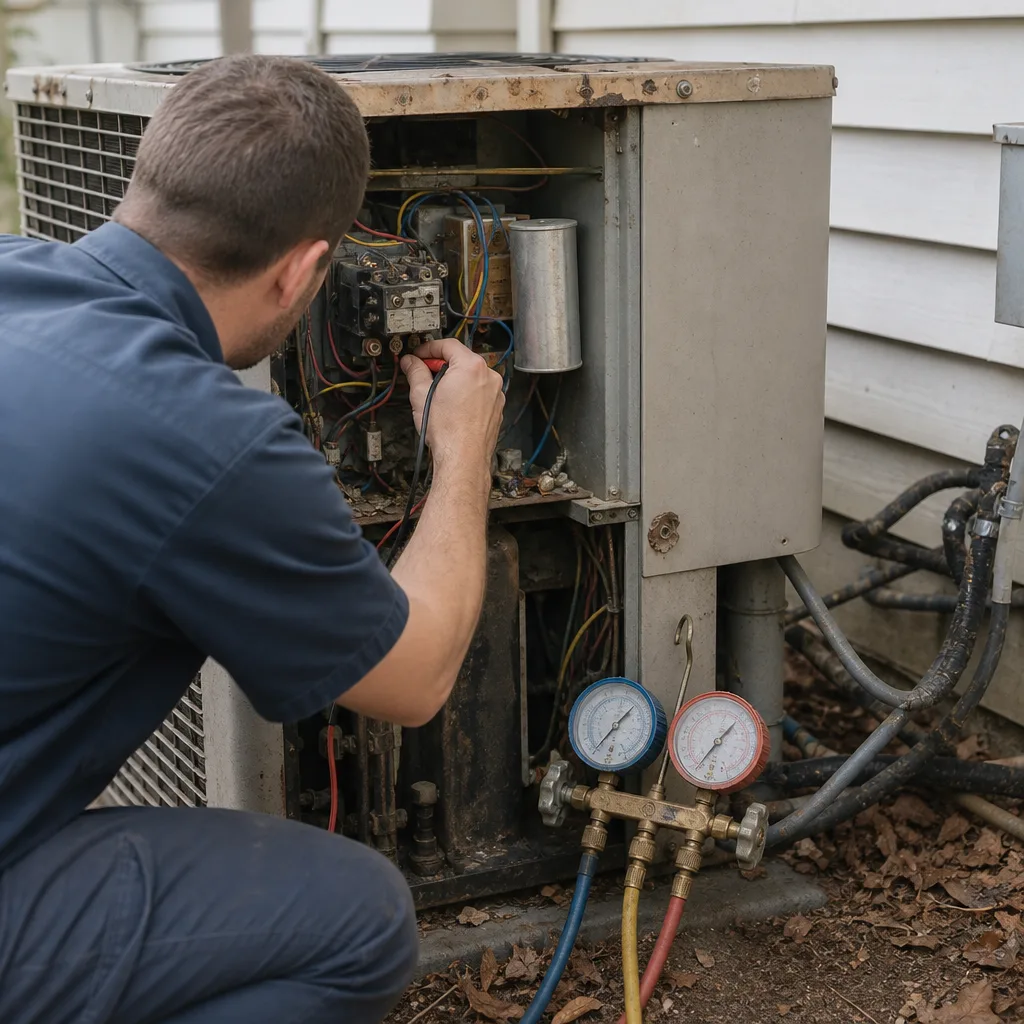 Before
 After
After Before
 After
After Before
 After
After