
 Furnace & heating
 AC repair
 Heat pumps
 Ductless mini splits
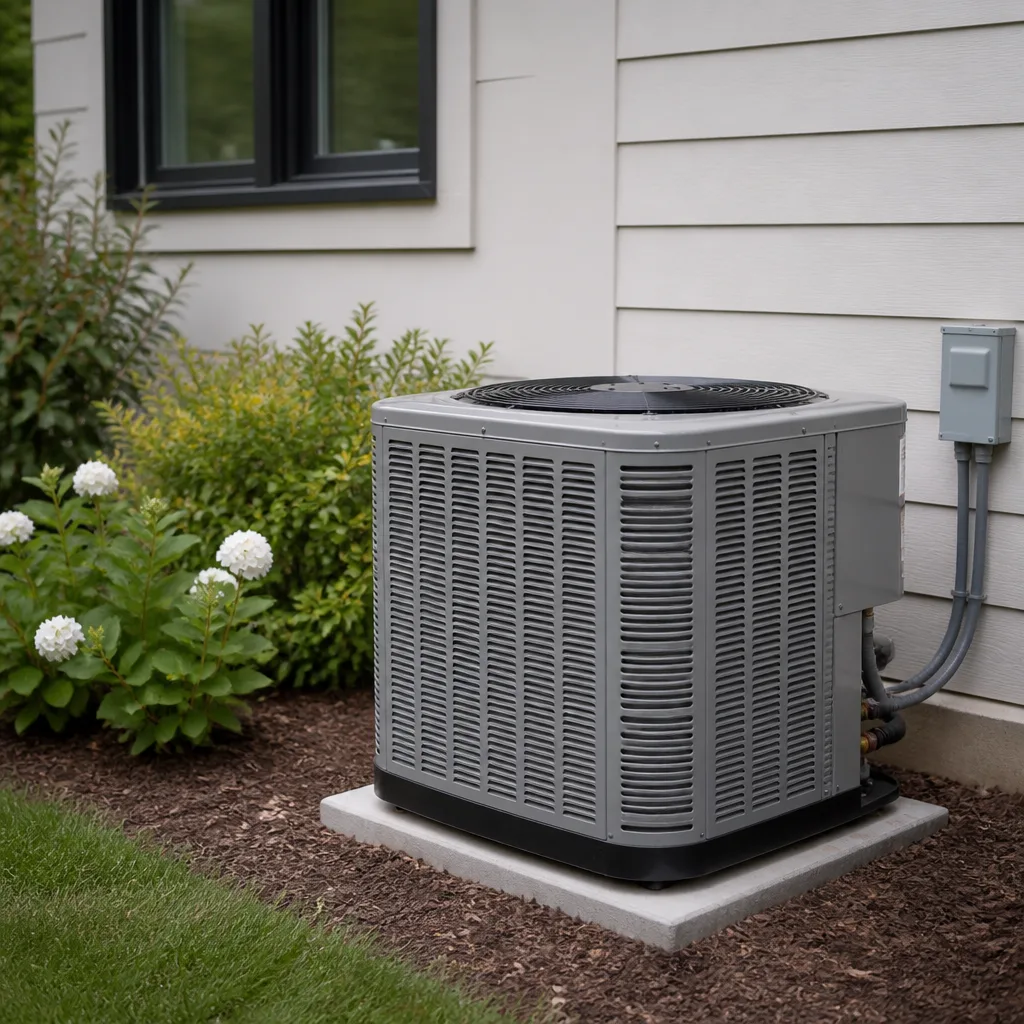 Carrier
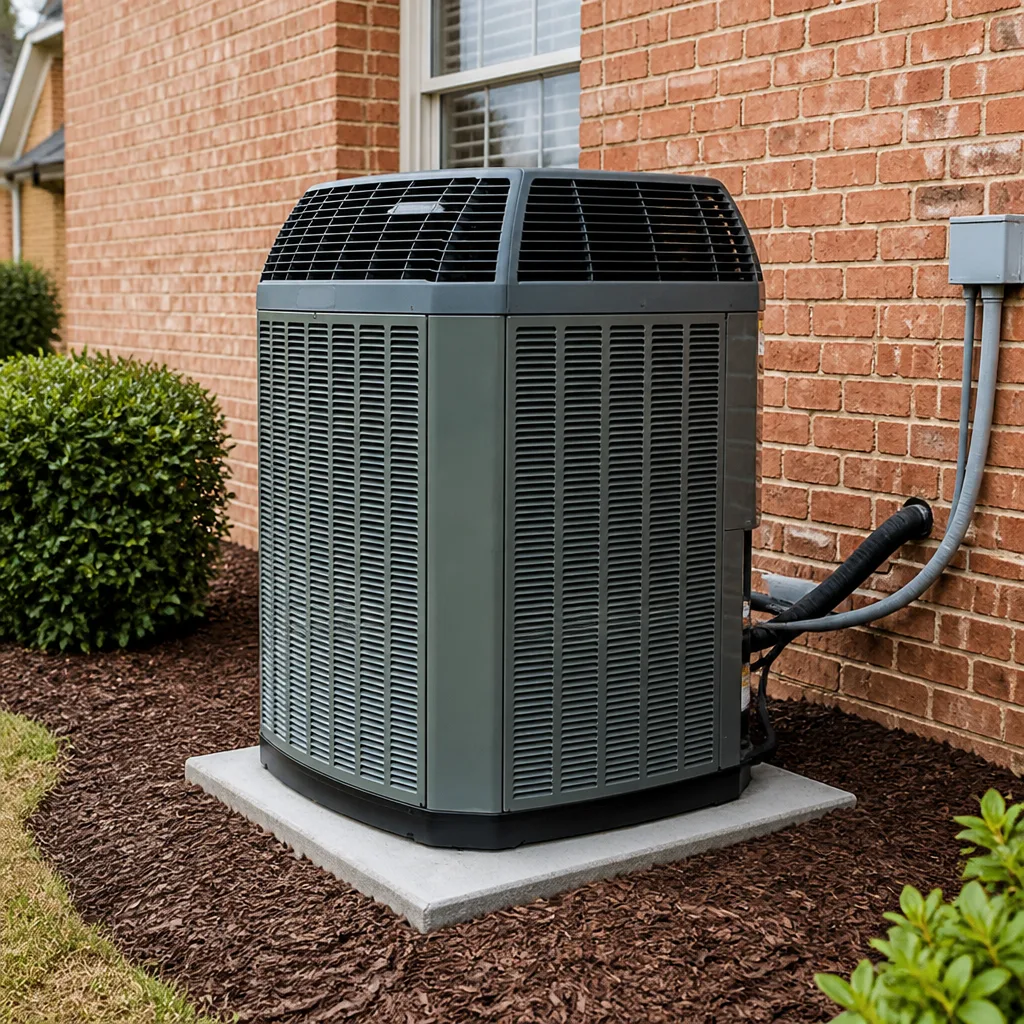 Trane
Trane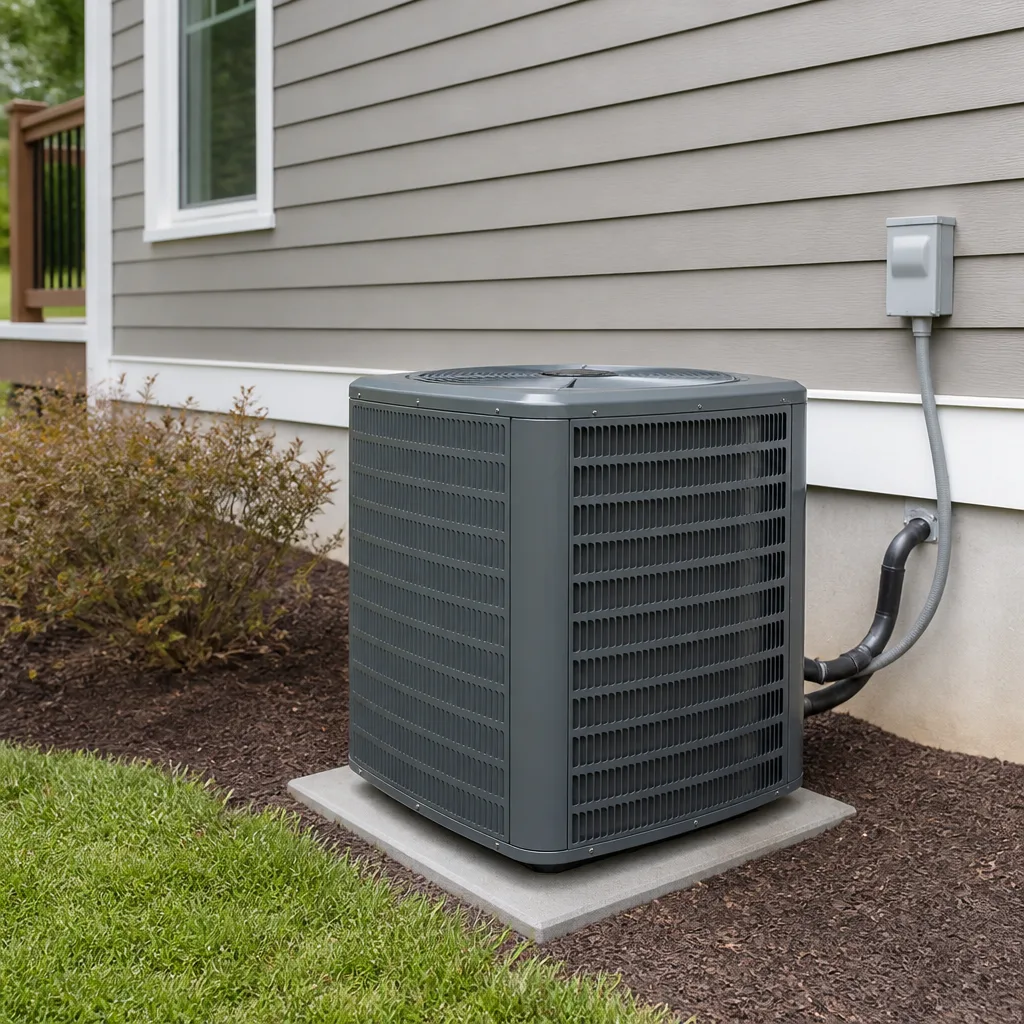 Goodman
Seasonal tune-up and full diagnostic on your Carrier, Trane, or Goodman system - readings shown to you before any repair is proposed
Diagnosis first, numbers second - you approve the repair price before a single part goes in.
Get your free estimateCarrier Capacitor Replacement: The Marietta Owner’s Guide
A Carrier capacitor replacement in Marietta typically runs $150 – $400 installed, depending on whether your system uses a single run capacitor or a dual capacitor that serves both the compressor and the outdoor fan. We keep common Carrier-compatible capacitors on our trucks and can usually have your system running the same day you call. Most Marietta homeowners discover a failed capacitor the hard way: the outdoor unit hums but the fan won’t spin, or the compressor tries to start and gives up after a few seconds. It’s one of the most common AC failures we see in Georgia summers, and it’s also one of the fastest fixes when caught early.
Key Takeaways
- Installed capacitor replacement for Carrier systems in Marietta: $150 – $400
- We stock Carrier-compatible capacitors on the truck for same-day service
- Every replacement is covered by the 365-Day Done Right Promise in writing
- A failed capacitor left unrepaired can damage the compressor, turning a $200 fix into a $1,500+ problem
Which Carrier Models This Applies To
We replace capacitors across the full Carrier residential lineup, from older 38-series condensing units to the current Performance and Infinity lines, including heat pump models. The exact capacitor your system needs depends on the microfarad (µF) rating printed on the old part and the voltage rating, which for Carrier residential units is almost always 370V or 440V. Here’s the Carrier-specific gotcha: some Carrier dual capacitors have a slightly different physical footprint than generic replacements, and shoving a physically larger cap into a tight electrical compartment can cause vibration failures within a year. We match both the electrical specs and the physical dimensions so the part seats correctly.
A note on OEM versus aftermarket: Carrier’s OEM capacitors are made by third-party manufacturers like AmRad and Genteq to Carrier’s spec. Quality aftermarket capacitors from the same factories often perform identically at a lower installed price. We’ll show you the options and explain the difference in plain English before you spend a dollar. And while we’re independent and not affiliated with Carrier, we also stock parts for Trane and Lennox systems, so if you’ve got a mixed-brand setup, the same truck visit can handle it.
Styles & brands we work with
Signs Your Carrier Capacitor Replacement Is Failing
- The outdoor unit hums but the fan doesn’t turn. This is the classic dead capacitor call. The compressor and fan motor are getting power, but the capacitor can’t deliver the starting jolt to get them moving. The hum you hear is the motor straining against a stalled condition, which is why you shouldn’t let it sit.
- The AC runs for a few minutes, then the breaker trips. A weak capacitor forces the compressor to draw higher amperage than the circuit was designed for. In Marietta’s July heat, this shows up fast. The breaker is doing its job, but the root cause is usually the capacitor, not the breaker.
- The compressor makes a clicking sound and shuts off after a few seconds. That click is the compressor’s built-in thermal overload cutting out because the capacitor couldn’t provide a clean start. Each failed start cycle heat-stresses the compressor windings. Repeated clicks mean repeated damage.
- The fan spins when you push it with a stick, then keeps going. This tells you the fan’s run winding is fine but the start winding isn’t getting the phase shift the capacitor provides. It’s a useful diagnostic trick, but we’d rather you call us before reaching for the stick.
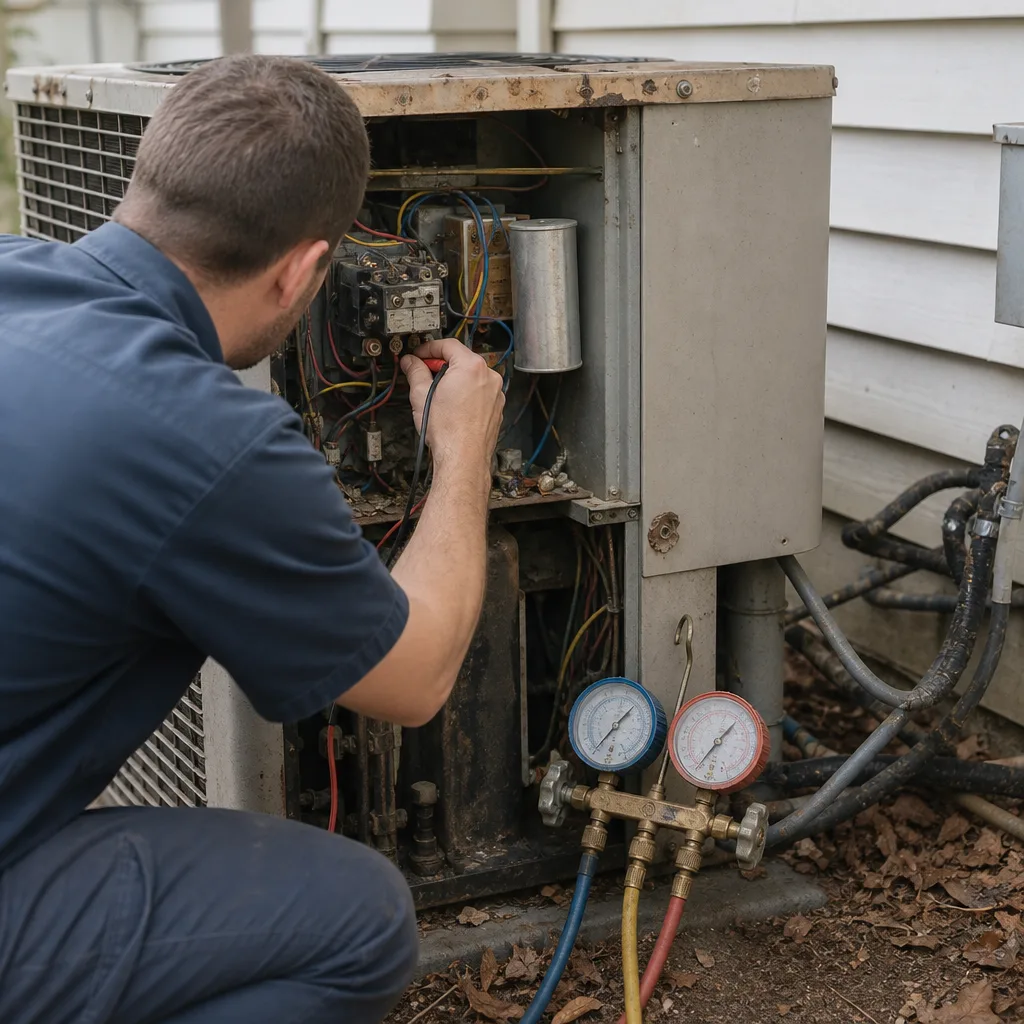
- The capacitor itself is swollen, leaking, or smells burnt. Capacitors have a designed vent that pops when internal pressure builds. A bulged top or oily residue around the base is a definitive “replace me now” sign, not a “watch it for another week” sign.
See the difference
 Before
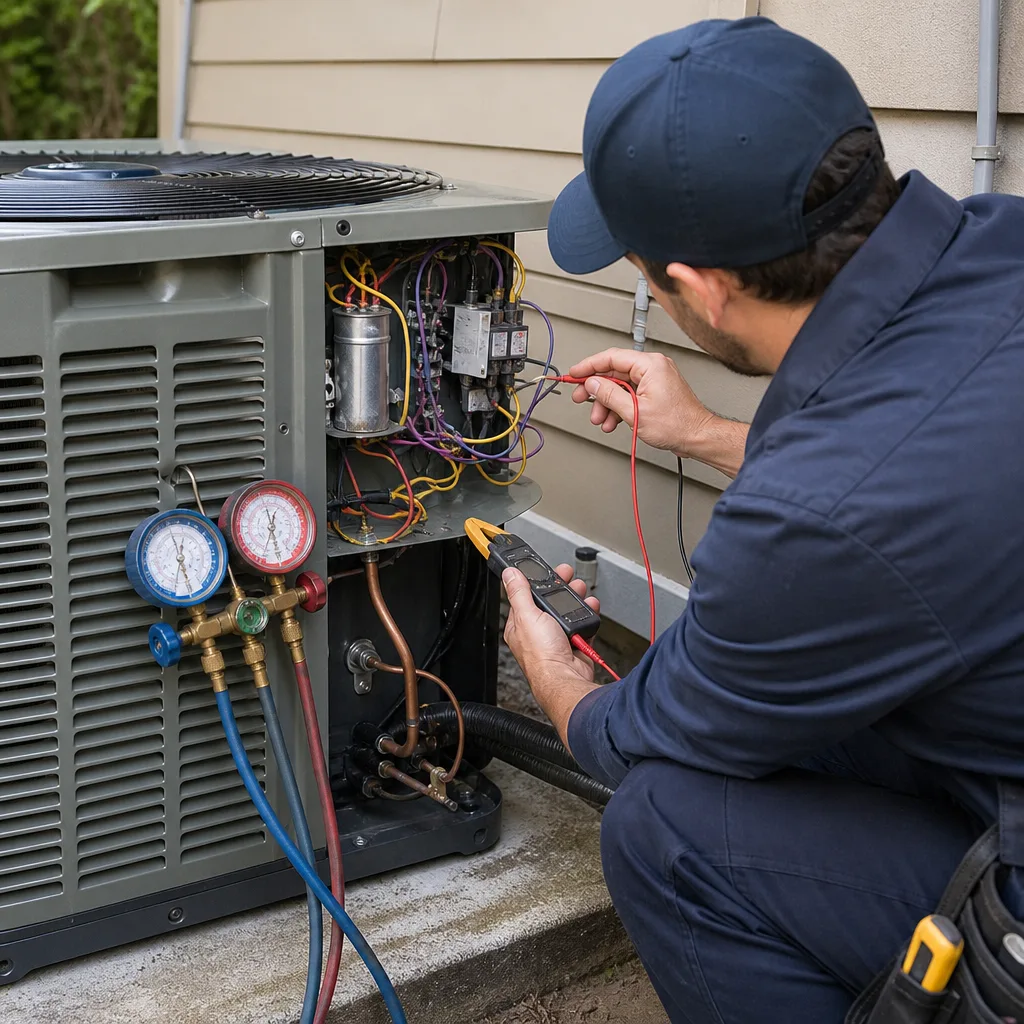 After
After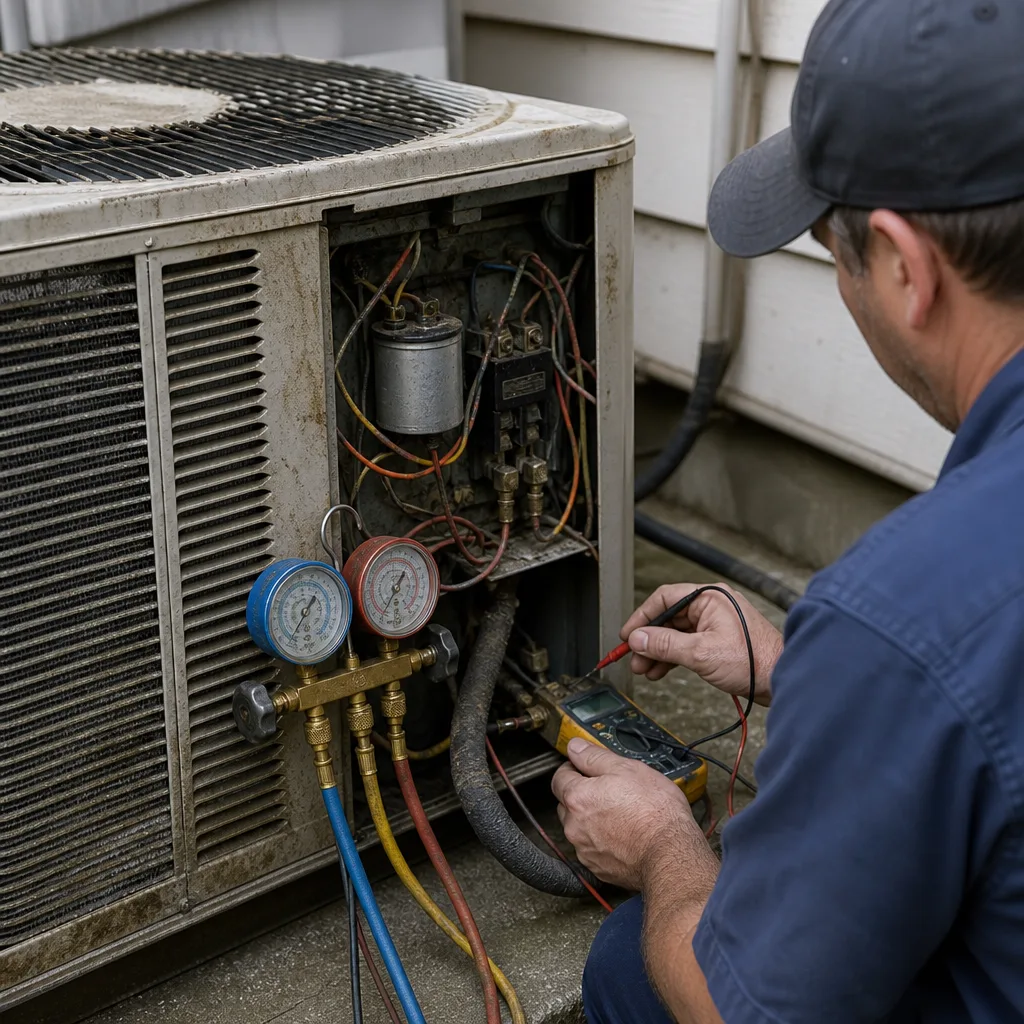 Before
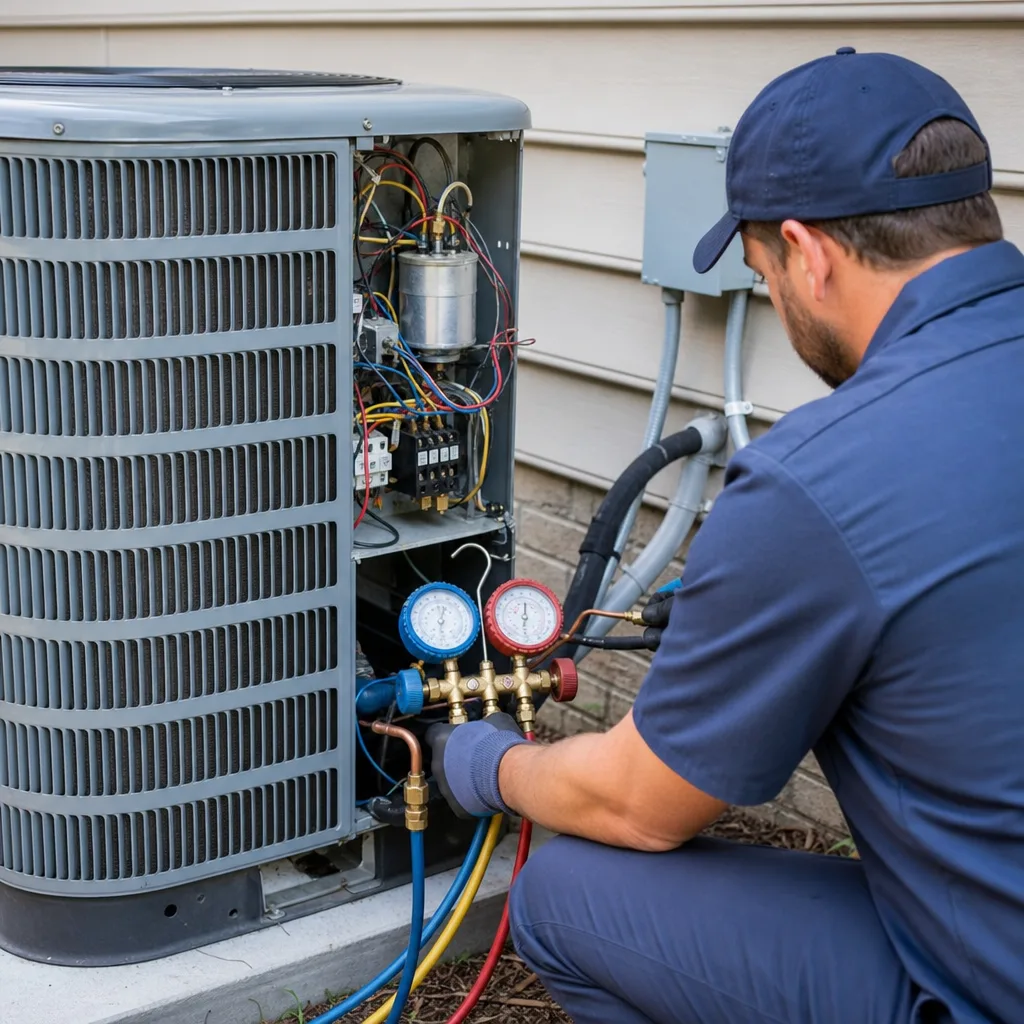 After
After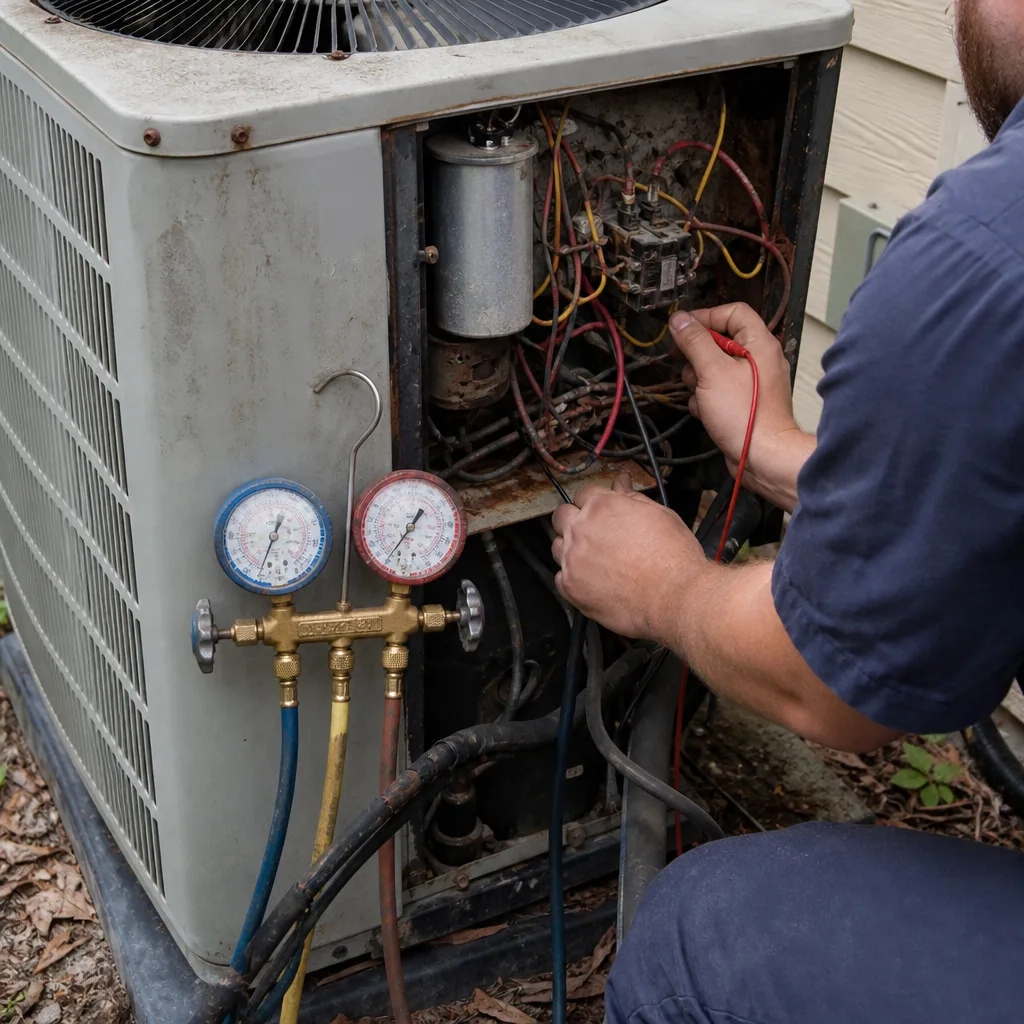 Before
 After
AfterReplacement Cost & What’s Included
In Marietta, a Carrier capacitor replacement runs $150 – $400 installed. The spread comes down to three things: single versus dual capacitor (dual costs more), where the capacitor sits in the unit (some Carrier models bury the cap behind other components, adding 20 – 30 minutes of labor), and whether we’re also replacing the hard-start kit, which we recommend on older compressors that are struggling to turn over. The written price covers the capacitor, the labor, the service call during business hours, and a full system check while we’re there.
Every replacement comes with the 365-Day Done Right Promise. That means a written guarantee is on your kitchen counter before we leave. If that capacitor fails within a full year, we come back and fix it at no charge. No prorating, no fine print, no “well, that’s a different failure.” It’s the Kingswell Way: say the price before the work, show up in the window given, leave the place cleaner than we found it, put the guarantee in writing, and come back if it fails.
DIY or Call Us?
We’re going to be direct: replacing a capacitor is not a safe DIY job. A capacitor stores voltage even after the power is off, and touching the wrong terminals can deliver a shock that sends you to the ER or worse. This isn’t like replacing an air filter. If you want to check something yourself, look for the visual signs: a bulged top, oily residue, or burn marks. That tells you the capacitor is done and you should call us. What we’d ask you not to do is open the electrical panel, discharge the capacitor, and attempt the swap with a YouTube tutorial running on your phone. The risk isn’t worth the $150 you’d save.
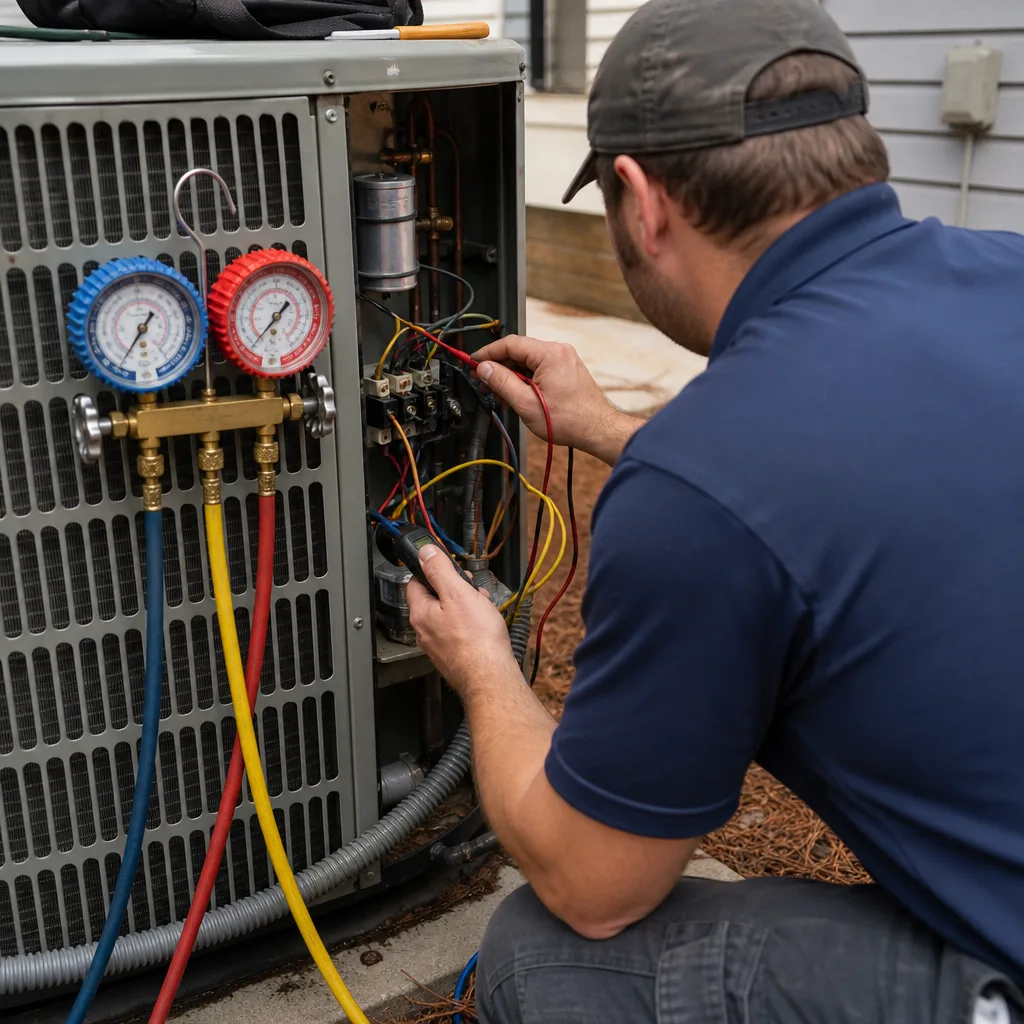
Our technicians kill the power at the disconnect, verify the capacitor is fully discharged with a meter, remove the old part, install the correct replacement, and test the system under load before we call it done. The whole swap usually takes under an hour. Call (762) 240-5599 and we’ll get a technician out with the right part on the truck.
FAQs
A Carrier capacitor typically lasts 5 – 10 years in Marietta’s climate, but our heat and humidity beat capacitors down faster than the national average. The biggest accelerant is repeated short-cycling from an oversized or undercharged system, followed by voltage spikes from thunderstorms rolling through Cobb County. If we replace a capacitor, we always check why it failed so you’re not seeing us again next summer.
No. Capacitors are sealed units and cannot be repaired or rebuilt. Once the dielectric material inside breaks down, the capacitor is done. The good news is that replacement is a straightforward, low-cost repair when done early. Letting it go is what turns a $200 capacitor into a $1,500 compressor. Call (762) 240-5599 if your Carrier system is showing start-up trouble.
Most capacitor replacements take 45 – 75 minutes from the time we arrive to the time we test the system and hand you the written guarantee. If the capacitor is inaccessible on your specific Carrier model or we’re adding a hard-start kit, it may run closer to 90 minutes. You’ll know the price before we start, and that price won’t move.
Yes. Our trucks carry the most common Carrier-compatible capacitor ratings, including 35/5, 40/5, 45/5, and 50/5 µF dual capacitors in both 370V and 440V configurations, plus a range of single run capacitors for fan motors. If your Carrier needs something unusual, our Marietta warehouse can source it same-day in most cases. We diagnose, quote a written price, and fix it in the same visit whenever the part is on the truck.
Written by Victor Mancini, Owner, Cold Harbour Heating and Air Marietta at Cold Harbour Heating and Air Marietta, serving Marietta and nearby areas.