
Last updated October 16, 2026
 AC repair
 Furnace & heating
 Heat pumps
 Ductless mini splits
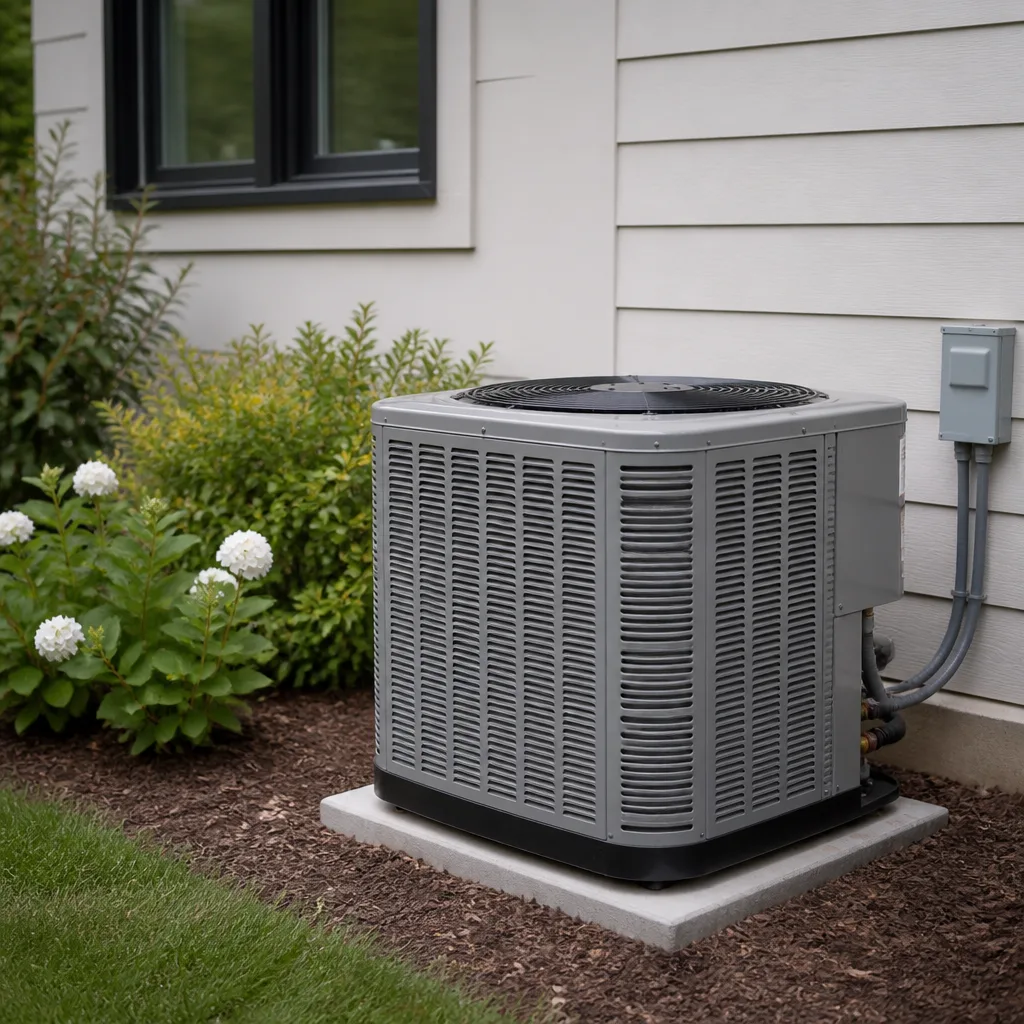 Carrier
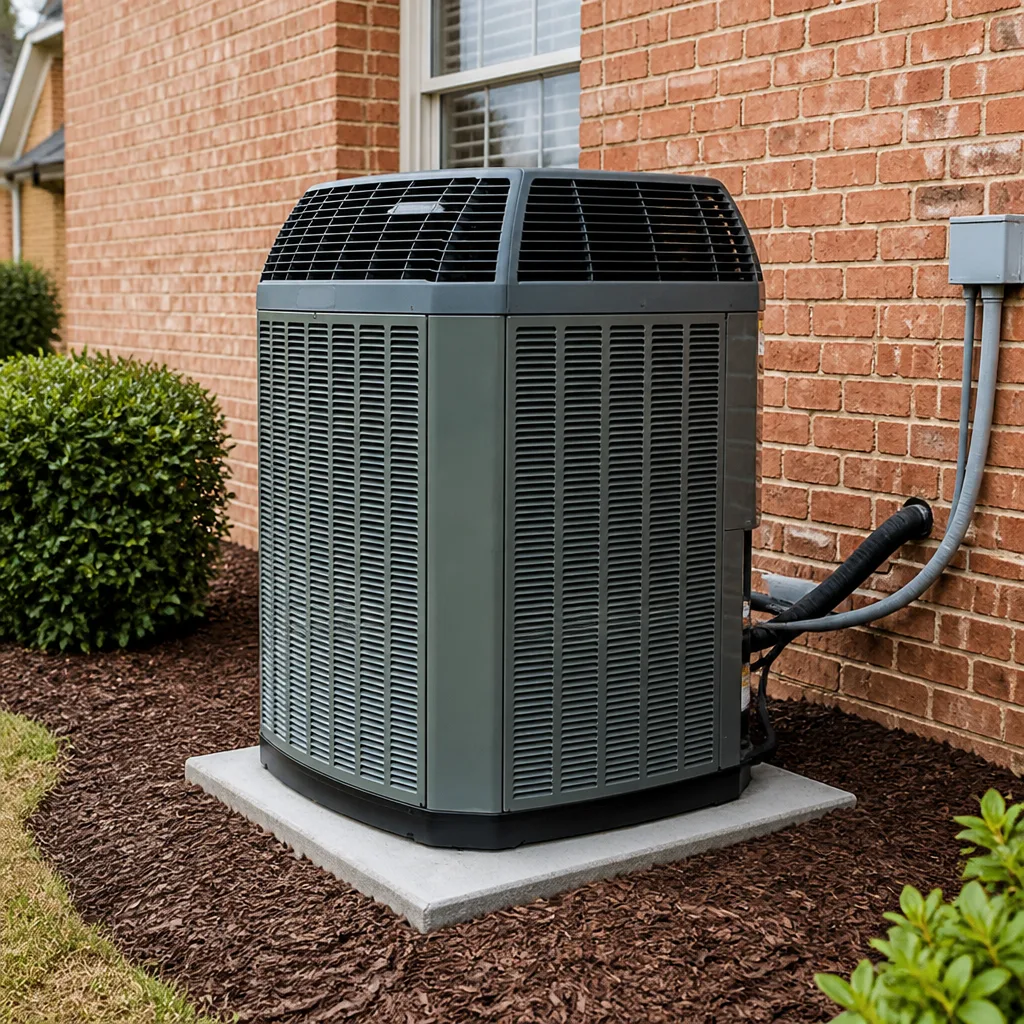 Trane
Trane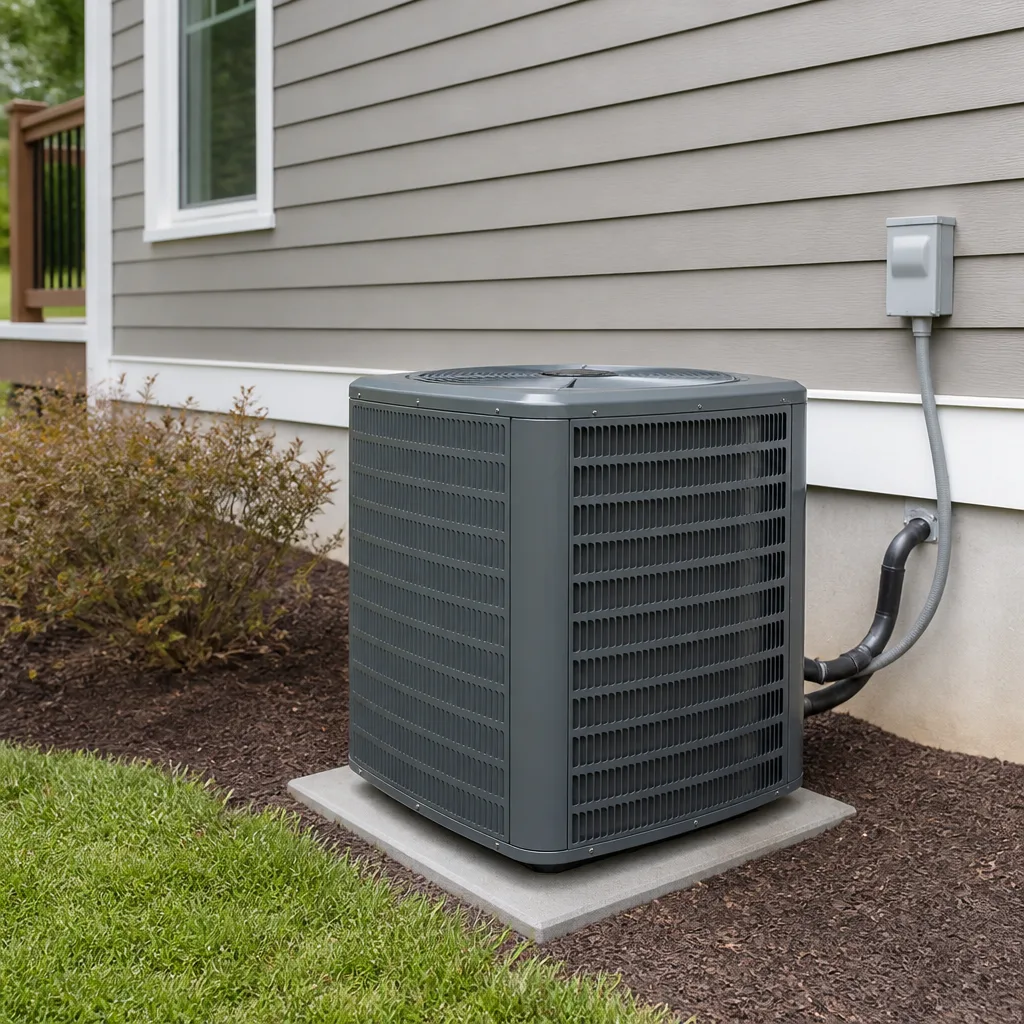 Goodman
Seasonal tune-up and full diagnostic on your Carrier, Trane, or Goodman system - readings shown to you before any repair is proposed
Diagnosis first, numbers second - you approve the repair price before a single part goes in.
Get your free estimateDIY vs Professional HVAC: The Marietta Homeowner’s Decision Guide
You can buy a capacitor for $18 on Amazon and watch a YouTube video showing you exactly how to install it. What the video won’t tell you is that installing the wrong microfarad rating can cause your compressor to overheat and fail within a season, that your equipment warranty almost certainly has language voiding coverage for unauthorized repairs, and that the capacitor you’re about to touch holds enough stored voltage to knock you off a ladder. The DIY versus professional HVAC debate in Marietta is usually framed around saving money. The more useful frame is legal exposure and warranty impact, because the tasks that seem most DIY-friendly are often exactly the ones that create the biggest problems downstream. This guide draws the line where it actually falls, not where online forums pretend it is.
Styles & brands we work with
Quick Answer
For Marietta homeowners, the safe DIY list is short: air filter replacement, thermostat battery changes, condensate line flushing with vinegar, clearing debris from around the outdoor unit, and checking that vents are open. Everything involving refrigerant, electrical components, gas lines, or warranty-covered parts should be handled by a licensed professional. The reason isn’t gatekeeping. It’s the EPA, your equipment warranty, and the fact that a single wrong wire connection can turn a $200 repair into a $4,000 replacement. When in doubt, call a professional in Marietta who puts the guarantee in writing.
Table of Contents
- The Legal Landscape: What Georgia Law and the EPA Actually Say
- Warranty Language: The Exact Exclusion Clauses to Look For
- The Safe DIY List: Five Tasks That Won’t Void Your Warranty
- The Professional-Only List: What Requires EPA 608 or a Georgia License
- The Real Cost Comparison: Five Common Repairs in Marietta
- The Documentation Gap: How DIY Creates Warranty Claim Problems
- How to Evaluate a Professional Quote for a Job You Could Technically Do
- Common Mistakes to Avoid
- When to Call a Professional
- Frequently Asked Questions
- The Bottom Line
The Legal Landscape: What Georgia Law and the EPA Actually Say
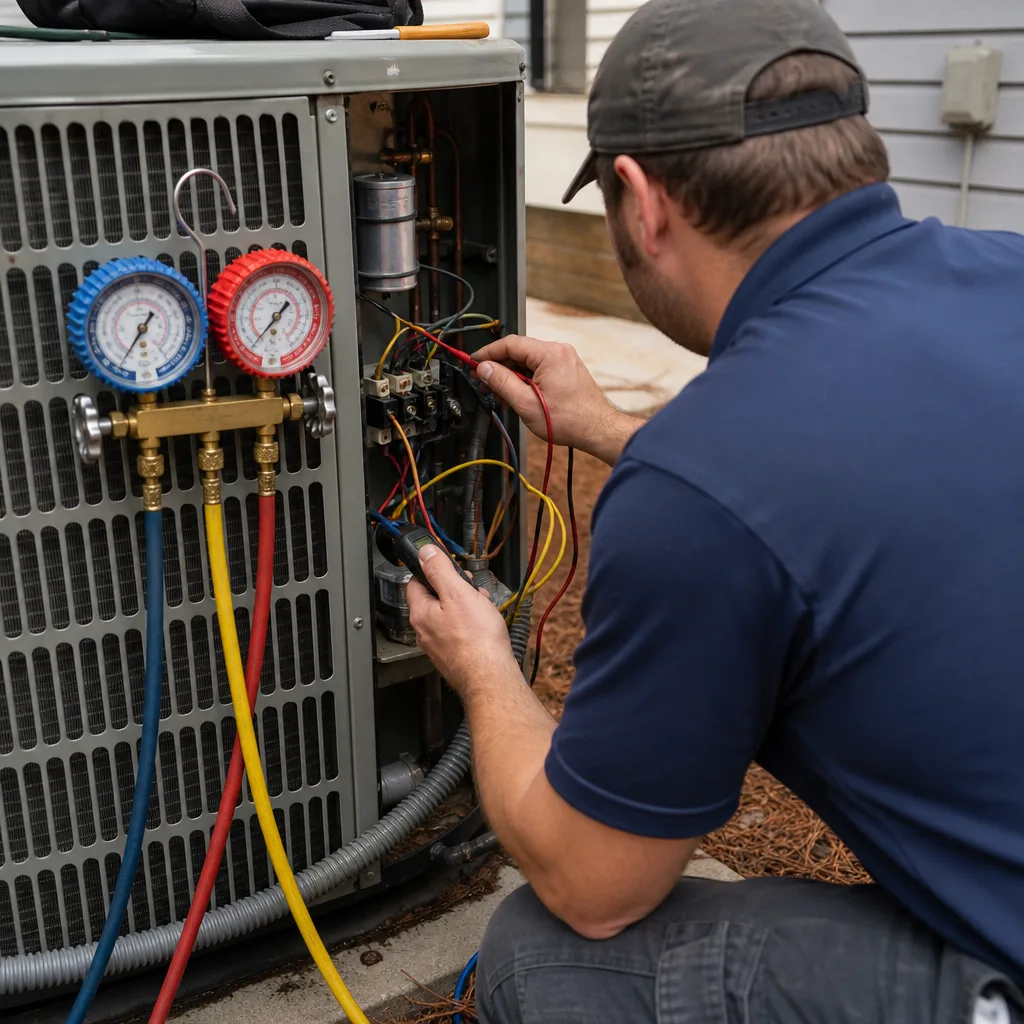
Most homeowners don’t realize that federal law, not company policy, draws the line on certain HVAC work. The Clean Air Act, enforced by the EPA, requires anyone handling refrigerants to hold a Section 608 certification. That includes adding refrigerant to a system, recovering refrigerant before opening a sealed system, and even connecting gauges to check pressure. There is no homeowner exemption. If your AC is low on refrigerant and you buy a can of R-410A online, you’re technically in violation of federal law the moment you open the valve, and the fine structure is serious enough that the EPA has pursued individual homeowners, not just contractors.
Georgia adds a second layer. The state requires HVAC contractors performing installations, repairs, or replacements on systems in residential settings to hold a Georgia conditioned air contractor’s license through the State Construction Industry Licensing Board, as covered in our HVAC Permits, Codes & Inspections in GA: What You Need to Know. That license requires documented experience, a passing exam score, and continuing education. A handyman who “does HVAC on the side” in Marietta is often operating without it, which matters when something goes wrong and you discover your homeowner’s insurance doesn’t cover unlicensed work.
The practical upshot for Marietta homeowners: the legal line isn’t “what I’m comfortable doing.” It’s what the EPA and the state of Georgia will permit you to do without a credential. The law was written around refrigerant safety and environmental protection, but it has a side effect that works in your favor. It creates a clear, documented standard for who should be touching your system.
Warranty Language: The Exact Exclusion Clauses to Look For
Every major HVAC manufacturer, including Carrier, Trane, Lennox, and American Standard, writes exclusion language into their equipment warranties that most homeowners never read. Pull out your warranty booklet or find the PDF online, then look for these specific section headers: “Exclusions,” “What Is Not Covered,” or “Limitations of Warranty.” Inside, you’ll find variations of the same clause: damage caused by unauthorized repairs, alterations, or adjustments, or installation by someone other than a licensed professional.
The phrasing matters more than you’d expect. Some manufacturers use “improper installation” only, which sounds like it covers the original install but not later repairs. Others use “unauthorized service” or “service performed by unqualified persons,” which is broader and catches DIY work directly. We’ve seen homeowners in Marietta lose compressor coverage on a seven-year-old unit because they’d replaced a capacitor themselves, and the manufacturer’s warranty claim was denied on the grounds that the system had been serviced by an unqualified person. The capacitor swap worked fine. The warranty was already gone.
Here’s the exact list of phrases to look for when you review your equipment documents:
- “Installed, operated, or serviced contrary to the manufacturer’s instructions”
- “Subjected to unauthorized modification or repair”
- “Serviced by anyone other than a licensed or qualified HVAC professional”
- “Damage resulting from the use of non-approved replacement parts”
- “Failure to maintain the equipment as specified in the owner’s manual”
If you see any of those phrases, your DIY repair is warranty-neutral only if it appears on the maintenance list, not the repair list. Maintenance is expected. Repair is restricted.
The Safe DIY List: Five Tasks That Won’t Void Your Warranty
Not everything requires a phone call. There’s a set of tasks that are legal, safe, warranty-neutral, and genuinely worth doing yourself in Marietta. These are maintenance items, not repairs. They don’t involve refrigerant, gas, line voltage, or sealed components. Here’s what you can do without worrying about the EPA or your warranty:
- Air filter replacement. This is the single most important maintenance task in any Marietta home, and the one most often skipped. During spring pollen season, a filter can clog in as little as three weeks. Buy a MERV 8 to 11 filter in the correct size (printed on the side of your current filter), slide it in with the arrow pointing toward the blower, and mark the install date on the frame with a Sharpie. Cost: $8 to $22. Frequency: every 1 to 3 months depending on pollen load and pets.
- Thermostat battery replacement. If your thermostat screen is blank or flickering, there’s a good chance it’s a dead AA or AAA battery. Most thermostats have a cover that slides or hinges open. Replace the batteries, verify the settings are still correct, and wait five minutes. This is a five-minute job with zero warranty implications. Cost: $2 to $6.
- Condensate line flush. Marietta’s humidity means condensate drain lines grow algae and eventually clog. Pour one cup of distilled white vinegar into the drain line access point (usually a capped PVC pipe near the indoor unit) once a month during cooling season. If the line is already clogged, a wet/dry vacuum on the outdoor drain outlet can often clear it. Cost: $1 for vinegar, or $0 if you already own it. This prevents the most common cause of AC water damage in Georgia homes.
- Outdoor unit debris clearing. Leaves, grass clippings, cottonwood, and pine needles collect around condenser units in Marietta yards. Turn off the power at the disconnect box next to the unit, pull debris away from the coil fins by hand or with a soft brush, and keep at least two feet of clearance on all sides. Do not use a pressure washer, which folds the aluminum fins flat. Cost: $0. Frequency: monthly during spring and fall.
- Vent and register inspection. Walk through your home and verify every supply register is open and unblocked by furniture, rugs, or drapes. Check each return vent as well. A single covered return vent can increase static pressure system-wide and shorten blower motor life. This takes ten minutes and costs nothing.
Every one of these tasks appears in manufacturer owner’s manuals as owner maintenance. Document them. A simple note on your phone or a paper log with the date and task is enough to show a warranty examiner that you maintained the equipment as required.
The Professional-Only List: What Requires EPA 608 or a Georgia License
This is the list that matters. These are tasks that either require a federal certification, a Georgia state license, or both, and attempting them as a homeowner carries real consequences:
- Adding or recovering refrigerant. Requires EPA Section 608 certification. No exception for homeowners. A system low on refrigerant has a leak, and adding refrigerant without finding the leak is both illegal and a temporary fix.
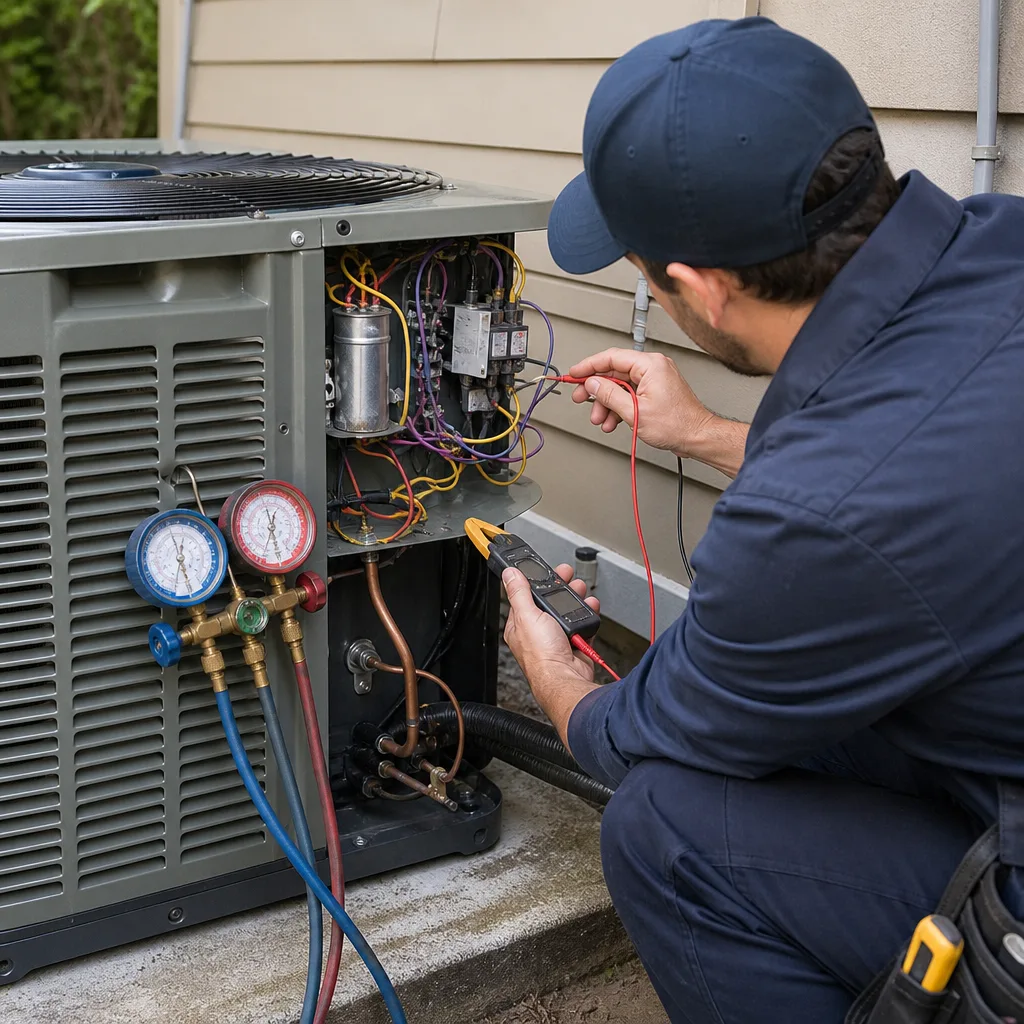
- Replacing a capacitor, contactor, or control board. These are line-voltage electrical components. A capacitor stores a charge even after power is disconnected, and the wrong spec or a miswired terminal can destroy a compressor. This is the $18 Amazon part that causes the most expensive failures we see in Marietta.
- Any work on the sealed refrigerant system. Evaporator coils, condenser coils, compressor, reversing valve, expansion valve, and refrigerant lines all require EPA certification to open and should only be handled by a licensed contractor.
- Gas furnace repairs. Gas valves, burners, heat exchangers, and ignition systems require a Georgia license and gas-specific training. A furnace heat exchanger crack can leak carbon monoxide, and a wrong gas valve adjustment creates an immediate safety risk.
- Electrical panel work related to HVAC. Running new circuits, replacing disconnects, or modifying wiring requires an electrical permit and a licensed electrician or HVAC contractor. This is not a weekend project.
- Ductwork modification or replacement. Duct design affects static pressure, airflow, and system efficiency. Improper duct sizing in a Marietta attic can make a correctly sized system underperform by 30% or more.
If a task appears on this list, the decision isn’t really DIY versus professional. It’s professional versus unlicensed, unpermitted work that will likely void your warranty and may be illegal. The choice is easier when you frame it that way.
The Real Cost Comparison: Five Common Repairs in Marietta
Here’s where the DIY math usually falls apart. Homeowners compare the part price online to the full professional quote and conclude they’re being overcharged, without accounting for diagnosis, labor, warranty backing, and the cost of getting it wrong. The table below compares typical DIY cost to professional cost for five repairs in the Marietta market, based on what we see across Cobb County; for a deeper look at pricing, see our HVAC Cost Breakdown: The Marietta Homeowner’s Reference for 2026:
| Repair | DIY Parts Cost | Professional Cost in Marietta | What the Professional Price Includes |
|---|---|---|---|
| Air filter replacement | $8 – $22 | $15 – $35 (filter only, often sold at cost as a courtesy) | Correct MERV rating for your system, no upcharge |
| Capacitor replacement | $15 – $30 (risk: wrong spec, stored charge, warranty void) | $120 – $220 | Diagnosis to confirm capacitor is the actual fault, correct microfarad rating, dual vs single run verification, written guarantee |
| Thermostat replacement | $40 – $180 (risk: wiring mismatch, C-wire issues, no compatibility check) | $200 – $400 installed | Compatibility verification with your system type, wiring correction, programming setup, written guarantee |
| Condensate line flush | $1 – $5 (vinegar, water) | $80 – $150 (full clearing) | Complete line clearing, drain pan inspection, algae treatment, secondary drain check |
| Outdoor unit cleaning (deep) | $15 – $40 (coil cleaner, brush) | $150 – $280 | Power off and safe handling, coil cleaning without fin damage, refrigerant pressure check, electrical inspection, written condition report |
The filter replacement is genuinely a DIY win. Everything else on this list has a hidden cost that doesn’t show up in the parts price. A capacitor installed with the wrong microfarad rating can overheat a compressor, and that’s a $1,800 to $3,500 replacement in a Marietta home, not covered under warranty because the failure traces back to an unqualified repair. The $200 you saved just became the down payment on a system replacement.
The Documentation Gap: How DIY Creates Warranty Claim Problems
Manufacturer warranty claims require documentation. When your compressor fails at year six and you file a claim, the manufacturer asks for proof that the system was maintained and serviced according to their requirements. That means records: receipts for filters, dates of professional maintenance visits, and documentation of any repairs with the technician’s name, license number, and the parts used.
A homeowner who replaces a capacitor themselves has no invoice, no technician name, no license number, and no record that the part was correct for the system. When the compressor fails six months later, the warranty examiner sees an undocumented part change in the system’s history and has grounds to deny the claim. We’ve watched this happen in Marietta. The homeowner did the work correctly. The warranty was still denied because the claim investigation flagged an unauthorized repair with no documentation trail.
If you’re going to do any maintenance yourself, keep the receipts. Write down the date, the part purchased, the brand, and the spec. If you later have a professional repair, keep the invoice even if it feels unnecessary. The invoice is your warranty documentation, not just proof of payment. It shows what was diagnosed, what was replaced, and who did the work. When our technicians complete any repair in Marietta, we hand over a written guarantee that serves exactly this purpose: documentation that protects the homeowner’s equipment warranty if something goes wrong later.
How to Evaluate a Professional Quote for a Job You Could Technically Do
You’ve watched three YouTube videos and you’re confident you could replace that contactor yourself. The professional quote arrives at $180 and you’re annoyed. Here’s how to evaluate whether that number is fair for the Marietta market:
First, benchmark against the five-repair table above. Simple component swaps like capacitors and contactors typically run $120 to $220 in Cobb County when performed by a licensed professional, including diagnosis, the part, installation, and a written guarantee. That’s not a “gotcha” price. It’s what it costs to operate a licensed, insured Georgia HVAC business with trained technicians, stocked trucks, and live customer support.
Second, ask what the quoted price includes. A fair quote for any HVAC repair in Marietta should specify the diagnosis, the repair itself, the parts brand and spec, and the guarantee period. If the quote says “repair AC” with no breakdown, ask for one. Reputable shops provide it without resistance.
Third, ask about the guarantee. This is where we’ve seen the biggest difference between contractors in this market. When we complete a repair, the homeowner receives a written 365-day guarantee. If the repair fails within that year, we return and correct it at no additional charge. The guarantee is printed on paper before our technician leaves. Most companies in Marietta won’t put that in writing. They’ll tell you their work is “guaranteed” over the phone and then produce nothing when a problem recurs. If a quote doesn’t include a written guarantee, the lowest price is probably not the best value.
Common Mistakes to Avoid
- Assuming “YouTube-able” means “warranty-safe.” The fact that a repair is explained online in a clear video has no bearing on whether your manufacturer warranty permits it. Read the exclusion section of your warranty before touching anything beyond maintenance.
- Buying refrigerant without an EPA 608 certification. R-410A and R-32 purchases require certification. The online sellers who ship to homeowners are not doing you a favor; they’re setting you up for a federal violation and an underperforming system, because low refrigerant means there’s a leak that needs finding and repairing first.
- Replacing a capacitor with “the same part” by shape instead of spec. Capacitors are printed with their microfarad rating and voltage. A visually identical capacitor with the wrong microfarad rating will cause the compressor or fan motor to run incorrectly, potentially permanently. This is the single most common DIY mistake we correct in Marietta homes.
- Using a pressure washer on your outdoor coil. Condenser fins are thin aluminum. A pressure washer at close range folds them flat against the coil and reduces airflow permanently. The unit looks cleaner but runs hotter. We’ve replaced coils damaged this way in houses all over Cobb County.
- Ignoring a tripped breaker without finding the cause. A breaker that trips once could be a fluke. A breaker that trips twice is your system telling you something is wrong. Resetting it repeatedly without identifying the fault can damage the compressor or the blower motor. Call a professional.
- Forgetting that your homeowner’s insurance may not cover unlicensed work. If an unlicensed handyman causes damage that leads to an insurance claim, your insurer may deny the claim because the work was performed by an unlicensed contractor. Georgia license requirements exist for a reason.
When to Call a Professional
Call a professional when the system is blowing warm air, making noises it didn’t make before, tripping breakers, showing ice on the refrigerant lines, or emitting any gas smell. Call when the thermostat says “on” but the unit isn’t running, when you notice water around the indoor unit, or when the system simply isn’t keeping up with a Marietta August afternoon. These aren’t minor symptoms; they’re the first sign of a developing failure. The earlier a licensed technician diagnoses the issue, the cheaper the repair almost always is. Delay pushes a $200 contactor replacement toward a $1,200 compressor burnout. AC repair in Marietta is usually needed within 24 to 48 hours when the system stops cooling, and a refrigerant leak left running can damage the compressor irreversibly.
Cold Harbour Heating and Air Marietta offers free estimates and a live person answers the phone every day of the year, including nights and weekends; for more guides & resources, visit our blog. Call (762) 240-5599 and describe what’s happening. We’ll give you a straight answer about whether it’s worth a service visit.
Frequently Asked Questions
No. Adding refrigerant requires an EPA Section 608 certification, which homeowners don’t have, and purchasing refrigerant without the certification is a federal violation. A system low on refrigerant has a leak that needs repair before more refrigerant is added. Call a professional in Marietta to find the leak, repair it, and recharge the system legally. For anything involving refrigerant, call us at (762) 240-5599.
Yes, in most cases. Manufacturer warranties for Carrier, Trane, Lennox, and American Standard equipment include exclusions for unauthorized service or service by unqualified persons, and a capacitor replacement falls under that exclusion. If a later compressor failure is traced to an incorrect capacitor spec or an undocumented repair, the warranty claim will likely be denied. This is one repair where the professional cost of $120 to $220 in Marietta is protecting a $3,000-plus asset.
Air filter replacement is the safest, cheapest, and most useful DIY task for any Marietta homeowner. It requires no tools beyond your hands, no electrical or refrigerant exposure, and no warranty risk. A clean filter during spring pollen season and summer humidity is the single best thing you can do for system longevity. Change it every 1 to 3 months depending on how quickly it loads.
On maintenance tasks like filter changes and condensate flushes, the savings are real but modest: $50 to $200 per year, depending on how often you’d otherwise pay for a maintenance visit. On repairs like capacitors and thermostats, the short-term savings is deceptive because you’re absorbing the risk of a wrong install that voids a warranty worth thousands of dollars. The honest answer: you’ll save money on maintenance, not on repairs.
Yes. When our technicians complete a repair in Marietta, they document the work with a written guarantee that serves as warranty protection for your equipment. We don’t do work that will void your manufacturer’s coverage, and we’ll tell you before any repair whether it has warranty implications. The 365-Day Done Right Promise covers every repair we complete, in writing, at no additional charge.
No. Turn off the furnace at the thermostat and leave the area ventilated. A gas smell can indicate anything from a dirty burner combustion issue to a cracked heat exchanger, which can leak carbon monoxide. Call a professional immediately. Furnace repair in Marietta for gas odor should happen same day. Call (762) 240-5599 and a live person will answer, not a voicemail tree.
The Bottom Line
The DIY versus professional HVAC question has a clear answer once you layer in the legal, warranty, and documentation factors. Maintenance tasks are DIY-appropriate. Repairs involving refrigerant, line voltage, gas, or sealed systems are professional-only by law and by warranty. The $18 capacitor is a trap. The $200 “overpriced” professional repair is a documented, guaranteed fix that protects a much larger investment. Marietta homeowners who read their warranty exclusions, do their own maintenance with records, and call a professional for everything else will spend less money over the life of their system than homeowners who try to save money by doing repair work themselves. When something breaks, call Cold Harbour Heating and Air Marietta at (762) 240-5599. We’ll answer the phone, show up when we say, and put the price and the guarantee in writing before any work starts.
Written by Victor Mancini, Owner at Cold Harbour Heating and Air Marietta, serving Marietta since 2003.
See the difference
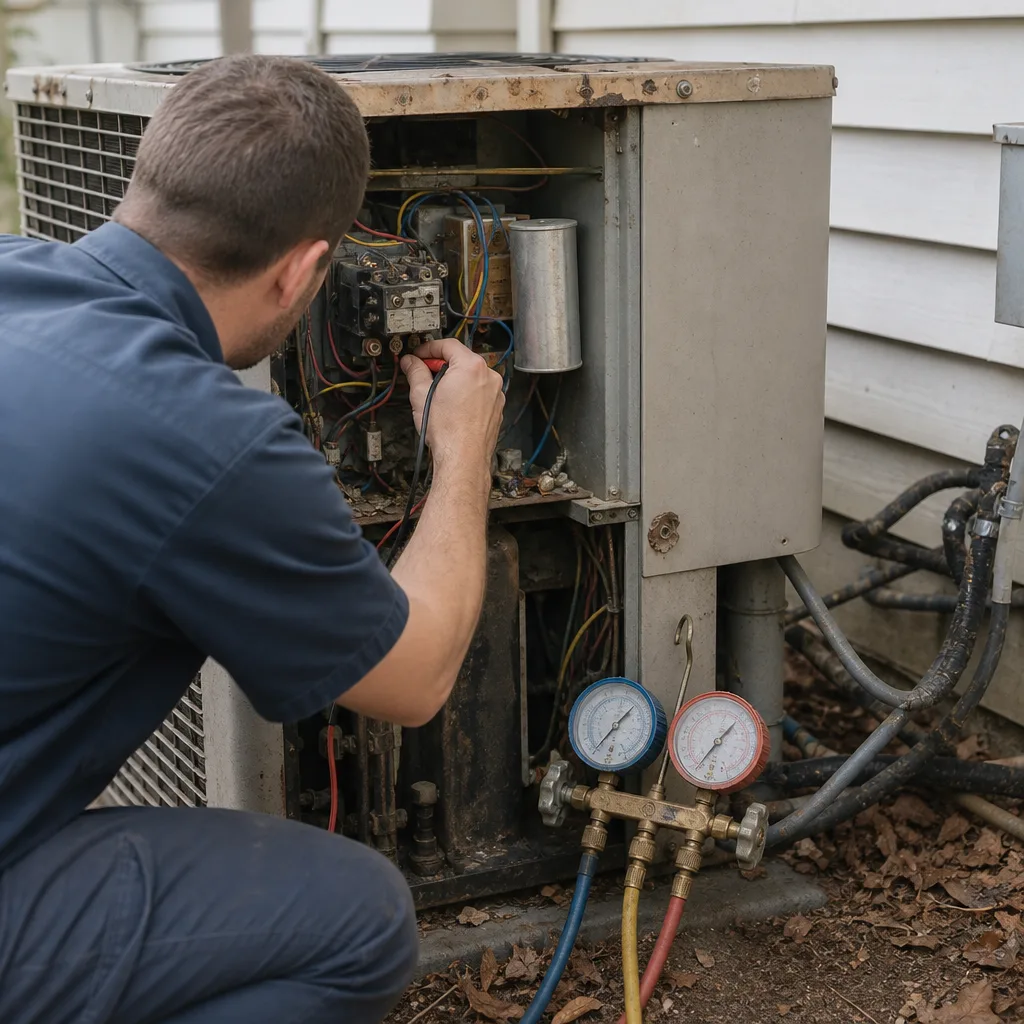 Before
 After
After Before
 After
After Before
 After
After