
Last updated October 16, 2026
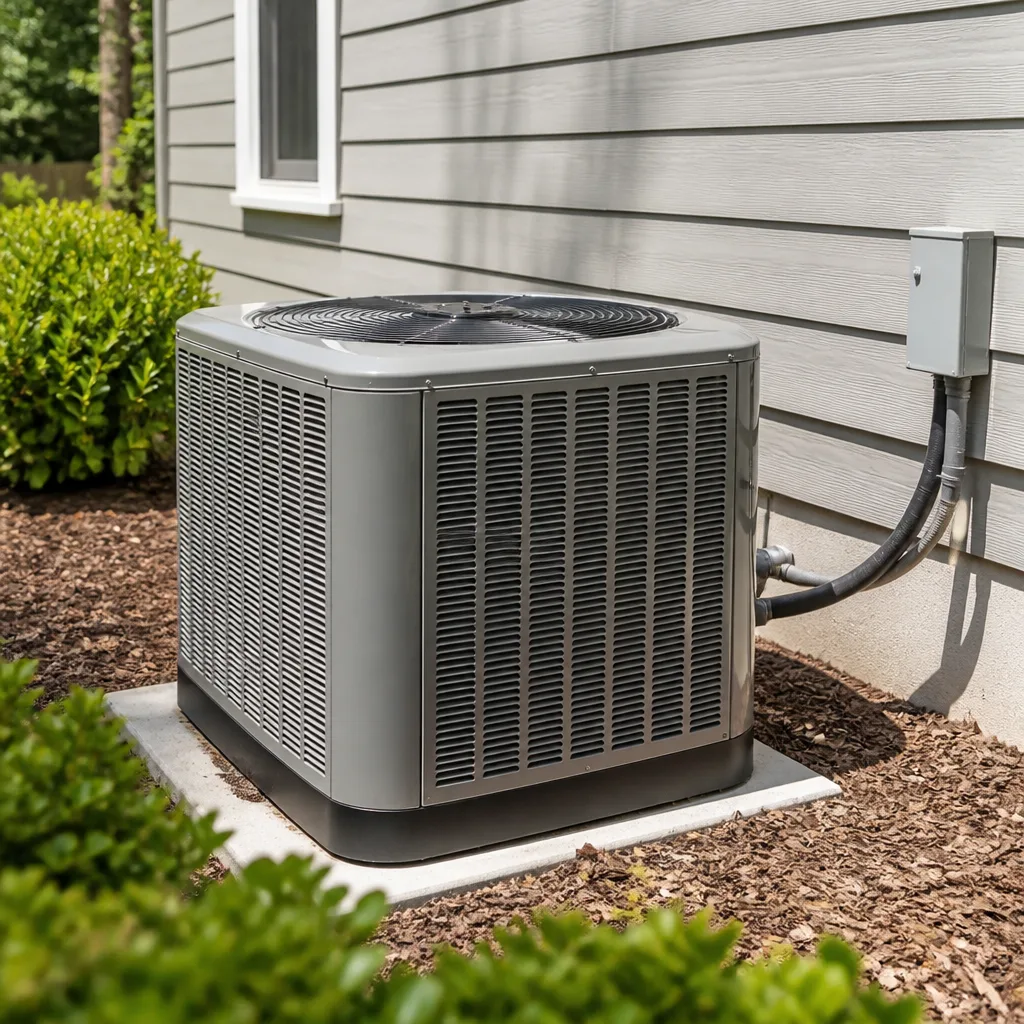 AC repair
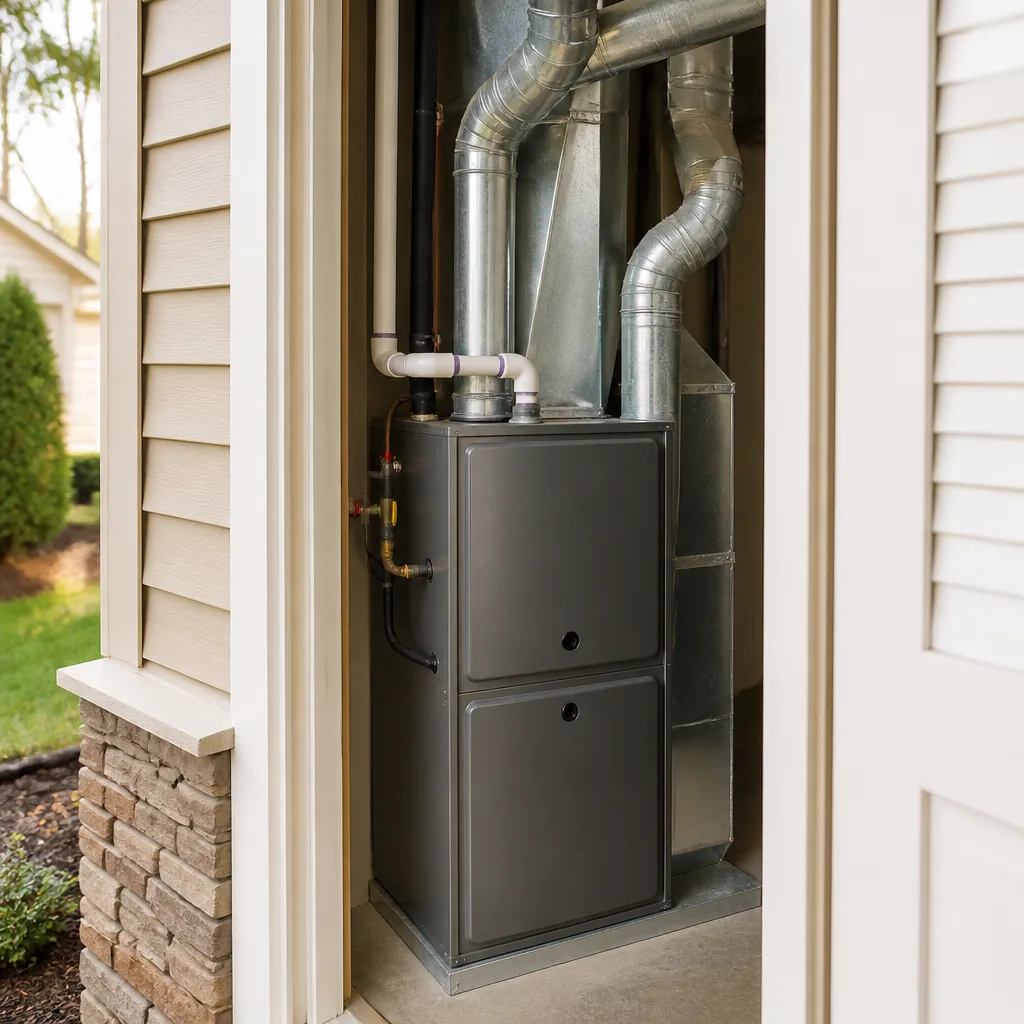 Furnace & heating
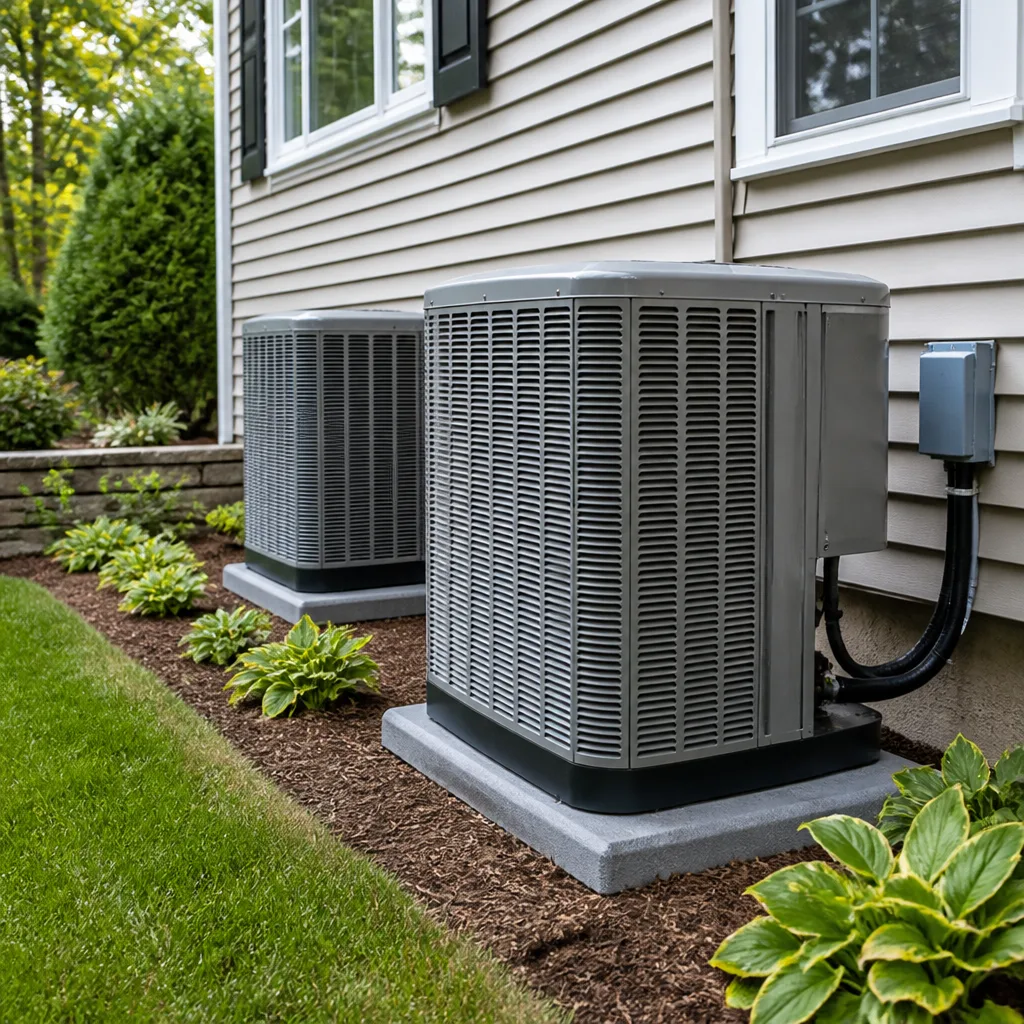 Heat pumps
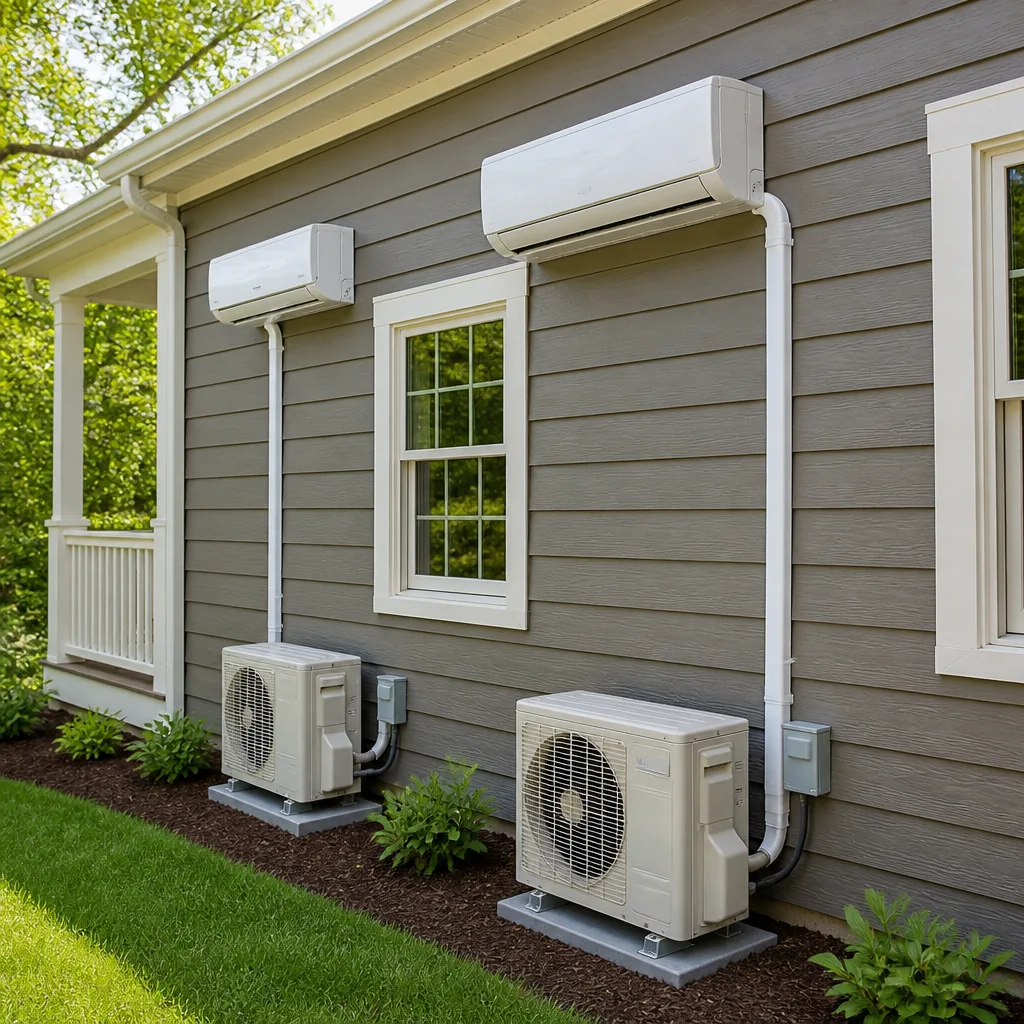 Ductless mini splits
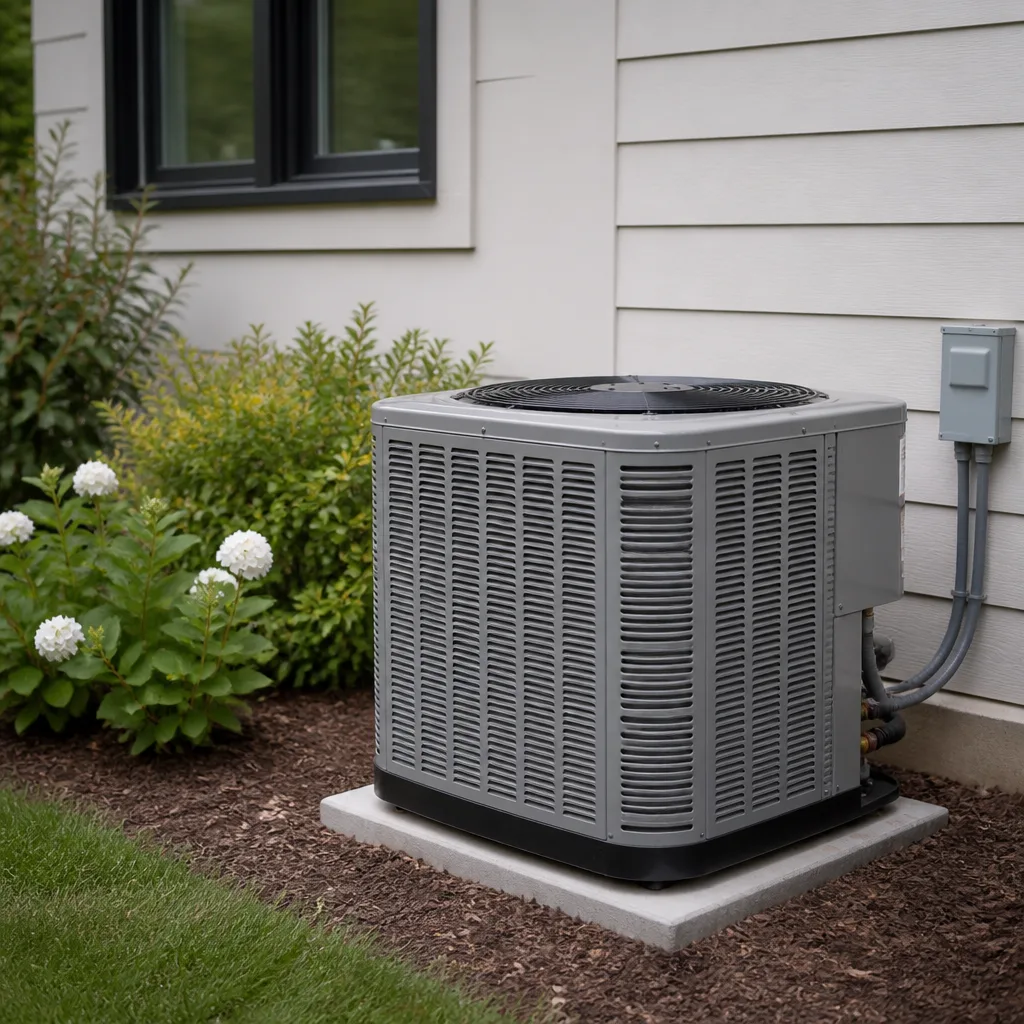 Carrier
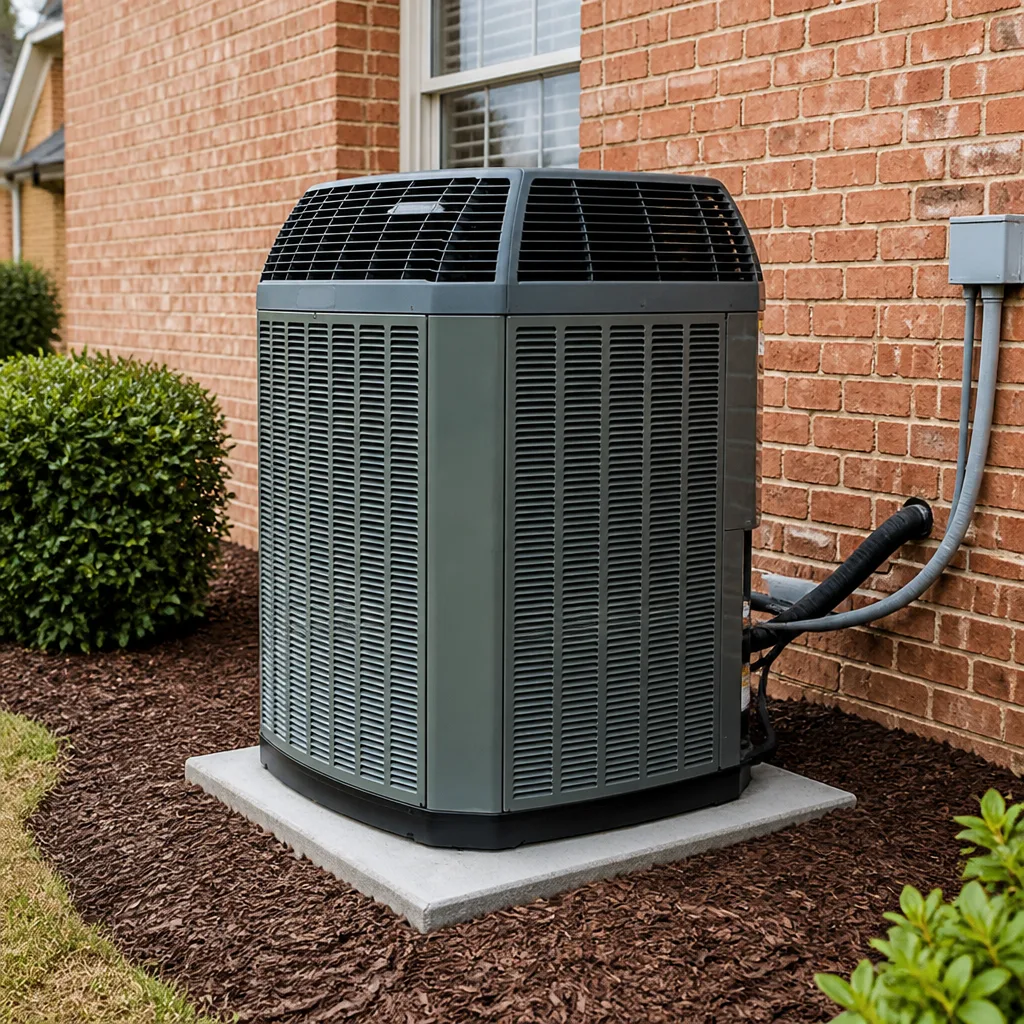 Trane
Trane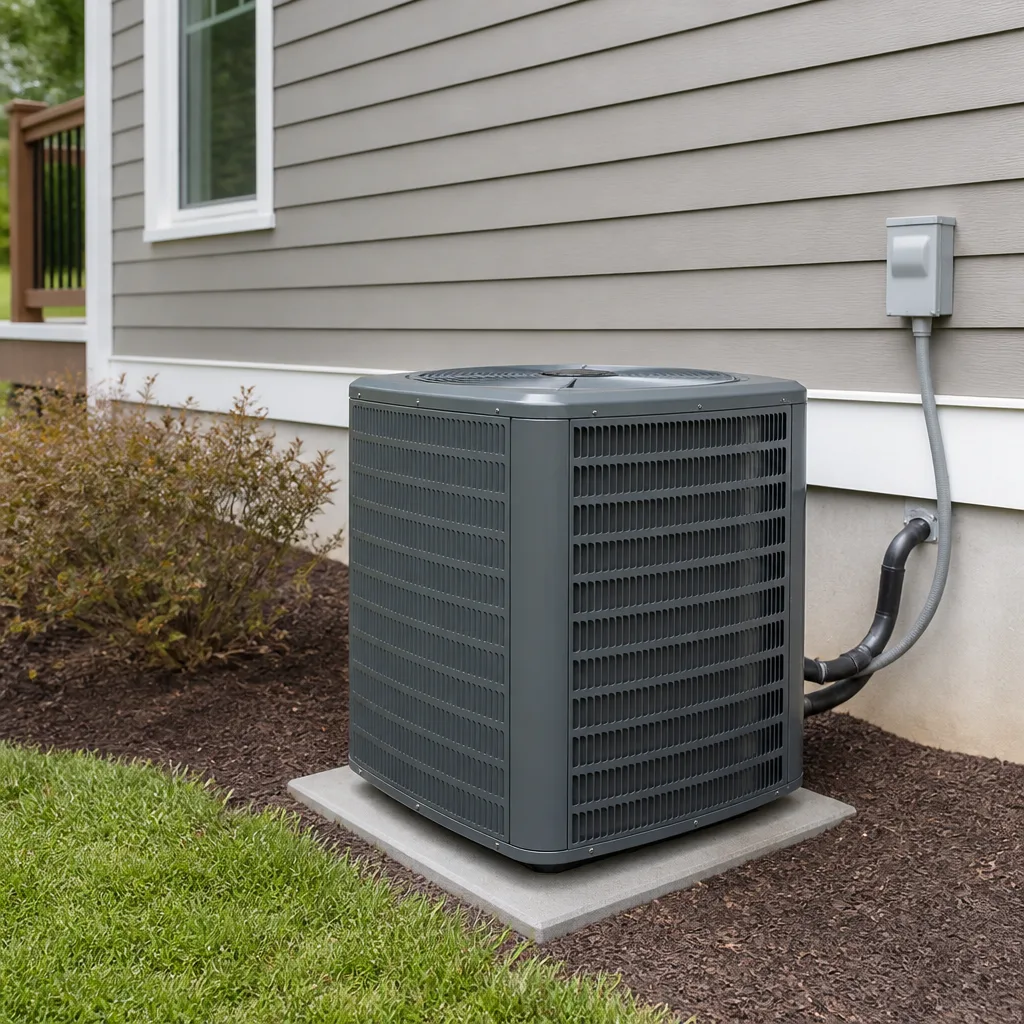 Goodman
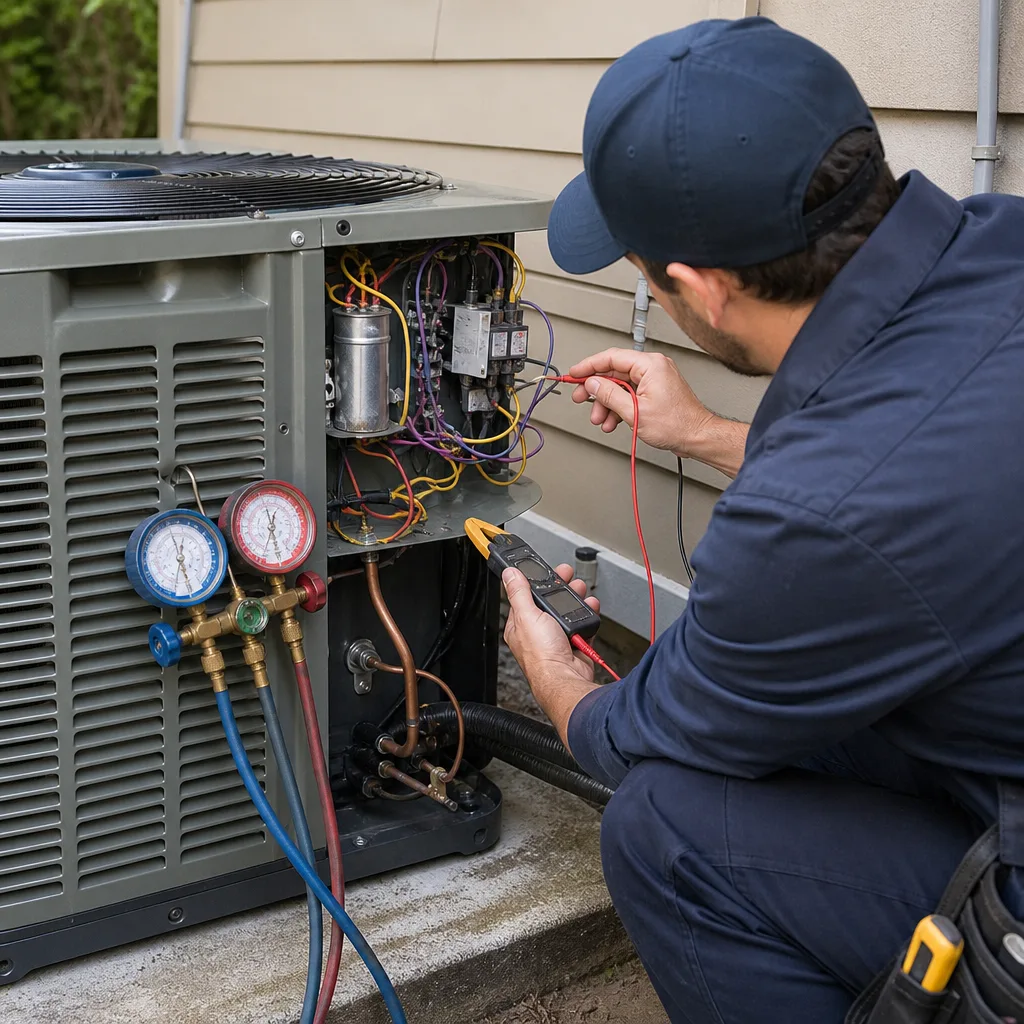
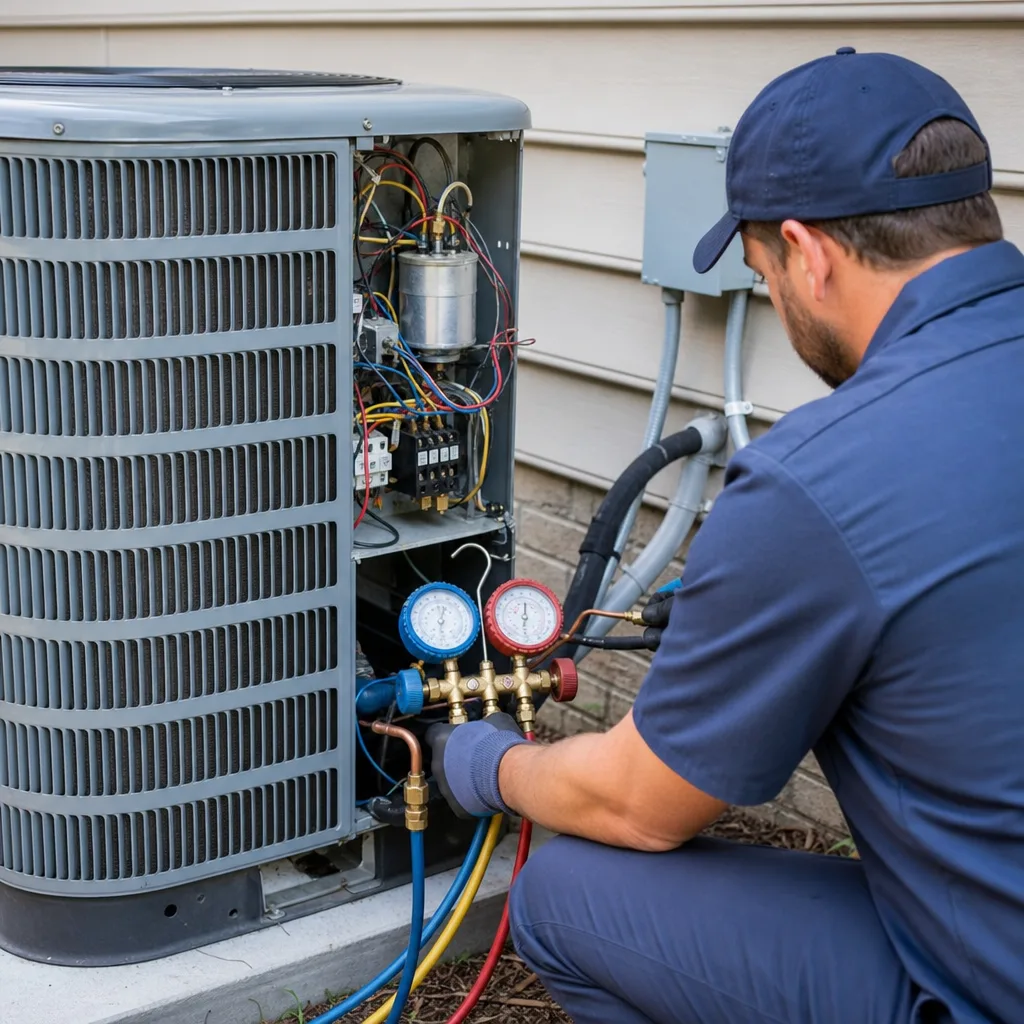
Seasonal tune-up and full diagnostic on your Carrier, Trane, or Goodman system - readings shown to you before any repair is proposed
Diagnosis first, numbers second - you approve the repair price before a single part goes in.
Get your free estimateThe Complete Guide to HVAC in Marietta
Marietta averages roughly 98 more cooling degree days per year than the national median, yet most HVAC guides handed to local homeowners are written for a fictional average American city that doesn’t exist anywhere near Cobb County. This guide is different. It explains how Marietta’s clay-heavy soil, humid subtropical summers, and surprisingly cold January snaps create a specific set of demands on heating and cooling equipment that generic advice misses entirely. By the end, you’ll know what your system actually needs in this climate, what repairs should cost, what Cobb County requires for permits, and how to read a service guarantee so you’re not left holding a worthless promise. For more, see our more guides & resources.
Quick Answer
HVAC in Marietta means sizing equipment for long, humid cooling seasons first and occasional freezing nights second. Because the city’s clay soil expands and contracts with moisture, outdoor units need proper pad support and drainage planning that homeowners in sandy-soil regions never think about. Repairs here typically range from $150 to $650 for common component failures, while full system replacements usually run $6,500 to $13,500 depending on efficiency and home size-see our HVAC Cost Breakdown: The Marietta Homeowner’s Reference for 2026 for full details-and Cobb County requires permits and inspections that many contractors quietly skip at the homeowner’s long-term expense.
Styles & brands we work with
Table of Contents
- How Marietta’s Climate Shapes HVAC Decisions
- Clay Soil, Pads, and Refrigerant Lines: What the Ground Does to Your System
- SEER Ratings vs. What’s Actually Worth Paying For in Georgia
- Cobb County Permits and Inspections: What the Law Requires and Why Contractors Skip It
- Why Shoulder Seasons Are the Only Practical Windows for Major Installations
- How to Read a Written Service Guarantee: Four Clauses That Matter
- What Common HVAC Repairs Cost in Marietta
- Should You Repair or Replace? A Decision Framework for Marietta Homes
How Marietta’s Climate Shapes HVAC Decisions
Marietta’s HVAC realities are not the same as Atlanta’s, and they’re certainly not the same as the national averages manufacturers use when marketing equipment. The city sits at roughly 1,100 feet of elevation, slightly higher than downtown Atlanta, which means summer afternoons run a degree or two cooler but the humidity is relentless from mid-May through late September. Your air conditioner here does two jobs: it lowers the temperature and it strips moisture from the air. A system that’s oversized for the square footage will cool the air quickly but won’t run long enough to dehumidify properly, leaving you with that clammy, sticky feeling even at 72 degrees. This is the single most common mistake we see in Marietta homes built before 2000.
Winter brings a different challenge. January nights regularly dip into the mid-20s, and cold snaps can hold the city below freezing for several consecutive days. Homes here need a furnace or heat pump that’s sized for those stretches, not just for the mild 50-degree days that dominate December. The average Marietta heating season runs about 2,800 to 3,200 heating degree days, which means your heating system will log real hours but nothing like a Minneapolis system would. That balance matters when choosing between a furnace and a heat pump, and it matters when deciding how much to invest in heating efficiency versus cooling efficiency.
Shoulder seasons in Marietta, roughly March through April and October through November, are when the city’s weather is most forgiving. Temperatures sit in the 60s and 70s, humidity drops, and neither heating nor cooling runs constantly. This is also when HVAC companies in Marietta have the most scheduling flexibility, which translates directly into pricing and workmanship. A compressor replaced in March gets a technician’s unhurried attention. A compressor replaced during a July heat advisory gets replaced as quickly as possible, which is understandable but not ideal.
Clay Soil, Pads, and Refrigerant Lines: What the Ground Does to Your System
Marietta sits on the Southern Piedmont, and much of the city’s residential soil is a heavy, reddish clay that expands when wet and shrinks when dry. That movement is slow but relentless. Over years, it shifts outdoor condenser pads, tilts them, and in the worst cases, stresses the copper refrigerant lines running from the outdoor unit into your home. We’ve seen units in East Cobb and around the Marietta Square that have sunk three or four inches on one side, which puts the compressor out of level and strains the line set at the connection points.
There are two practical steps every Marietta homeowner should take. First, make sure the condenser pad is a proper pre-cast composite or concrete pad that sits on a compacted base, not a plastic pad dropped directly onto topsoil. Second, inspect the line set where it exits the house and enters the unit at least once a year. Look for kinks, bends, or any sign that the line has been pulled tight. A stressed line can develop microscopic cracks that leak refrigerant slowly over months, and a slow leak means your system runs longer, cools less, and costs more every month without any obvious failure.
Refrigerant line burial depth is another Marietta-specific consideration. In sandy or loamy soils, contractors routinely bury lines at shallow depths without issue. In dense Georgia clay, shallow burial can create problems during the freeze-thaw cycles of winter. Clay holds water, and when that water freezes, it expands with significant force. Any refrigerant line buried less than 12 inches in Marietta clay is a candidate for premature failure, and most manufacturer specifications call for deeper burial plus sand bedding to protect the line. If you’re planning a new installation or moving a condenser, ask your contractor specifically how they protect buried lines in clay soil. A contractor who pauses before answering is telling you something.
SEER Ratings vs. What’s Actually Worth Paying For in Georgia
SEER stands for Seasonal Energy Efficiency Ratio, and it measures how much cooling an air conditioner produces per watt of electricity consumed. Higher SEER means lower operating cost, but the relationship between SEER and actual savings is not linear, and in Marietta’s climate, the marketing math often overpromises. The federal minimum for new equipment in the Southeast is currently SEER2 14.3, which translates to roughly what used to be called SEER 15 under the old testing standards. That’s the floor. The question is how far above the floor makes financial sense.
In Marietta, where air conditioning runs for six to seven months of the year, SEER2 15 to 17 is the sweet spot for most homes. Going from SEER2 15 to SEER2 17 typically cuts cooling energy use by about 8 to 12 percent, which on a $180 average summer electric bill in Marietta means savings of roughly $15 to $20 per month during peak cooling season. That’s real money over 20 years, and the equipment premium is usually modest. Going from SEER2 17 to SEER2 20 or higher is where the numbers get murky. The equipment premium can be $1,500 to $3,000, and the additional savings shrink with each step up because you’re already starting from an efficient baseline.
Here’s the Marietta-specific part: humidity matters more than raw SEER numbers. A variable-speed, two-stage, or modulating system in the SEER2 16 to 18 range will often deliver better comfort in Georgia’s humid climate than a single-stage SEER2 20 unit, because the variable-speed system runs longer at lower capacity and removes more moisture. Manufacturers push high SEER numbers because they’re easy to advertise. What actually changes how your home feels in July is a system that controls humidity properly. When you’re evaluating quotes, ask about dehumidification performance at part-load conditions, and don’t get hypnotized by SEER alone. Brands like Carrier, Trane, and Goodman all make solid mid-efficiency systems that perform well in Marietta’s climate when properly sized, and the installation quality matters more than the name on the cabinet.
Cobb County Permits and Inspections: What the Law Requires and Why Contractors Skip It
Cobb County requires a mechanical permit for HVAC system replacements and most major installations, including new AC condensers, furnaces, heat pumps, and ductwork modifications. The permit comes with an inspection, and the inspection is what protects you. A county inspector verifies that the system was installed to current code, that the electrical connections are proper, that the refrigerant charge was handled by a certified technician, and that the equipment meets current efficiency minimums. Without that inspection, you have no independent verification that the work was done correctly.
The part most homeowners don’t realize is that skipping the permit can void the manufacturer warranty on your new equipment. Trane, Lennox, Goodman, and the other major brands write warranty terms that require installation by a licensed contractor in compliance with all applicable codes and permits. If the system fails in year three and the manufacturer asks for the installation permit, and you don’t have one, that 10-year parts warranty can become worthless. We’ve seen this happen more than once in Cobb County to homeowners who hired the cheapest bid and didn’t ask about permits.
State-level licensing in Georgia is a separate matter. HVAC contractors in Marietta must hold a state-issued Conditioned Air Contractor license, which requires documented experience, passing a comprehensive exam, and maintaining continuing education. The county permit process and the state license are two different layers, and a legitimate contractor in Marietta will provide both without being asked. When you’re comparing quotes, the permit line item is not optional overhead you should try to negotiate away. It’s evidence that the contractor is willing to have their work inspected by a third party. Contractors who discourage permits often have a reason. For help vetting contractors, read our How to Hire a HVAC Contractor in Marietta: A Step-by-Step Guide.
Why Shoulder Seasons Are the Only Practical Windows for Major Installations
Every HVAC company in Marietta fills its summer schedule with emergency repair calls the moment temperatures climb into the 90s. That’s just how the business works. When your AC dies on the first 95-degree day of June, the phone rings, and you need help immediately. Companies respond, because that’s the job. But full system replacements and major installations are a different category of work. They require load calculations, equipment ordering, sometimes duct modification, and a full day or more of labor. They also require the homeowner to be without heating or cooling for that period, which is tolerable in April and miserable in July.
The practical result is that homeowners who plan their replacement for March, April, October, or November get several meaningful advantages. Scheduling is flexible, so you’re not competing with a hundred emergency calls. Equipment availability is better, because suppliers aren’t running short on certain condenser sizes or furnace configurations. And pricing reflects the normal pace of work. A system installed during a July heat wave often carries what amounts to a rush premium, whether it’s itemized or not, because the company has to rework its schedule and pull technicians from other jobs. The same system installed in mid-April doesn’t.
There’s a second reason shoulder seasons matter in Marietta specifically. The city’s spring and fall are gentle enough that you can take your time making a decision. You can get three quotes, compare equipment proposals, read the contract language, and check references without the pressure of a house that’s 88 degrees inside. That deliberation produces better decisions. We recommend starting your research in February or September, scheduling estimates in March or October, and completing the installation before the weather turns. You’ll pay less, the crew will have adequate time, and the system will be running properly before you actually need it.
How to Read a Written Service Guarantee: Four Clauses That Matter
Most HVAC companies in Marietta offer a “guarantee” of some kind. The word sounds good. The details are what separate a real commitment from marketing language. Here are the four clauses you need to examine when reading a written guarantee, and what each one actually means.
- The coverage period in writing. A guarantee that says “we stand behind our work” without a specific time period isn’t a guarantee, it’s a slogan. A real guarantee states a number: 90 days, one year, two years. At Cold Harbour Heating and Air Marietta, every repair comes with the 365-Day Done Right Promise, a written guarantee valid for a full year. If the repair fails in that window, we come back and correct the work at no charge. That’s the kind of specificity that matters.
- What the guarantee covers, in plain language. Does it cover parts, labor, or both? Does it cover the specific component that was replaced, or the entire system? Does it transfer to a new owner if you sell the house? A guarantee that’s silent on these points is designed to be argued about later. Read the language carefully before you sign.
- What the homeowner must do to keep the guarantee valid. Some guarantees require annual maintenance performed by the issuing company. That’s not unreasonable, but it should be stated clearly and the maintenance should have a disclosed price. A guarantee that requires unstated “routine service” at undisclosed prices is no longer a guarantee, it’s a subscription.
- What happens after a failure is reported. Does the contractor commit to a response time? Is the follow-up visit free, or will there be a service fee? The weakest guarantee language says the contractor will “make it right” but doesn’t define what that means or who pays for what. The strongest language says specifically: if the repair fails within the term, the return visit and correction cost nothing.
The Kingswell Way, the operating standard Cold Harbour Heating and Air Marietta follows as part of the Kingswell network, puts the guarantee in writing on every job before the technician leaves. Not after you ask for it. Not in a follow-up email. On paper, in your hand, at the time of service. That’s the standard homeowners should expect from any contractor they hire in Marietta.
What Common HVAC Repairs Cost in Marietta
Repair pricing in Marietta varies based on the specific equipment, the age of the system, and whether the component is still under manufacturer warranty. The figures below reflect what we’ve seen across more than two decades of service in this market. They include parts and labor for a typical single-family home.
- Capacitor replacement: $160 to $290. The capacitor provides the electrical jolt that starts the compressor and fan motor. It’s the most common AC failure in Marietta, especially after the first sustained 90-degree stretch of summer.
- Condensate drain line clearing: $90 to $180. Georgia humidity means drain lines clog with algae and debris regularly, which is why we recommend a drain treatment during annual maintenance.
- Thermostat replacement: $120 to $320 depending on the thermostat type, including the cost of a mid-range digital or smart model and installation.
- Igniter replacement: $150 to $280. Furnace igniters fail more often in Marietta than in colder climates because the repeated on-off cycling of mild winters creates thermal stress on the component.
- Blower motor replacement: $350 to $750. The blower pushes conditioned air through the ducts. Variable-speed blowers cost more to replace but are increasingly common in newer systems.
- Refrigerant leak repair and recharge: $400 to $1,100 depending on the leak location and how much refrigerant (the cooling fluid) the system lost. This work requires EPA certification, and in Georgia, you may not simply “top off” a leaking system without repairing the leak.
- Compressor replacement: $1,400 to $2,300 when the system is worth saving and the compressor is under warranty. Out of warranty, compressor replacement is often a sign to consider replacing the whole system.
These are honest ranges, not bait-and-switch estimates. The final price depends on what’s actually wrong, which is why Cold Harbour Heating and Air Marietta provides a written price before any work begins, not a vague verbal estimate that changes at the door. If you’re seeing repair quotes significantly lower than these ranges, ask what’s excluded. If you’re seeing quotes significantly higher, ask for a detailed explanation. Reputable contractors in Marietta explain their pricing without hesitation.
Should You Repair or Replace? A Decision Framework for Marietta Homes
The repair-versus-replace decision is the hardest call most Marietta homeowners face, and it’s easy to get it wrong. Here’s a practical framework-along with our DIY vs Professional HVAC: The Marietta Homeowner’s Decision Guide-that matches what we actually use when advising customers.
- Age of the system. Most residential HVAC equipment lasts 12 to 18 years in Marietta’s climate. If your system is under 10 years old, repair is almost always the right call, unless the repair is a compressor out of warranty. If it’s over 15, start planning for replacement regardless of the current repair cost. The question changes from “should I fix this?” to “how much longer do I want to keep fixing this?”
- Cost of the repair as a percentage of replacement cost. The 50-percent rule is crude but useful. If a repair costs half or more of what a new system would cost, and the system is over 10 years old, replacement usually makes more financial sense. In Marietta’s July heat, we’ve seen homeowners pour $1,500 into a 16-year-old system and then ask why it failed again in September. The answer was predictable.
- Refrigerant type. Systems older than 2010 typically use R-22 refrigerant, which is no longer manufactured in the United States. It’s still available from recovered and recycled supplies, but the price climbs every year. If your system uses R-22 and has a refrigerant leak, replacing the system with a modern R-410A or R-454B unit is usually the better long-term move.
- Energy costs and comfort complaints. If your system runs constantly to hold 78 degrees in August, or leaves the upstairs ten degrees warmer than the downstairs, there’s a problem that no single component replacement will solve. Those symptoms point to sizing issues, duct problems, or age-related degradation. Repair can bandage it; replacement can fix it.
- Infrared evidence of heat loss or gain. A professional energy assessment can show where your home is leaking conditioned air. If the envelope is the problem, no HVAC upgrade will fully resolve your comfort issues. Fix the envelope, then reassess the equipment.
Common Mistakes to Avoid
- Oversizing equipment based on square footage alone. A system that’s too large for your home will short-cycle, fail to dehumidify, and wear out prematurely. Proper sizing requires a Manual J load calculation that accounts for window orientation, insulation levels, ceiling height, and shade. Square feet alone tells you almost nothing.
- Skipping the Cobb County permit to save a few hundred dollars. The permit and inspection exist to protect you, and the warranty implications alone justify the cost. Any contractor who says “you don’t really need a permit for this” is giving you a reason to hire someone else.
- Ignoring the condensate drain line until water appears. In Marietta’s humidity, drain lines clog constantly. Annual maintenance should include drain treatment and clearing. By the time water is dripping through your ceiling, the problem has been building for months.
- Buying based on SEER number instead of system design. A single-stage high-SEER unit often delivers worse comfort in Georgia’s humidity than a two-stage or variable-speed unit with a lower SEER number. Match the equipment to the climate, not to the marketing.
- Neglecting the outdoor unit pad on clay soil. Marietta’s clay shifts. Check your condenser annually for level. A unit that’s tilted more than a few degrees is stressing the refrigerant lines and the compressor internals.
- Letting a no-heat or no-cooling situation force a rushed decision. When the house is 92 degrees, any functioning AC looks good. That’s how homeowners end up overpaying for the wrong equipment. If you can sort out your needs in March, you’ll make a better decision than you would in July.
- Accepting a verbal guarantee instead of a written one. In Marietta, as everywhere, a guarantee you can’t hold in your hand doesn’t exist. If the contractor won’t put it in writing before you pay, assume it won’t be honored after you pay.
See the difference
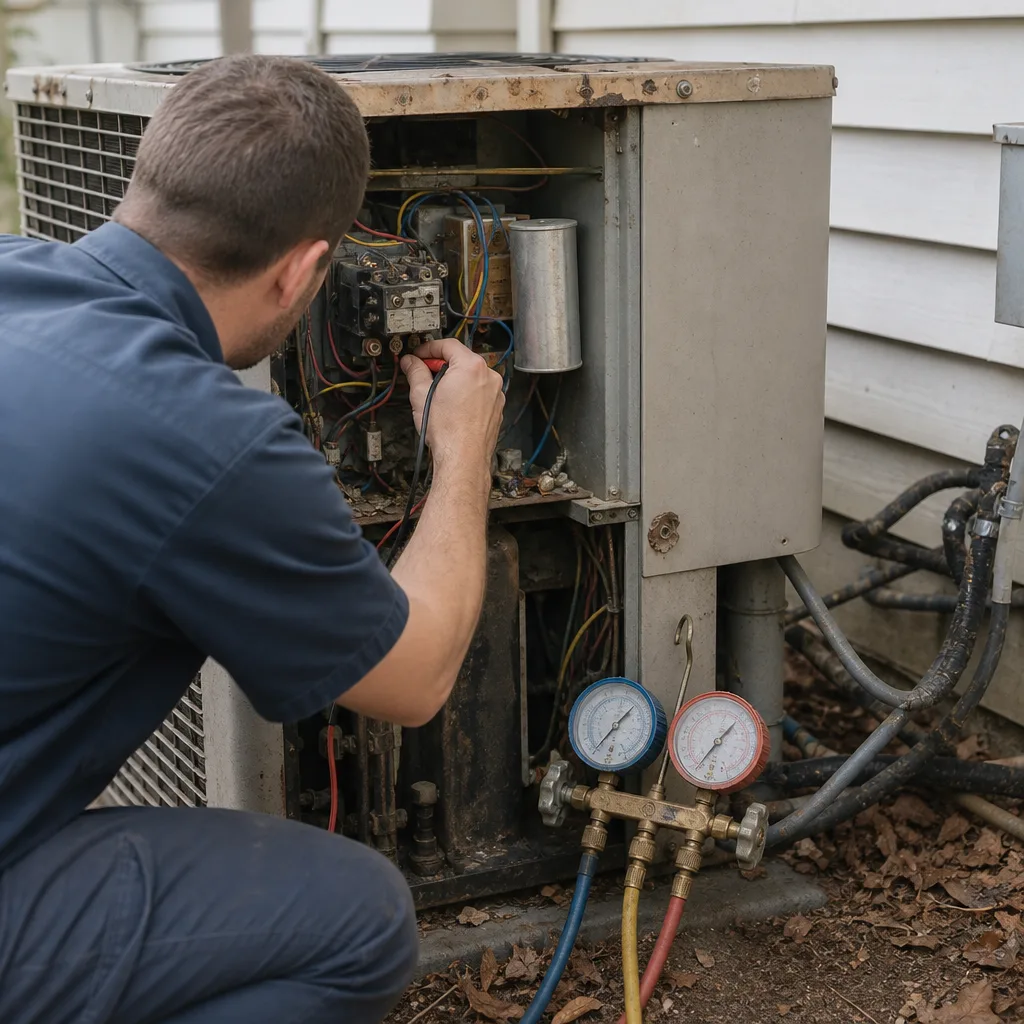 Before
 After
After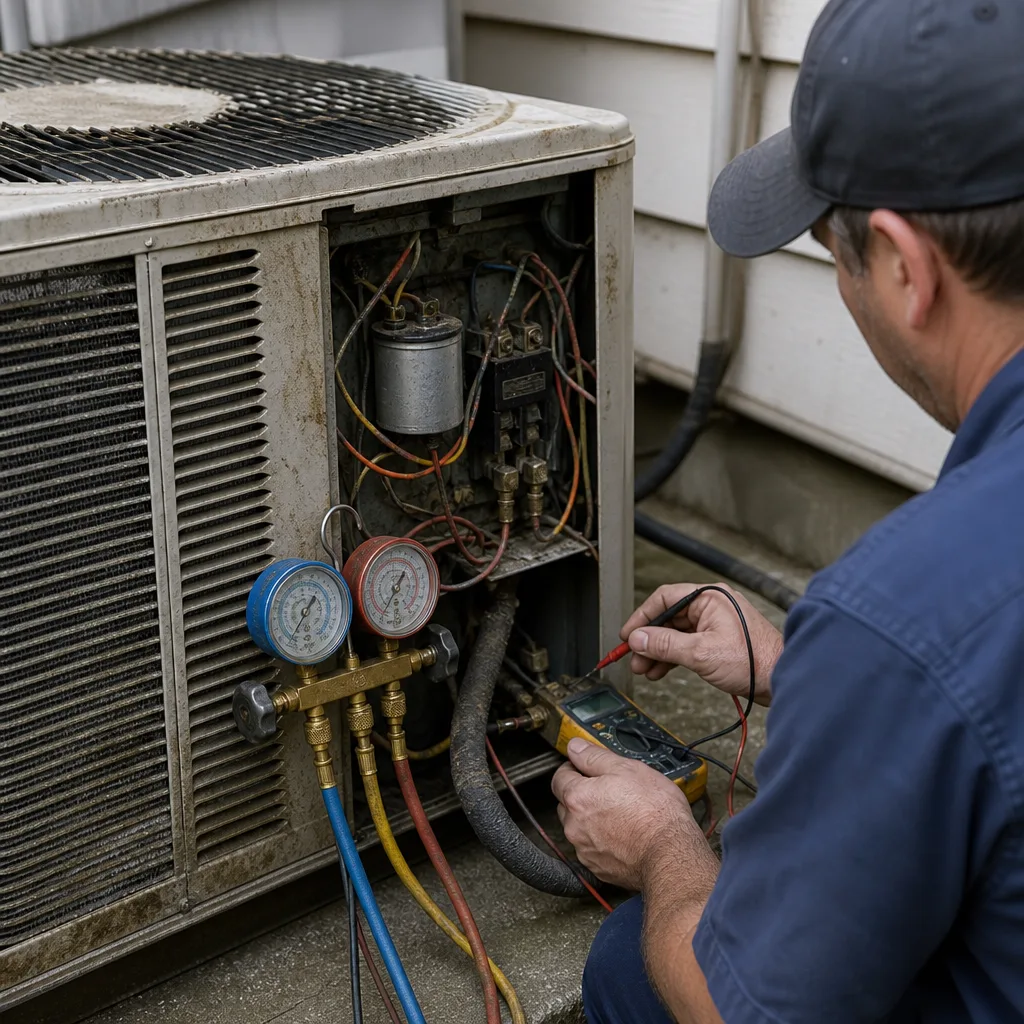 Before
 After
After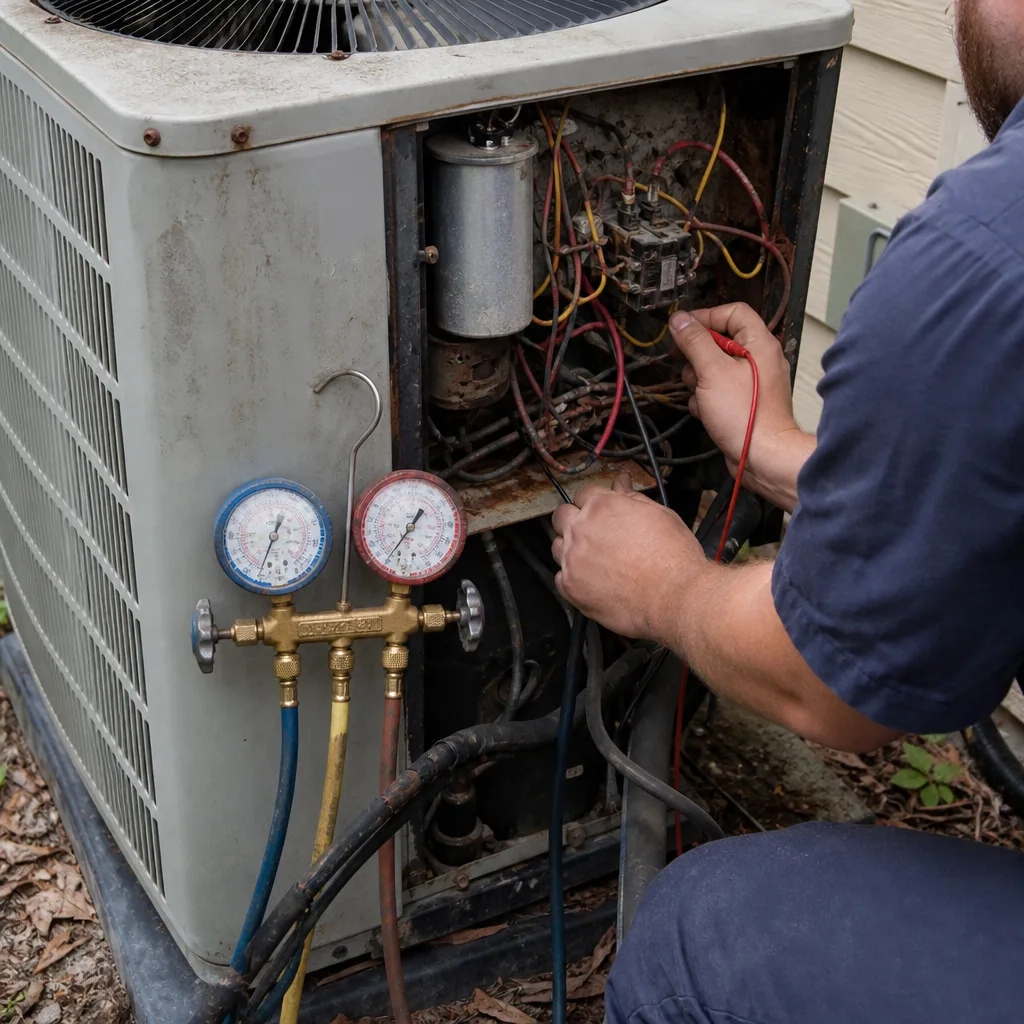 Before
 After
AfterWhen to Call a Professional
Call an HVAC professional when: your system runs but doesn’t cool or heat effectively; you hear grinding, squealing, or banging from the unit; you smell burning or musty odors from the vents; your energy bills spike without a corresponding change in weather; water pools around the indoor unit; or the system short-cycles, turning on and off every few minutes. Refrigerant handling is regulated and requires EPA certification. Electrical work inside the system carries real safety risks. High-tension springs and certain furnace components can cause serious injury if mishandled. For anything beyond filter changes and basic thermostat settings, the right move is a trained technician. Cold Harbour Heating and Air Marietta offers free estimates in Marietta, and every repair we do is backed by the 365-Day Done Right Promise. Call (762) 240-5599 to schedule.
Frequently Asked Questions
A complete HVAC system replacement in Marietta typically costs between $6,500 and $13,500, depending on home size, equipment efficiency, and installation complexity. The lower end covers a basic 14.3 SEER2 system with a standard gas furnace in a smaller home, while the upper end includes high-efficiency variable-speed equipment in a larger house. Every quote we provide is written and itemized before any work begins. Call (762) 240-5599 for a free estimate at your home.
Twice a year is the right frequency for Marietta: once in early spring before cooling season, and once in early fall before heating season. The city’s humidity means drain lines, coils, and blower wheels collect algae, mold, and debris faster than in drier climates, so annual-only maintenance leaves a long gap where problems can develop unnoticed. Many maintenance plans in Marietta run $180 to $350 per year for two visits.
Yes. Cobb County requires a mechanical permit for HVAC system replacements, and the work must pass a county inspection. The permit protects your warranty and verifies that the installation meets current code and efficiency standards. Cold Harbour Heating and Air Marietta handles the permit and inspection process on every installation we perform.
Stack effect is the main culprit: hot air rises into the upper level while cooler air pools downstairs, and most single-zone systems can’t compensate for the difference. Duct leakage, insufficient attic insulation, and undersized returns make the problem worse. Solutions range from zoning dampers to dedicated mini-split units, and a proper assessment starts with measuring temperatures and airflow in each room.
For most Marietta homes, SEER2 15 to 17 delivers the best balance of equipment cost and operating savings. Higher-rated units save incrementally more electricity but rarely repay their price premium in our climate, especially if the system doesn’t also include variable-speed or two-stage humidity control. A mid-efficiency two-stage system often outperforms a high-SEER single-stage unit when it comes to real comfort in Georgia’s humid summers.
We answer the phone with a live person 24 hours a day, 7 days a week, and we prioritize no-cooling calls in Marietta when summer temperatures climb above 88 degrees. Same-day service is often available depending on call volume, especially for homeowners who reach us before mid-afternoon. Call (762) 240-5599 and a real person will take your call, day or night.
The Bottom Line
Marietta’s HVAC demands are shaped by humid subtropical summers, clay-heavy soil, and a mild but real winter season. Equipment that works well here is sized for humidity control as much as temperature, supported by proper pads on shifting ground, and installed with permits and inspections that hold up over years. The decisions worth taking seriously are efficiency choices, permit compliance, and the written guarantee that comes with the work. Cold Harbour Heating and Air Marietta has served the city since 2003, with written pricing, firm arrival windows, and a 365-Day Done Right Promise on every repair. For a free estimate at your home, call (762) 240-5599 and talk to a live person who can help you plan the right next step.
Written by Victor Mancini, Owner at Cold Harbour Heating and Air Marietta, serving Marietta since 2003.