
Last updated October 16, 2026
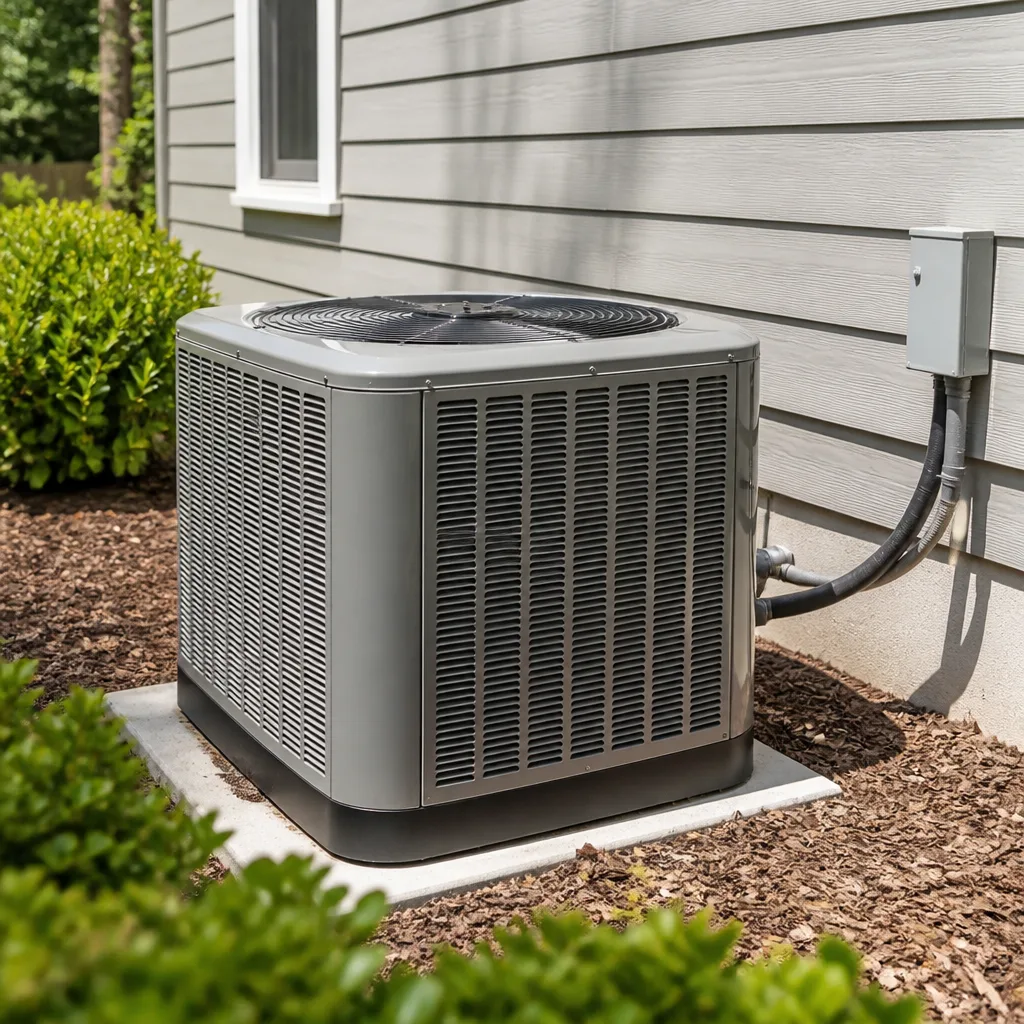 AC repair
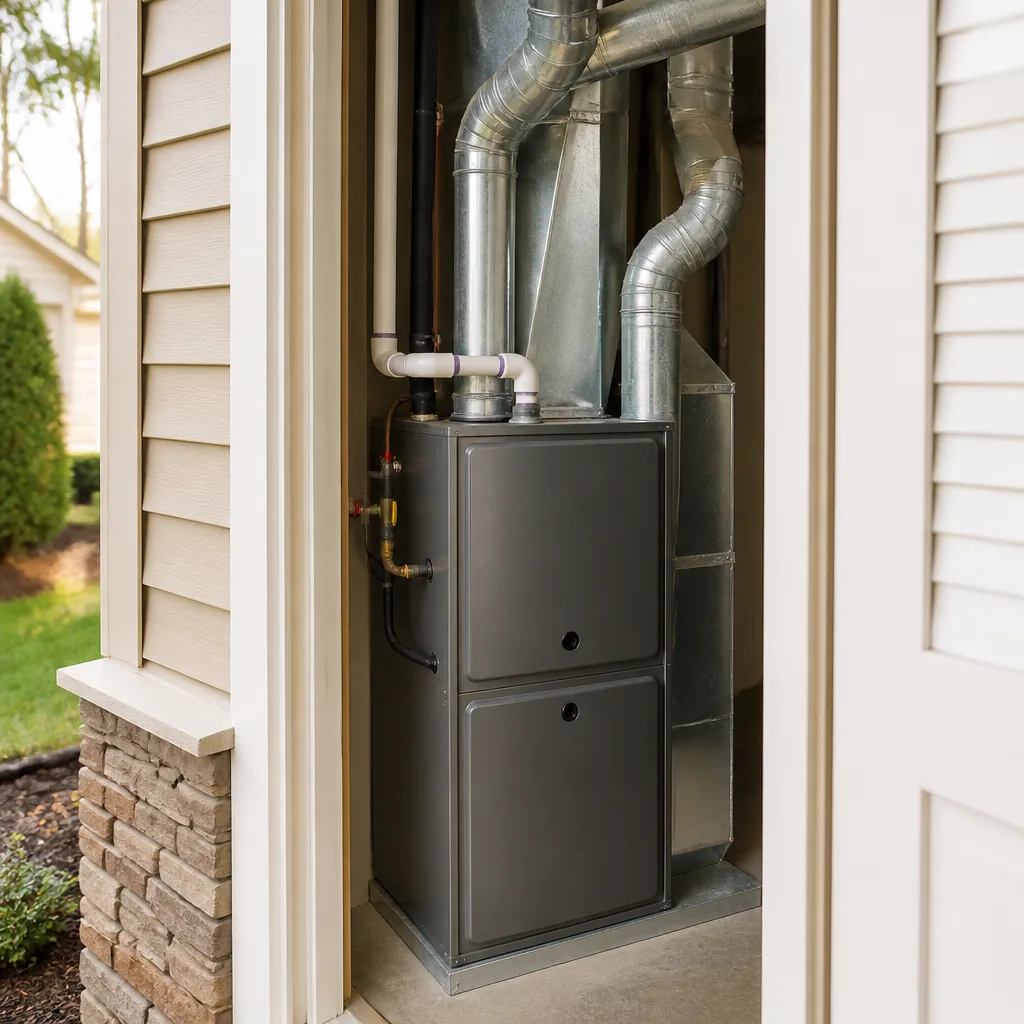 Furnace & heating
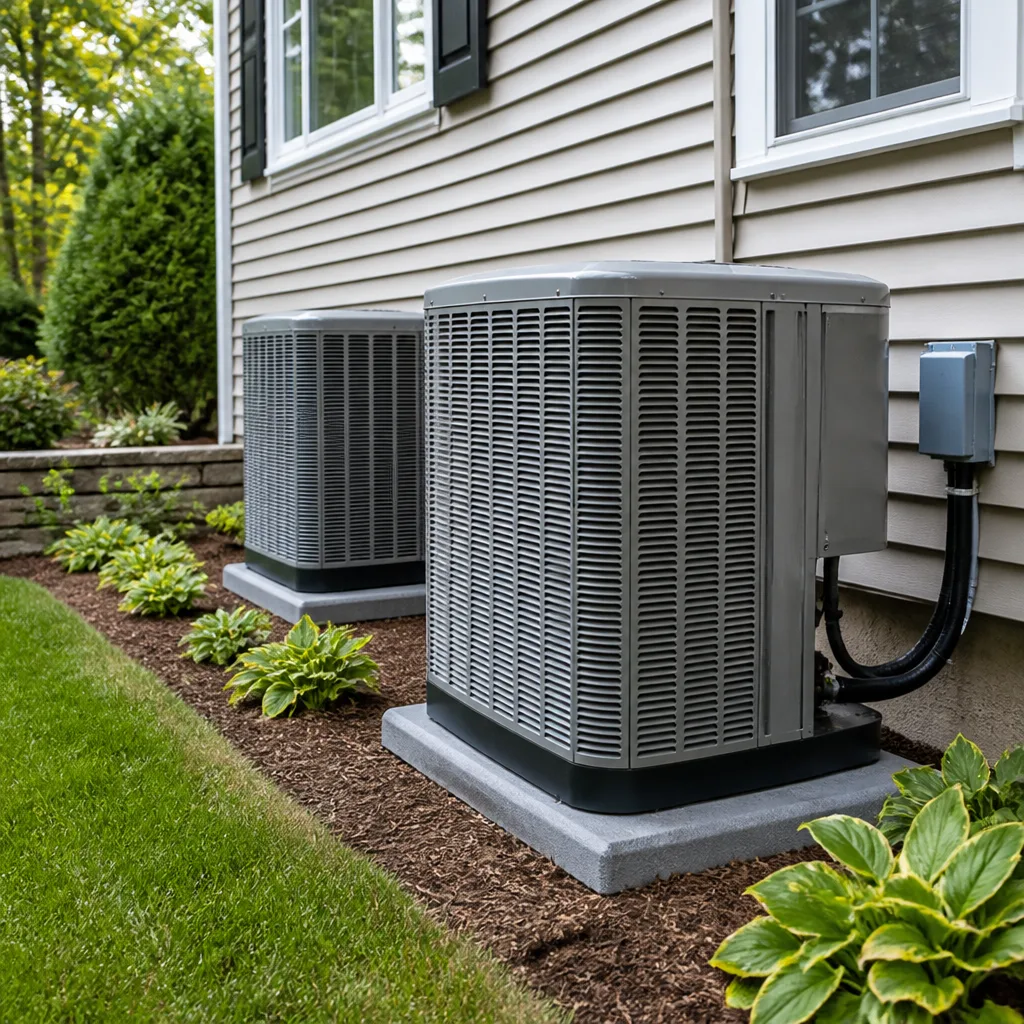 Heat pumps
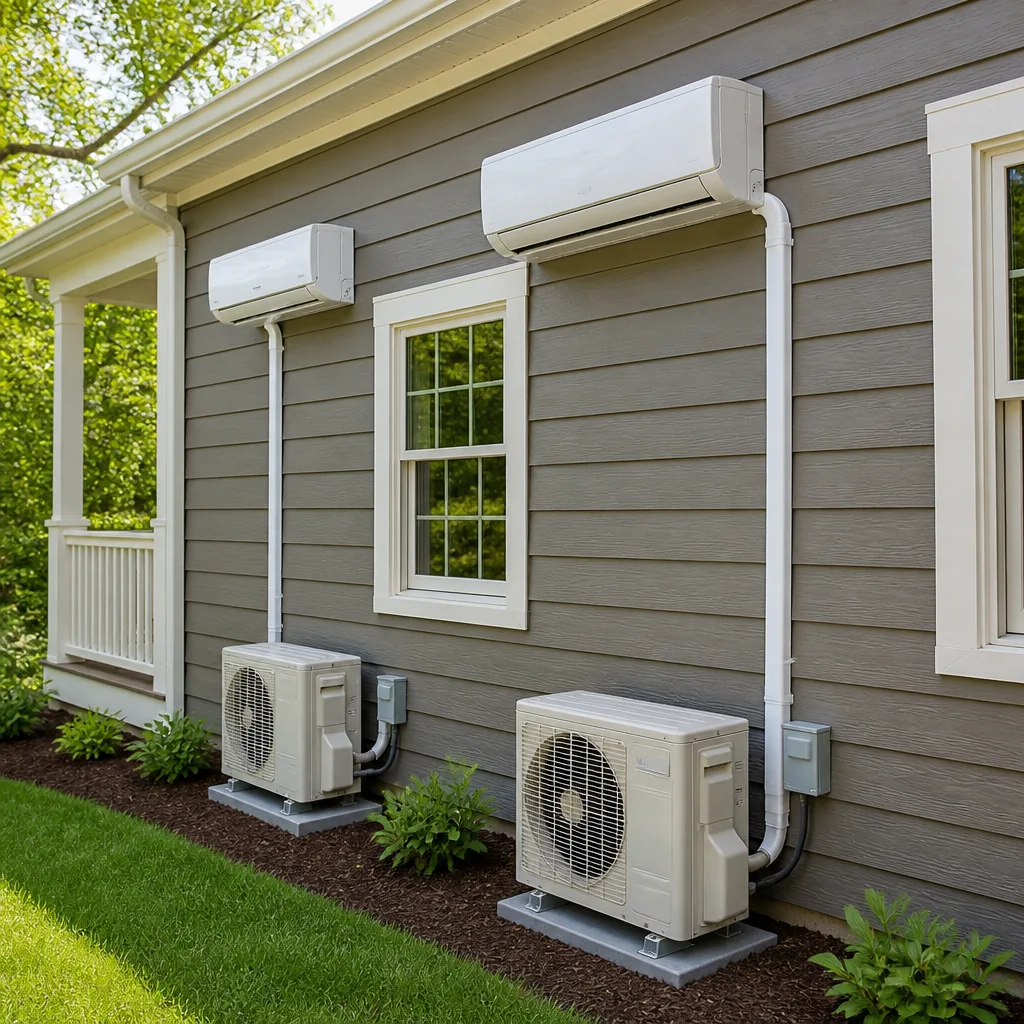 Ductless mini splits
 Carrier
 Trane
Trane Goodman
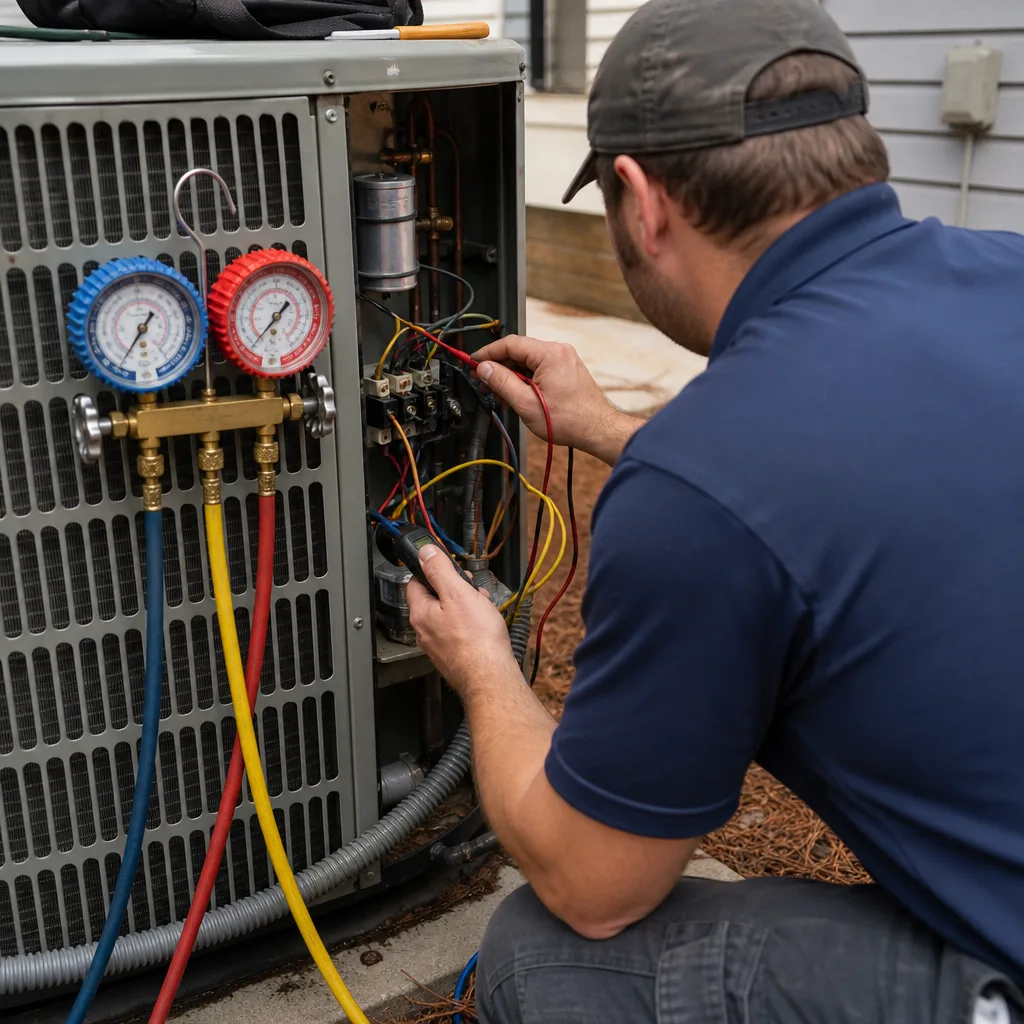
Seasonal tune-up and full diagnostic on your Carrier, Trane, or Goodman system - readings shown to you before any repair is proposed
Diagnosis first, numbers second - you approve the repair price before a single part goes in.
Get your free estimateHVAC Warning Signs: A Marietta Homeowner’s Reference Guide
A clicking sound when your AC starts isn’t the same as a clicking sound that continues after it starts. One is a normal relay doing its job. The other is a capacitor telling you it’s about to quit, and in a Marietta August, that’s the difference between a $45 part and a $450 emergency call on a Saturday night. Most warning sign guides list symptoms and leave you no better informed than before you searched. This guide does something different: it assigns each warning sign a plain-English cause, a severity level, and a specific next step, so you know whether to call tomorrow, call this week, or shut the system down and call right now.
Quick Answer
The HVAC warning signs that matter in Marietta fall into three tiers: signs that mean call tomorrow (minor drainage issues, slightly uneven cooling), signs that mean call this week (persistent odd noises, musty odors, moderate bill increases), and signs that mean turn the system off and call now (burning smells, electrical clicking that continues, refrigerant hissing, or a system that runs constantly but won’t cool below 80 degrees). For a deeper look at year-round maintenance, see our Seasonal HVAC Care for Marietta: Year-Round Homeowner’s Guide. Most serious HVAC failures give you 7 to 21 days of warning before they become emergencies, if you know what to look for.
Styles & brands we work with
Table of Contents
- A Tiered Severity System: Call Tomorrow, Call This Week, Call Now
- What That Noise Actually Means: Clicks, Buzzes, Hisses, and Rattles
- The Georgia Humidity Problem: Condensation, Musty Odors, and Drain Failures
- Refrigerant Leaks vs. Low Refrigerant: Why the Distinction Matters
- Rising Utility Bills: The Numbers That Actually Warrant a Diagnostic Call
- Thermostat and Smart App Warnings Homeowners Routinely Dismiss
- Common Mistakes to Avoid
- When to Call a Professional
A Tiered Severity System: Call Tomorrow, Call This Week, Call Now
Every HVAC warning sign has a severity level. The problem is that most homeowners only learn the severity after the system fails, which is the most expensive way to learn anything. Here’s how we think about it after two decades of service calls across Marietta, from Whitlock Avenue to East Cobb and up through Sandy Plains.
Tier 1: Call Tomorrow (Not an Emergency, But Don’t Wait a Month)
These signs indicate a problem that isn’t going to damage your equipment in the next 48 hours, but will get more expensive the longer you wait. A condensate drain line that drips slowly onto your garage floor, one room that runs two or three degrees warmer than the rest of the house, a faint musty smell that comes and goes, a thermostat that needs new batteries every two months instead of every year. These are maintenance failures waiting to happen, not emergencies. Call during normal business hours and schedule a diagnostic at your convenience. Most of these issues resolve in under an hour when they’re caught early. For a full list of what to check, see our AC Repair Maintenance Checklist for Marietta Homeowners.
Tier 2: Call This Week (Escalation Risk is Real)
These signs mean something is actively degrading. A buzzing sound from the outdoor unit that wasn’t there last month. An AC that runs 45 minutes to drop the temperature one degree. A compressor that makes a hard noise at startup, a clunk or a thud. Water stains on the ceiling below an attic air handler. A bill that’s jumped 25 percent with no change in usage. None of these will necessarily fail tomorrow, but each one is a component working harder than it should, and in Marietta’s heat, increased strain shortens equipment life by weeks every single day. Schedule a diagnostic this week. A written diagnostic report will tell you exactly what’s failing and what it costs to fix, before you’re making that decision at 2 a.m. during a heat wave.
Tier 3: Turn It Off and Call Now (These Are Emergencies)
A burning smell that persists more than a few seconds. Clicking from the outdoor unit that continues after the system starts and won’t stop. A hissing sound near the indoor coil, which is refrigerant escaping. Any electrical smell, like hot metal or ozone. A furnace that blows warm air in winter and won’t light. An AC that runs nonstop for hours and won’t cool the house below 82 degrees when it’s 95 outside. None of these resolve on their own, and several of them actively damage other components while they continue. The compressor is the most expensive part in your system, and it fails fastest when it’s running without proper refrigerant charge or against a failing capacitor. Turn the system off at the thermostat, then at the breaker if the noise continues, and call. Cold Harbour Heating and Air Marietta answers the phone with a live person 24 hours a day, 7 days a week, so you’ll never leave a voicemail and wait for morning.
What That Noise Actually Means: Clicks, Buzzes, Hisses, and Rattles
Noise is the most common warning sign homeowners report, and the one they’re most likely to ignore because they can’t tell normal from not-normal. Here’s what each sound means, mechanically, and what to do about it.
Clicking
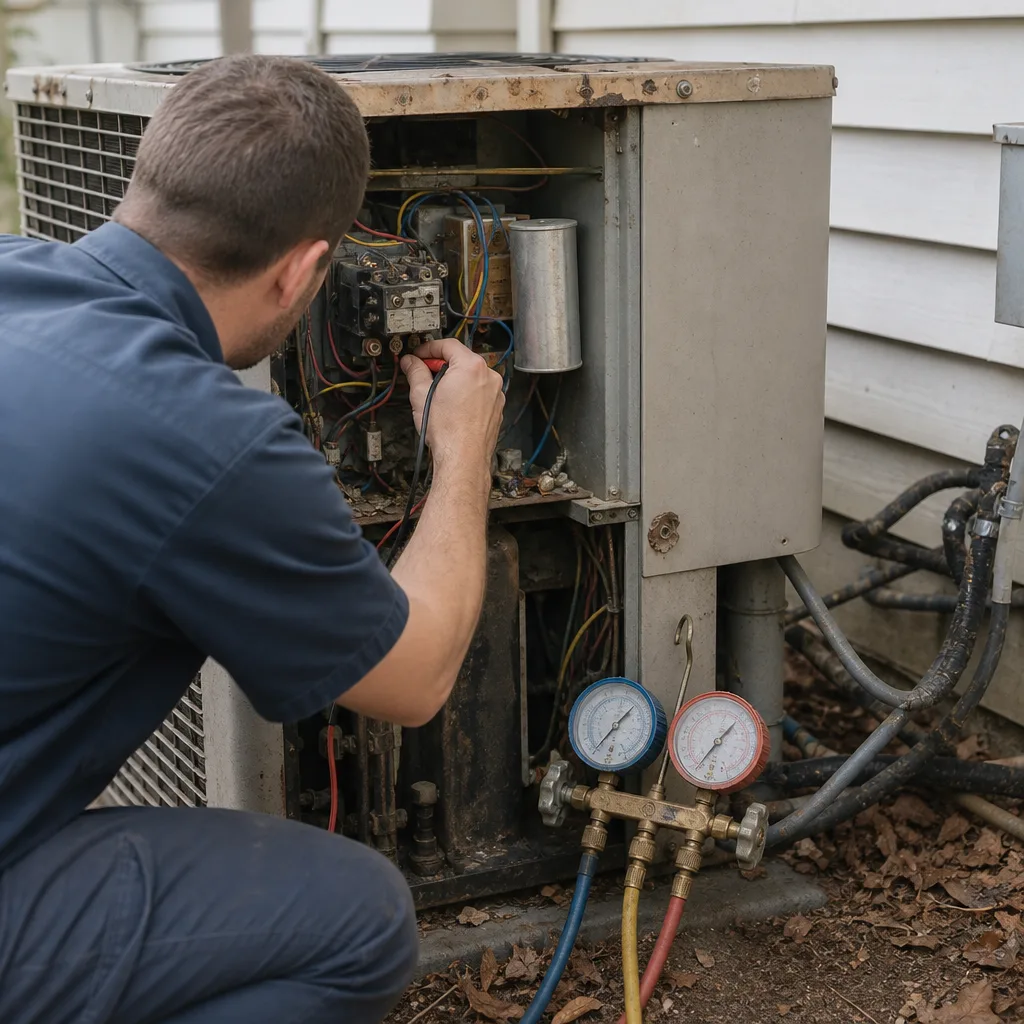
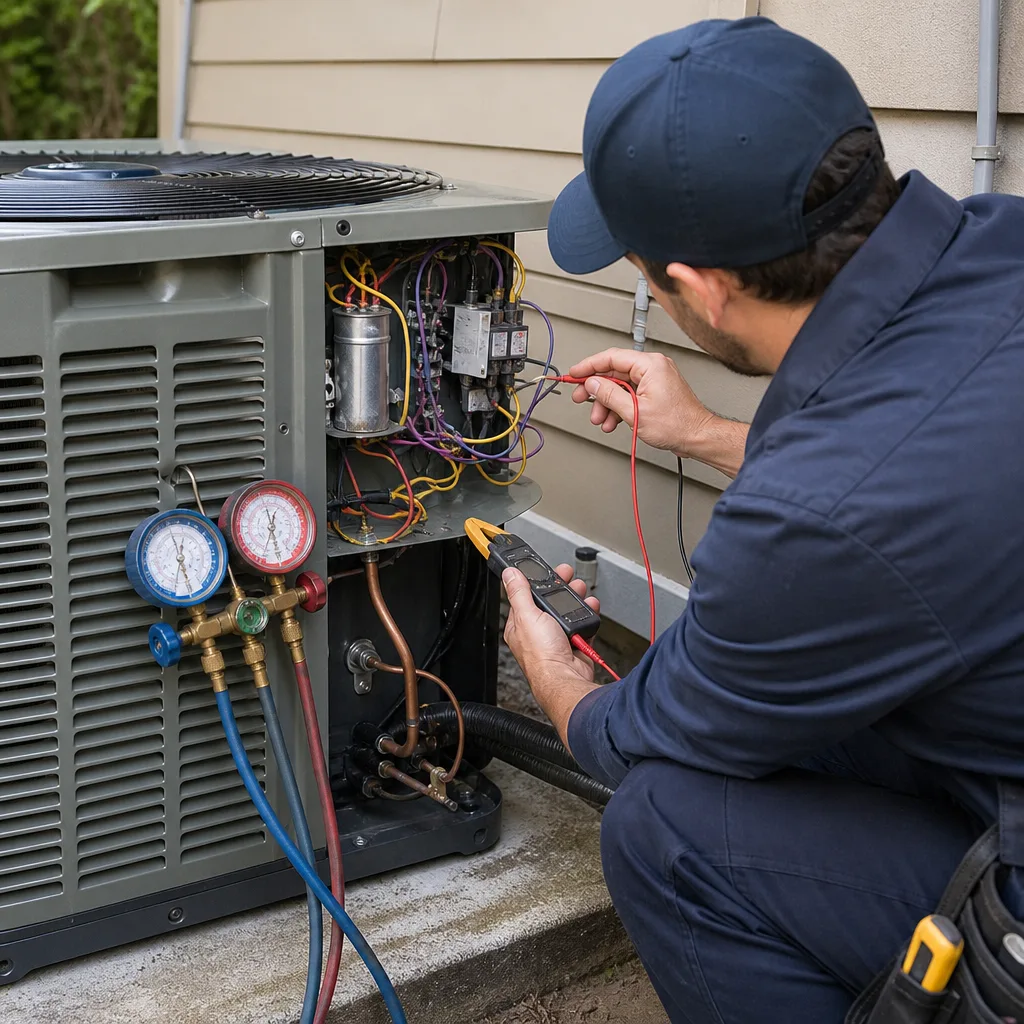
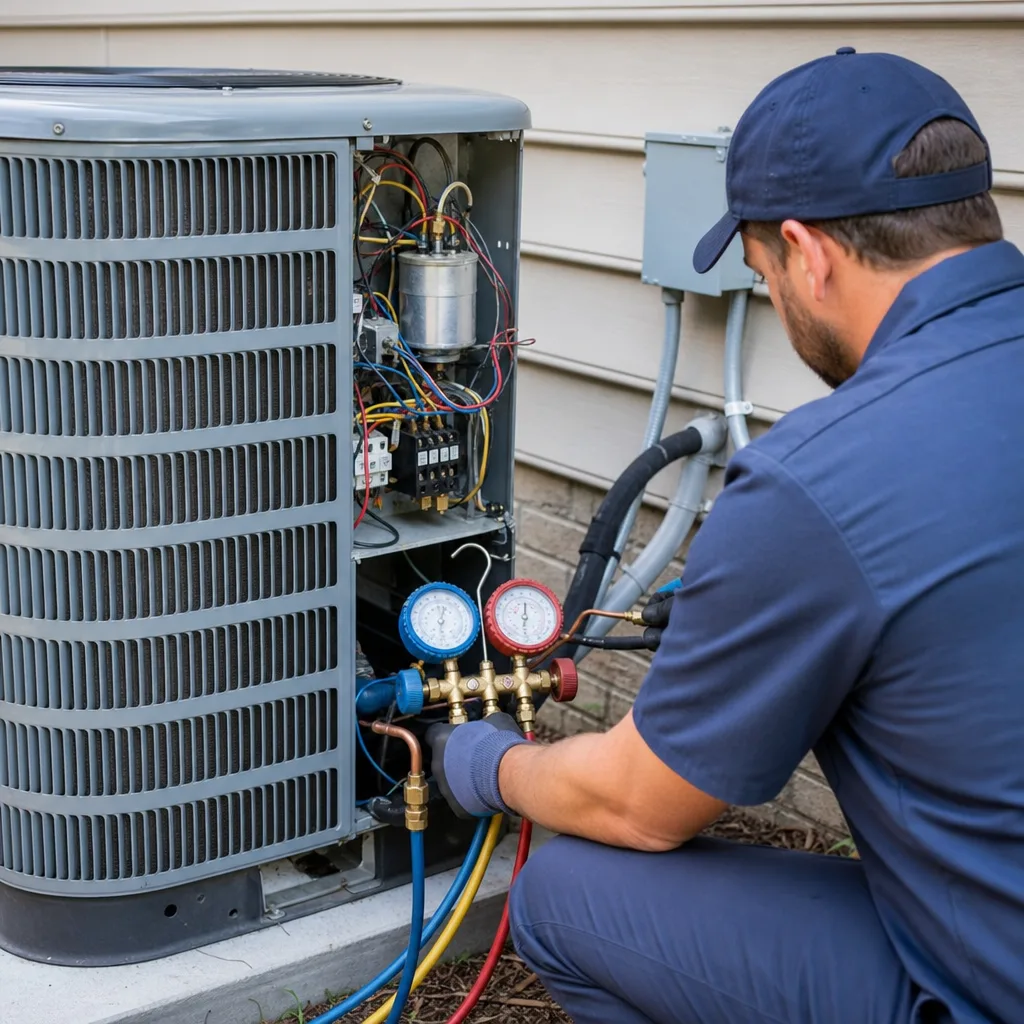
A single click when your AC starts is the contactor, an electrical switch, closing to send power to the compressor and fan. That’s normal and healthy. Clicking that repeats, clicking that continues after the system is running, or rapid clicking that sounds like someone tapping a pen against metal is your capacitor failing. The capacitor stores the electrical charge needed to start the compressor motor, and when it starts to fail, the system tries to start, can’t, and tries again. In our experience across Marietta, capacitor failure is the single most common AC repair we make between June and September, because capacitors degrade faster in sustained heat, and Georgia summer heat is exactly that. A capacitor replacement typically runs $150 to $300, parts and labor included, and takes under an hour. Running a system with a failing capacitor is what sends compressors to an early grave at $2,500 or more for replacement.
Buzzing or Humming
A low hum from the outdoor unit while it’s running is the compressor and fan doing their normal work. A louder buzz, especially at startup, usually means the compressor is struggling. Causes include a failing capacitor, low refrigerant, or a compressor that’s reaching the end of its service life. If the buzz comes from the outdoor unit and the fan isn’t spinning, that’s almost always the capacitor, and the fix is straightforward. If the fan is spinning and the buzz is loud, call for a diagnostic. This is a Tier 2 sign, unless the system is also tripping its breaker, which moves it to Tier 3.
Hissing
Hissing near the indoor coil or along the copper refrigerant lines means refrigerant is escaping. Refrigerant is the cooling fluid your AC needs to move heat from inside your house to outside. When it leaks, cooling capacity drops, the system runs longer to hit the same temperature, and the compressor works harder. Hissing is always a Tier 3 sign if it’s loud and continuous, and a Tier 2 sign if it’s faint and you’re not certain. Refrigerant leaks require finding and repairing the leak before recharging the system, a recharge (topping off the cooling fluid your AC needs to run) without fixing the leak is a temporary bandage that will fail again.
Rattling or Banging
Rattling usually means something is loose: a panel screw backed out, a stick or debris caught in the outdoor fan, or a failing motor mount. Check the outdoor unit for visible debris first, because that fix is free. If the rattle is inside the indoor unit or behind a wall, it could be a blower wheel that’s come loose on its shaft. Banging at startup in a furnace is often delayed ignition, a small explosion in the burner chamber when gas doesn’t light immediately. Delayed ignition is a Tier 3 sign: it’s a safety issue and requires a professional inspection before the heating season begins.
The Georgia Humidity Problem: Condensation, Musty Odors, and Drain Failures
Marietta summers bring humidity that starts climbing in May and doesn’t break until October. Your AC does two jobs: it cools the air and it removes moisture. When the moisture half of the equation fails, you get warning signs that have nothing to do with temperature.
Condensation Where There Never Was Condensation
Sweating on windows is one thing, but condensation forming on walls, ceilings, or around AC vents is the indoor humidity level rising above what your system should maintain. In a properly functioning system in Marietta, indoor humidity should stay between 45 and 55 percent. When it creeps higher, condensation forms on the first cold surfaces it finds, and those surfaces are usually around supply vents. The cause is usually one of three things: a refrigerant charge that’s low and reducing the system’s ability to pull moisture, an oversized system that cools the house too fast without running long enough to dehumidify, or a drain problem that’s recirculating moisture back into the air.
Musty Odors That Come and Go
Musty smells are almost always biological, and in Georgia, biological means mold, mildew, or algae growing where moisture pools. The condensate drain pan under your indoor coil is a common site. Water drips off the coil into the pan, flows into the drain line, and should leave the house. When the pan doesn’t drain completely, or when the drain line clogs with algae, water sits, and warm water sitting in a dark space will grow things. The odor is distinctive: it smells like a damp basement or wet towels left too long, and it often intensifies right when the AC kicks on, as the blower pushes air across the wet, biological surface. This is a health issue, not just a comfort issue, and it’s a Tier 2 sign. The fix usually involves cleaning the pan and coil, clearing the drain line, and often installing a drain pan treatment that prevents regrowth.
A Floor Drain or Ceiling Drip That Shows Up in Summer
If you see a wet spot on the garage floor under your air handler, or water dripping from a ceiling vent, the condensate drain line is clogged. This is one of the most common calls we make in Marietta between July and September. Georgia’s warm, humid air means your AC produces gallons of condensation a day, and that water needs a clear path out. When the line clogs, water backs up, overflows the pan, and finds the lowest exit. Clearing a clogged condensate line is a quick repair, often under $150, but if it’s ignored, the water damage to ceilings, drywall, and flooring will run into the thousands. If your system has a float switch, the clog may trip it and shut your AC down entirely, which is better than water damage but still a loss of cooling in the worst possible weather.
Refrigerant Leaks vs. Low Refrigerant: Why the Distinction Matters
Here’s a distinction almost no one makes, and it’s the difference between a lasting repair and a season-long headache. A refrigerant leak is a mechanical failure, an actual hole or crack in a coil, a fitting, or a line, that allows refrigerant to escape. Low refrigerant is the state of the system after that leak has been active for a while. You don’t have “low refrigerant” as a primary problem. You have a leak, and the low refrigerant is the symptom.
Why does this matter? Because a technician who only recharges the system without finding and repairing the leak is selling you a refill, not a fix. The system will cool again for a while, weeks or months, then the refrigerant escapes through the same leak, and you’re back where you started. We’ve repaired leak sites in Marietta systems that had been recharged three or four times by previous companies, and the homeowners had spent hundreds of dollars on refrigerant that was now gone into the atmosphere.
A proper refrigerant repair follows a sequence. First, the technician confirms low charge by checking pressures and temperature differentials. Second, they locate the leak, usually with an electronic leak detector or UV dye. Third, they quote you the repair cost, in writing, before work begins. Fourth, they repair the leak, pressure-test the system with nitrogen, pull a vacuum to remove moisture, and only then recharge to factory specification. This is the only sequence that produces a lasting fix. If a technician proposes adding refrigerant without discussing leak detection, ask why. The answer will tell you a lot. Cold Harbour Heating and Air Marietta provides a written price before any work begins on every refrigerant repair, and every repair is covered by the 365-Day Done Right Promise: if it fails within a full year, we come back and correct the work at no charge.
Rising Utility Bills: The Numbers That Actually Warrant a Diagnostic Call
Every Marietta homeowner’s electric bill rises in summer. That’s normal. But there’s a line between normal seasonal variation and a system that’s telling you it’s failing, and that line is clearer than most people realize.
Here’s the practical rule we use. A bill that’s 10 to 15 percent higher than the same month last year, with similar weather and similar usage, is usually explained by rate increases or a slightly hotter season. A bill that’s 20 to 30 percent higher than the same month last year warrants your attention. That’s the zone where mechanical degradation is a likely contributor: a compressor running with low refrigerant, a blower motor that’s drawing more amps as it fails, or duct leakage that’s getting worse. A bill that’s 40 percent or more higher than last year’s comparable month, with no new appliances, no added square footage, and no change in thermostat settings, is a diagnostic call this week. Something is wrong, and the money you’re spending on electricity is more than the repair will cost.
Here’s the calculation in concrete numbers. A typical 2,000 square foot home in Marietta runs a $180 to $240 summer electric bill. A 25 percent jump means you’re paying $45 to $60 more per month. Over a five-month cooling season, that’s $225 to $300 in waste, and a diagnostic call runs under $100. The math favors the diagnostic almost immediately, and if the problem is a simple airflow issue or a failing capacitor, the repair pays for itself in under a season.
One Marietta-specific factor: Georgia Power’s time-of-use rates have shifted the cost of running a system that cycles too frequently. If your AC is short-cycling, turning on and off every 8 to 10 minutes instead of running 15 to 20 minute cycles, it’s using more energy during the most expensive parts of the day. Short cycling is almost always a warning sign, either a failing capacitor, a refrigerant issue, or an oversized system, and it’s visible in your bill before it’s audible as a problem.
Thermostat and Smart App Warnings Homeowners Routinely Dismiss
Modern thermostats and smart home apps surface warning signs that older systems never could. The problem is that these warnings get dismissed as glitches, and ignoring them is ignoring the earliest possible notice of a real problem.
“Auxiliary Heat Running” or “Emergency Heat Active” (Heat Pump Systems)
If your thermostat displays an “aux heat” or “em heat” indicator on a heat pump system, and the outdoor temperature isn’t below freezing, something is wrong. Auxiliary heat is your electric resistance strips running at the same time as the heat pump, and it should only activate when the heat pump can’t keep up. If it’s running at 45 degrees outside, your heat pump isn’t doing its primary job, often because of low refrigerant or a reversing valve failure. Running auxiliary heat regularly will triple your heating bill for the same warmth.
Runtime Reports That Show Longer Cycles Every Month
Smart thermostats track system runtime. If your app shows runtime climbing month over month with no change in your settings or occupancy, the system is working harder to deliver the same result. In cooling season, climbing runtime means declining efficiency. In heating season, it means the same. A system that ran 6 hours a day in June and runs 11 hours a day in August with similar outdoor temperatures is failing slowly. This is the earliest possible warning sign, and it appears weeks before any noise or temperature issue.
Temperature Differentials and “Calibration” Alerts
A thermostat that reads 74 while the room feels 78 is either positioned badly, usually on a wall that gets direct sun or sits above a heat source, or it’s failing. Calibration alerts from smart thermostats are rarely false alarms. If the sensor has drifted, the system is making decisions based on bad data, and no amount of filter changing will fix a system that doesn’t know what temperature it actually is. This is an inexpensive fix, and one that changes comfort immediately.
The Short-Cycle Warning You See in the App
Some smart thermostats now flag short cycling, and homeowners dismiss it because the house “feels fine.” It doesn’t feel fine for long. Short cycling is the mechanical equivalent of driving your car in first gear on the highway: everything works harder, wears faster, and fails sooner. The most common causes are a refrigerant issue, a failing capacitor, or an oversized system, and all three are cheaper to address early than late. We work on systems from Daikin, Bryant, American Standard, and Carrier, and the short-cycle warning looks the same on every one of them: it’s the system asking for help before it breaks.
Common Mistakes to Avoid
- Recharging refrigerant without finding the leak. Adding refrigerant without locating and repairing the leak is a temporary fix that fails, and the refrigerant you bought is gone. Insist on leak detection before any recharge, and get the repair sequence in writing.
- Ignoring a rising bill for a second consecutive month. One high bill might be weather. Two high bills in a row with similar usage is a pattern, and patterns have mechanical causes. A diagnostic call is under $100 in Marietta, which is less than the waste already happening.
- Turning the system off at the breaker instead of the thermostat first. If a system is making noise or running when it shouldn’t, shut it down at the thermostat first, then at the breaker if the noise continues. Cutting breaker power while the compressor is running can cause a surge that damages other components.
- Waiting to replace a failing capacitor because the system “still cools a little.” A failing capacitor is visible weeks before it fails completely, and the part is among the least expensive in the system. The compressor it’s protecting is among the most expensive.
- Assuming a musty smell is just “Georgia humidity.” That smell has a source, and it’s usually biological growth in the drain pan or on the coil. The longer it sits, the more extensive the cleaning required, and the more air quality suffers in the meantime.
- Dismissing smart thermostat alerts as glitches. Runtime data, calibration alerts, and auxiliary heat indicators are the earliest warning system your HVAC has. Ignoring them means waiting for the system to fail audibly, which is the most expensive way to learn about a problem.
- Skipping the fall furnace inspection because last winter was mild. Georgia furnaces sit idle for eight months a year, and a heat exchanger that cracked in February gets ignored until November. The fall inspection is when heat exchanger cracks, burner issues, and gas line problems get found and fixed before you’re relying on the system at 30 degrees.
When to Call a Professional
Call when a warning sign moves into Tier 2, which is most of what this guide describes. Call when the noise you’ve been ignoring for two weeks is now the noise you hear from across the house. Call when the bill jumped and you can’t explain it. Call when the thermostat is telling you something and you don’t know what it means. The diagnostic is the cheapest thing you’ll buy for your HVAC system all year, and it converts a guess into a written set of facts: what’s failing, what it costs to fix, and what happens if you wait.
Cold Harbour Heating and Air Marietta offers free estimates in Marietta, and a live person answers the phone 24 hours a day, 7 days a week. Call (762) 240-5599 and you’ll get a human being, not a voicemail tree. If you’re searching for AC repair in Marietta, we do that. If the furnace is the problem, our furnace repair in Marietta service covers it. And if the diagnostic says replacement is the right call, AC installation in Marietta starts with a written price before any work begins. Welcome to the Cold Harbour Heating and Air Marietta home for anything else you need.
See the difference
 Before
 After
After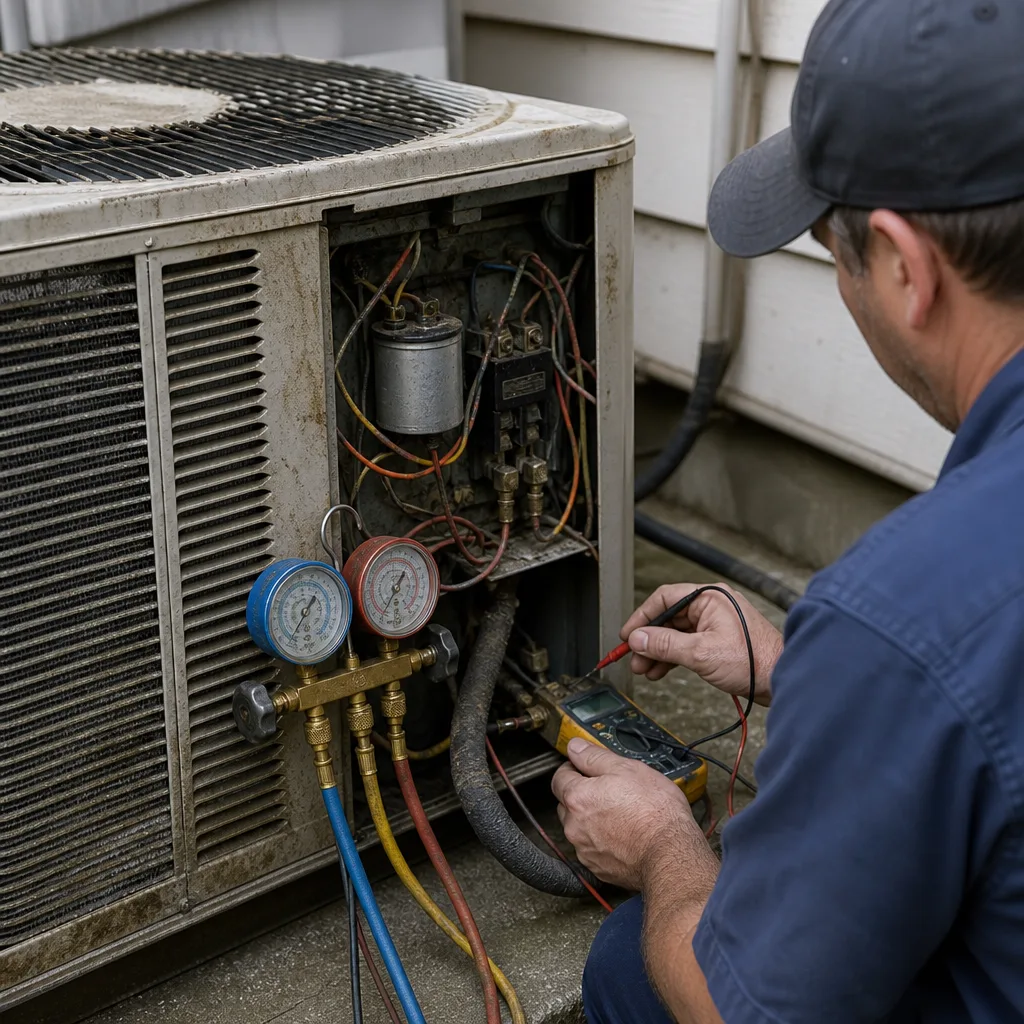 Before
 After
After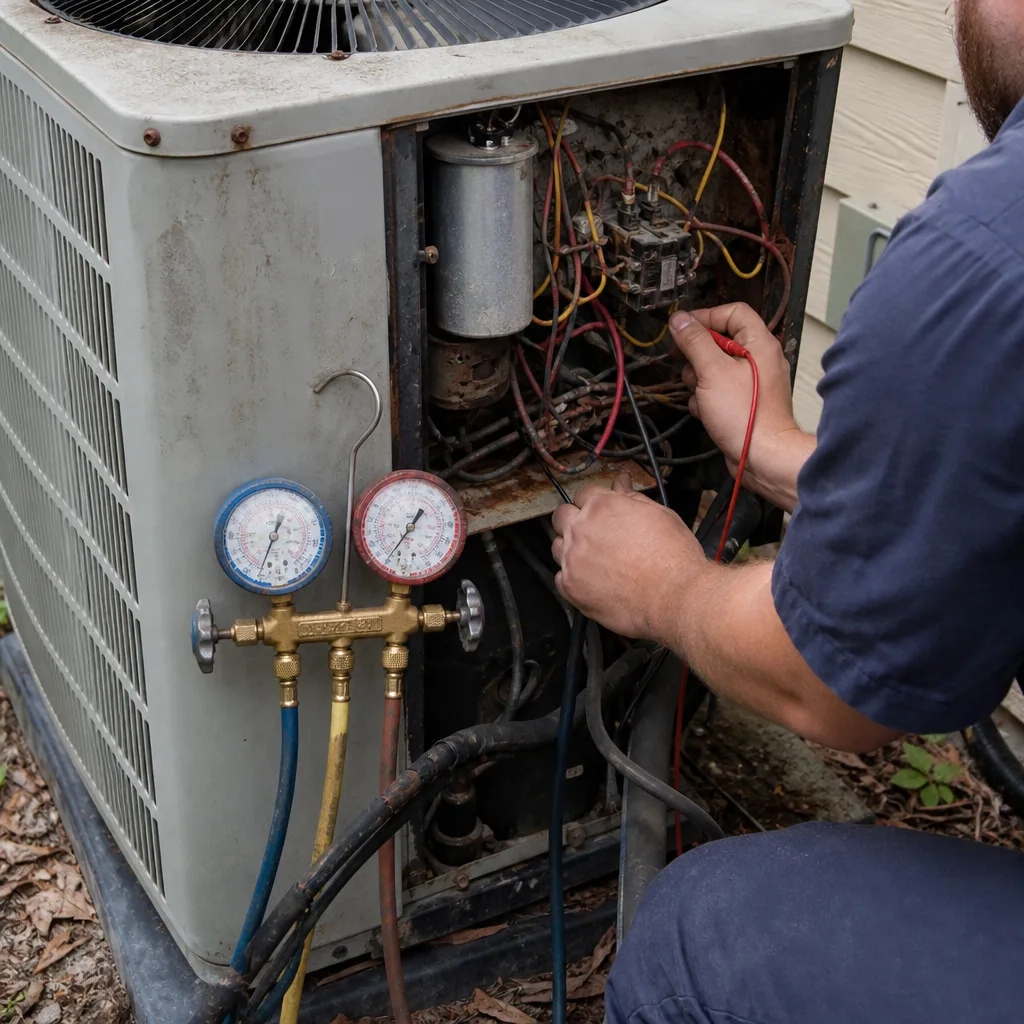 Before
 After
AfterFrequently Asked Questions
Turn the system off and call now if you experience a burning smell that persists, electrical clicking that continues after startup, a hissing sound indicating refrigerant loss, or a system that runs constantly but can’t cool the house below 82 degrees. Call this week if you have unusual noise that’s getting louder, musty odors, or a bill that’s jumped 25 percent or more. Call tomorrow for minor issues like slow drainage or slightly uneven cooling.
A single click at startup is the contactor closing normally. Repeated clicking or clicking that continues while the system runs usually means the capacitor is failing, and the compressor can’t start. A capacitor replacement in Marietta typically runs $150 to $300, and this repair is covered by our 365-Day Done Right Promise. Call (762) 240-5599 for a diagnostic if the clicking continues.
Marietta’s summer humidity overwhelms systems that can’t dehumidify properly, and the usual causes are low refrigerant, an oversized system that cools too fast to pull moisture, or a drain problem recirculating water into the air. A proper diagnostic will identify which one is at work, and the fix is often simpler than homeowners expect. Cold Harbour Heating and Air Marietta provides written pricing before any repair begins.
A 25 percent increase over the same month last year, with similar usage and weather, warrants a diagnostic call. That’s the level where mechanical degradation is likely contributing, and the wasted electricity over a cooling season costs more than the diagnostic and most repairs. A 40 percent increase with no other explanation means call this week.
No. Smart thermostat alerts for short cycling, auxiliary heat activation, or calibration drift are the earliest warning signs your system will ever give you, and they appear weeks before any audible or temperature problem. They’re the cheapest possible moment to catch a failure, and ignoring them means waiting for the problem to become expensive.
Our technicians are trained to service all major residential HVAC brands, including Carrier, Trane, Lennox, Goodman, Rheem, York, Daikin, Bryant, and American Standard. Whatever system is already in your Marietta home, the technician who shows up will know how to work on it. Call (762) 240-5599 for a free estimate.
The Bottom Line
HVAC systems fail predictably, and they nearly always warn you first. A capacitor clicks before it dies. A refrigerant leak hisses before the system stops cooling. A clogged drain line drips before it floods a ceiling. A rising bill shows up in the app before the compressor quits. The homeowners who catch these warnings early in Marietta spend hundreds on repairs. The homeowners who miss them spend thousands on replacements. For everything you need to know about local systems, read The Complete Guide to HVAC in Marietta. The diagnostic call is the cheapest insurance policy in the industry, and it’s free to ask. One phone call converts a guessing game into a written set of facts, a price, and a plan.
Written by Victor Mancini, Owner at Cold Harbour Heating and Air Marietta, serving Marietta since 2003.