
Last updated October 16, 2026
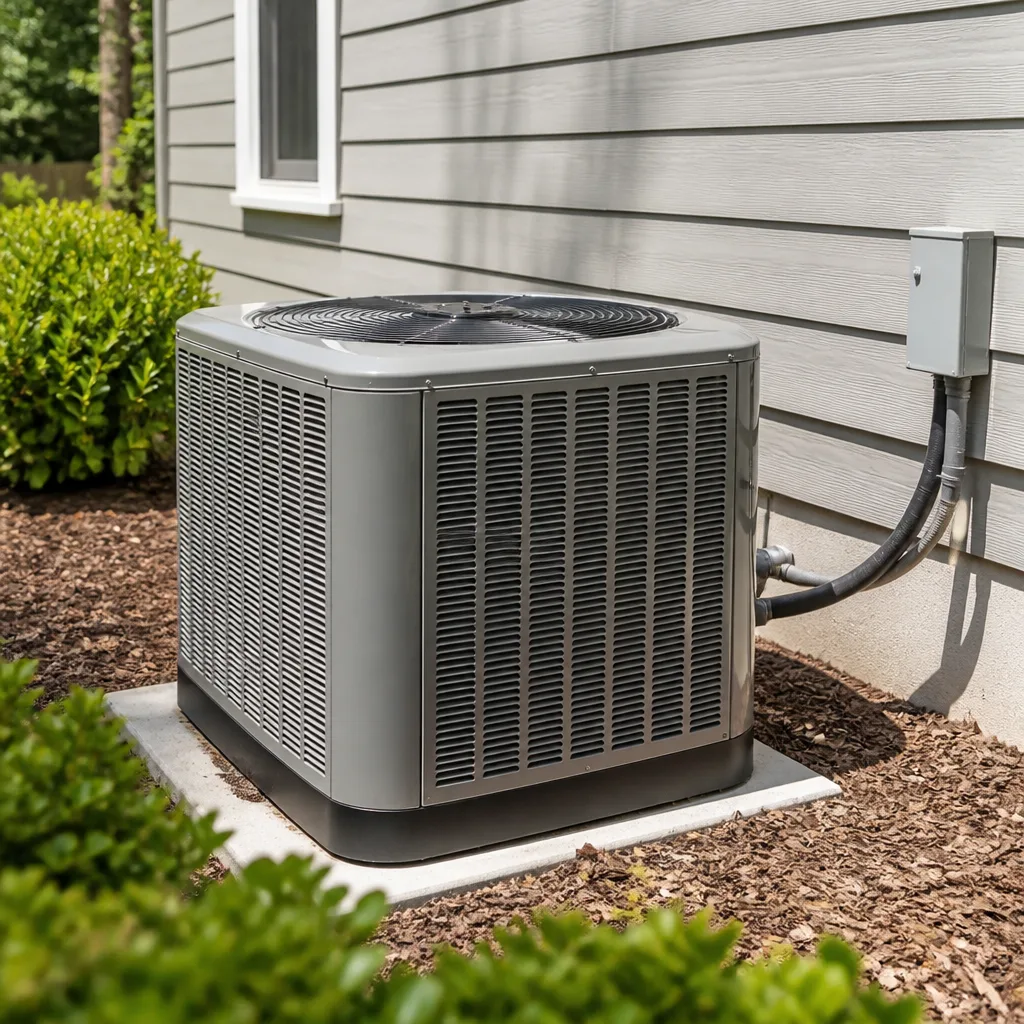 AC repair
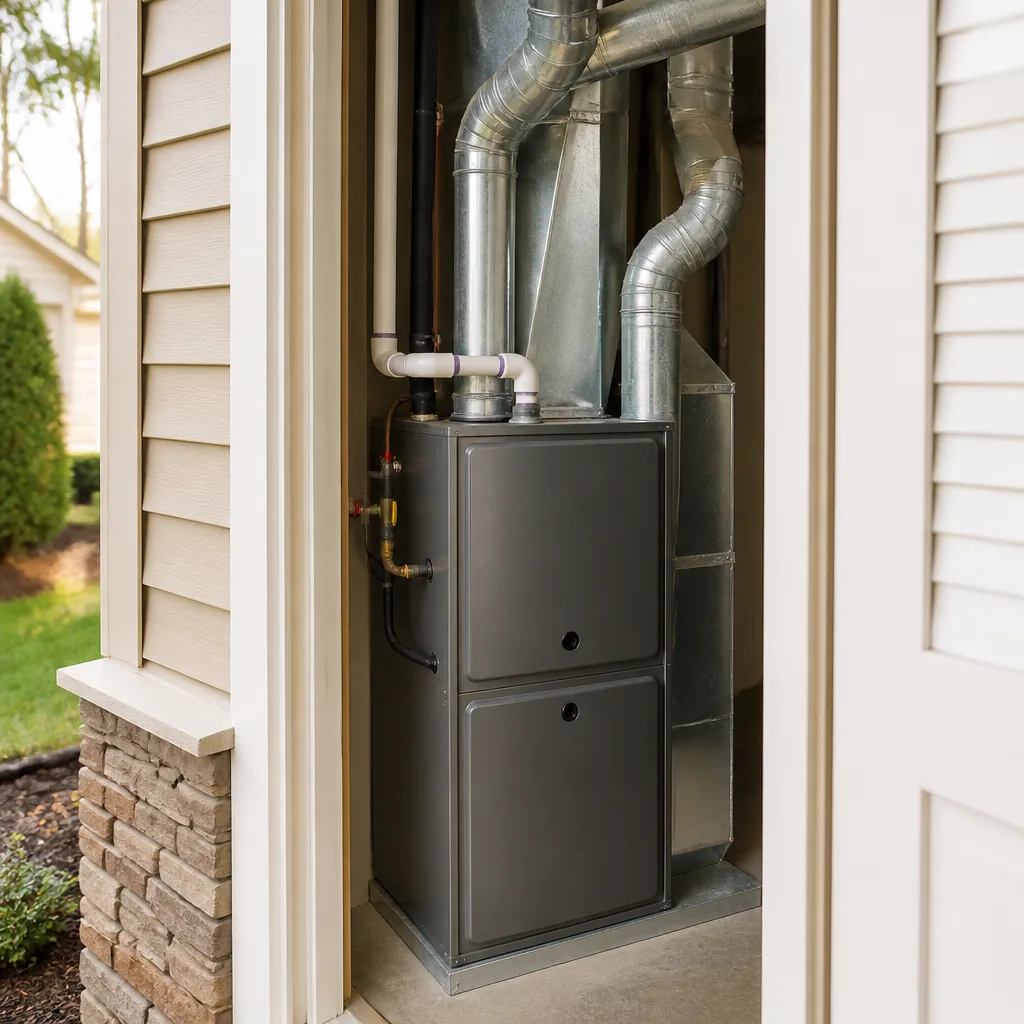 Furnace & heating
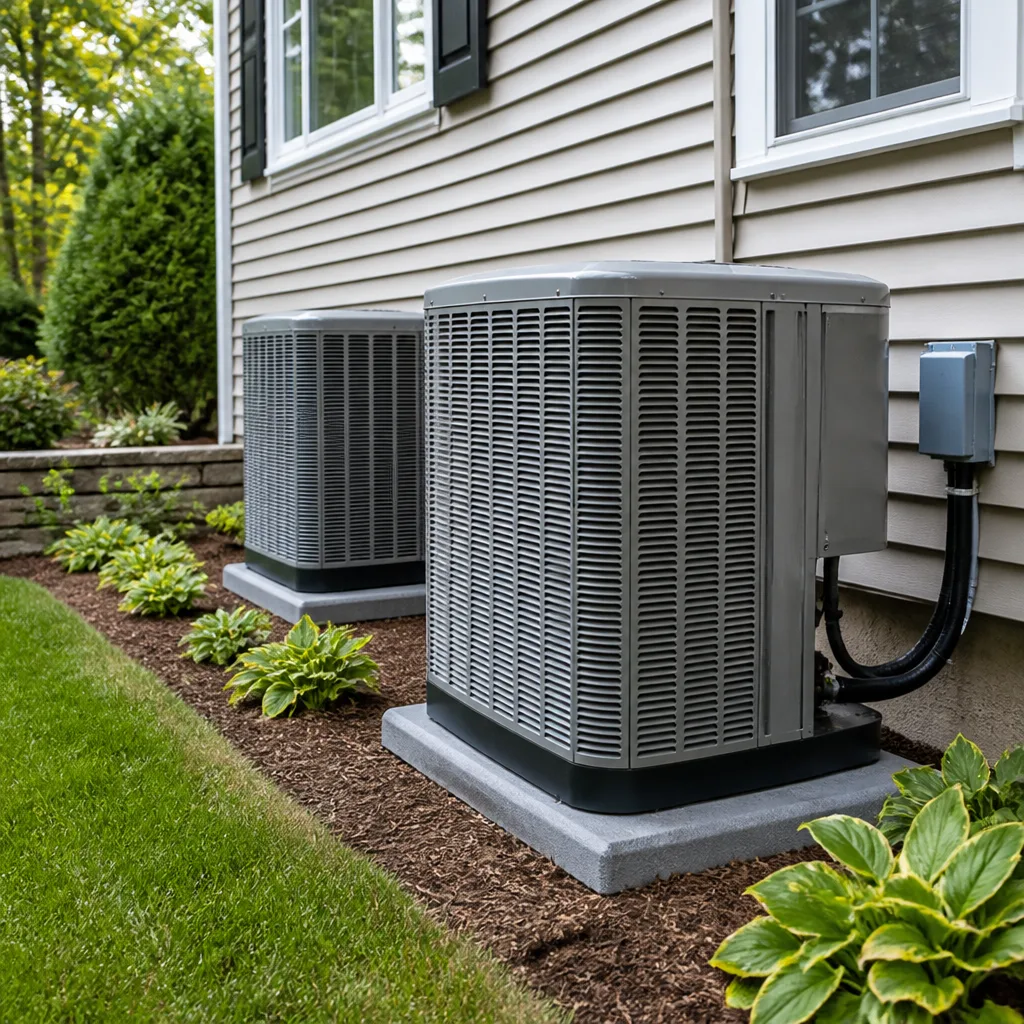 Heat pumps
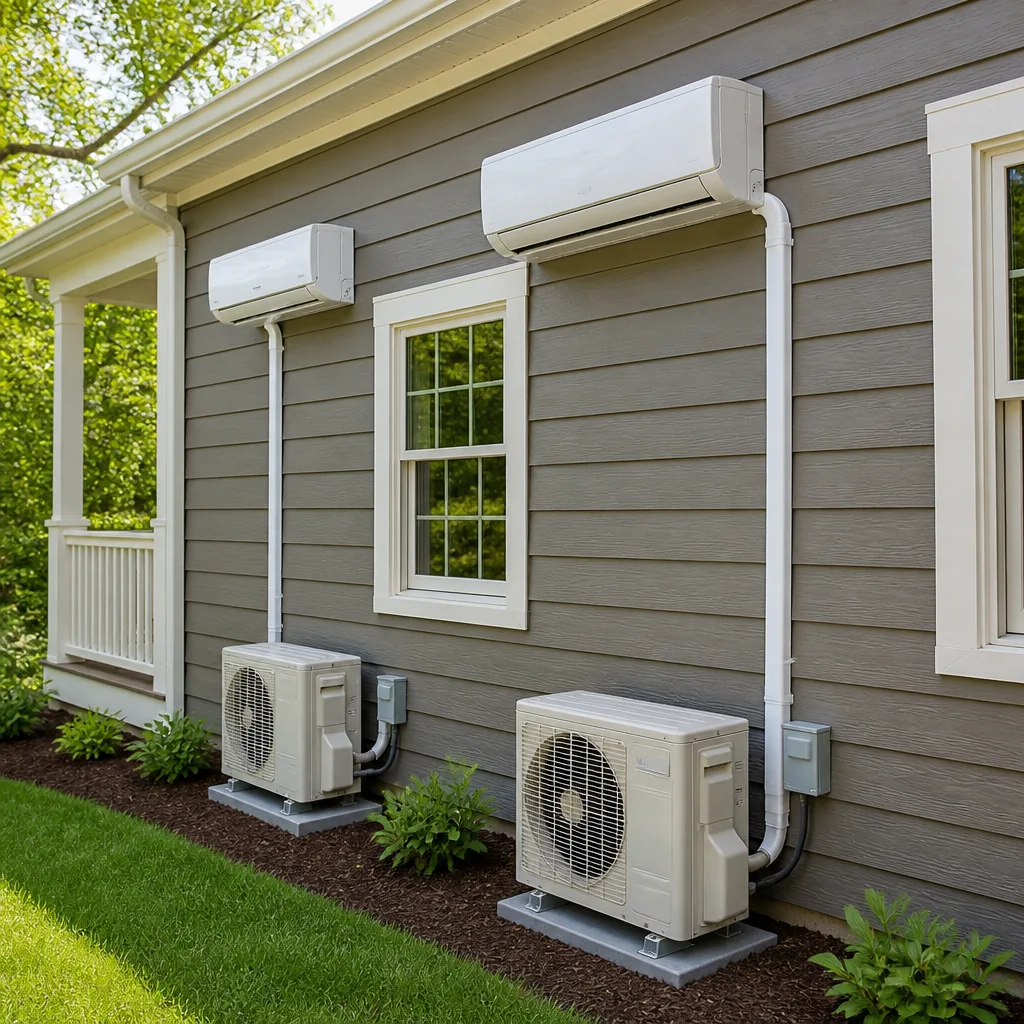 Ductless mini splits
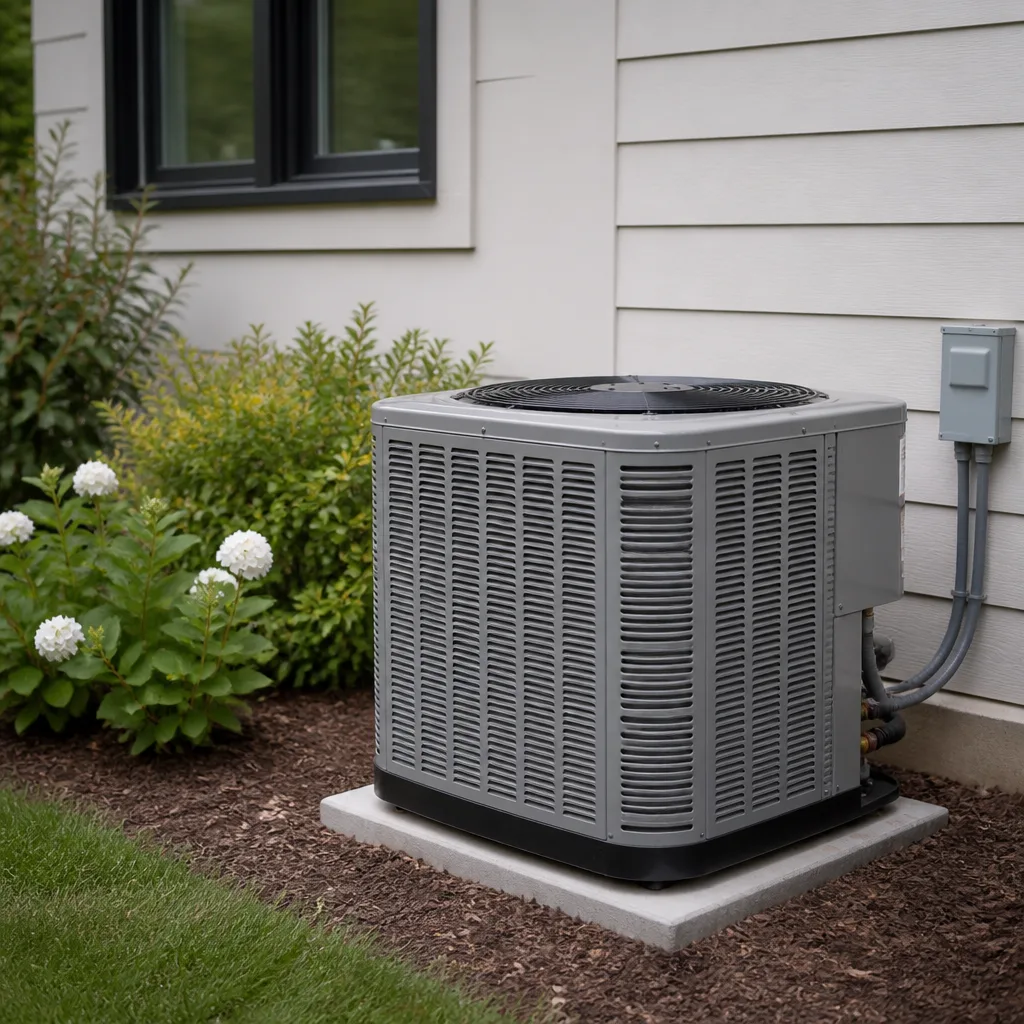 Carrier
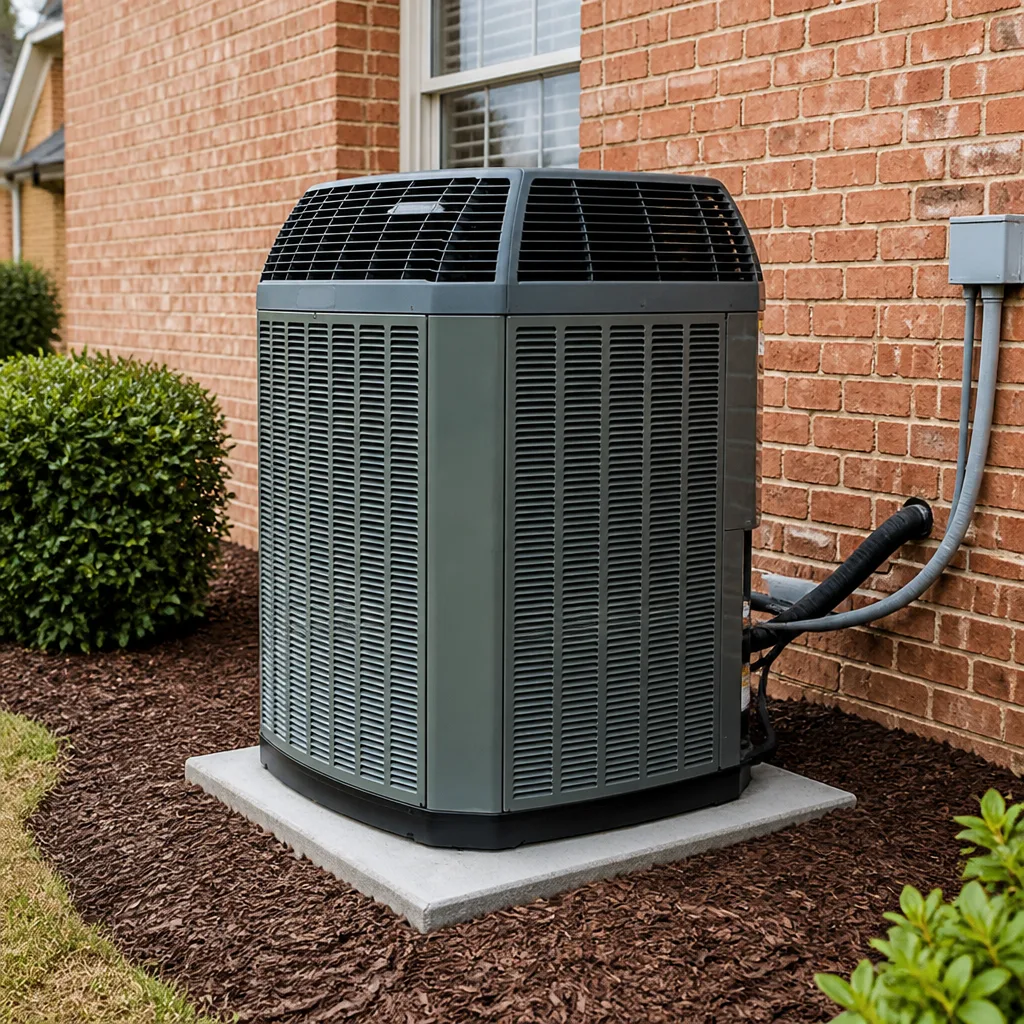 Trane
Trane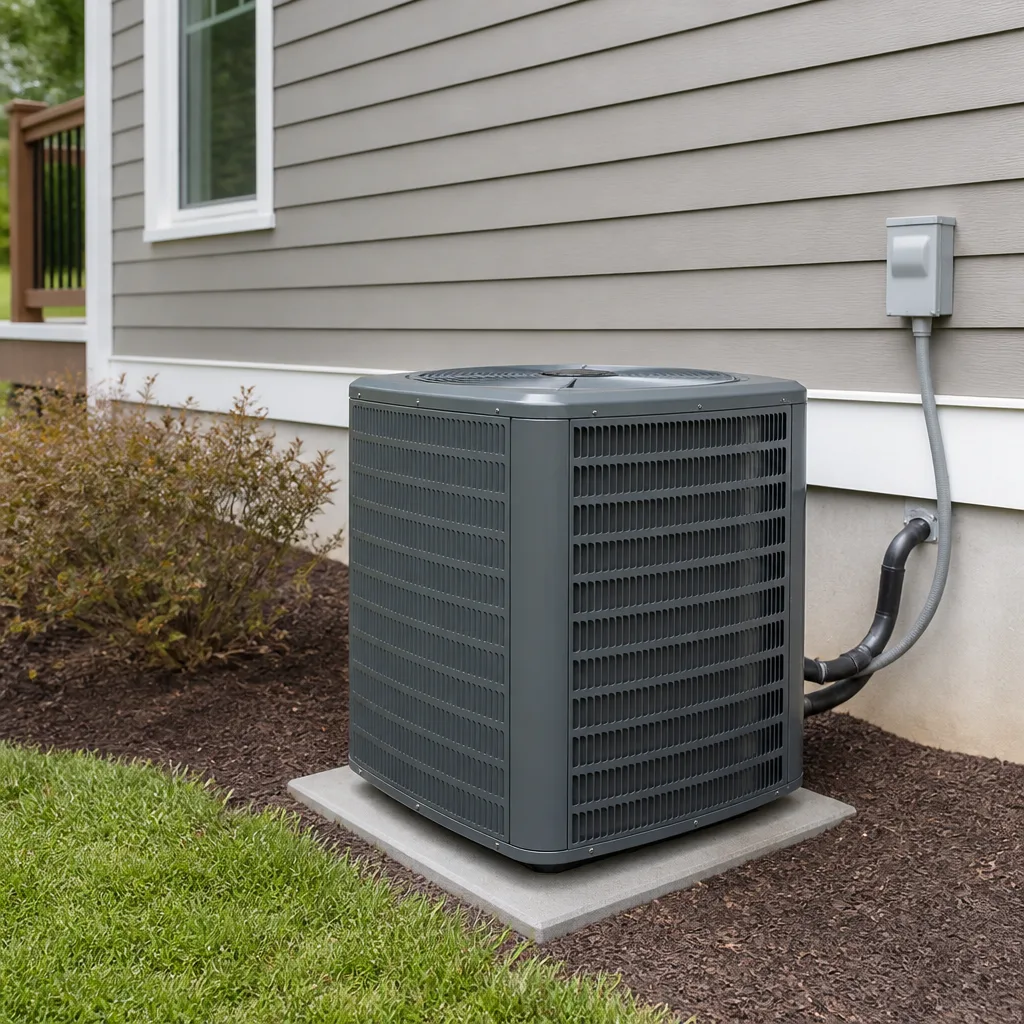 Goodman
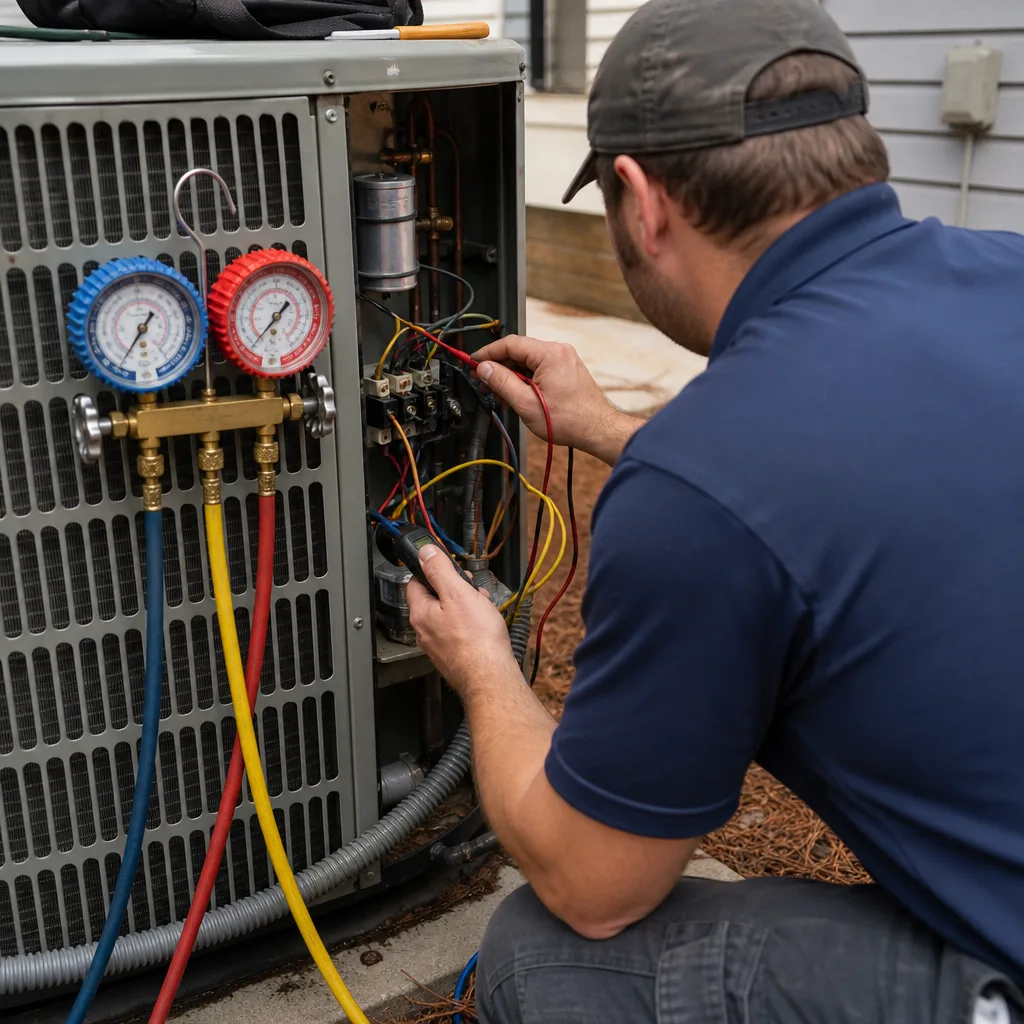
Seasonal tune-up and full diagnostic on your Carrier, Trane, or Goodman system - readings shown to you before any repair is proposed
Diagnosis first, numbers second - you approve the repair price before a single part goes in.
Get your free estimateHVAC Cost Breakdown: The Marietta Homeowner’s Reference for 2026
Most HVAC cost guides are built to hide the number, not reveal it. They give ranges so wide ($4,000 to $15,000 for a replacement) that you can’t budget anything, and they avoid the one thing you actually need: what a specific system costs in your specific house, in your specific city. This guide does the opposite. We’re going to walk through exactly what determines HVAC pricing in Marietta, Georgia in 2026, what numbers you can reasonably expect for repair versus replacement, how to run the breakeven math yourself, and where the rebate money actually comes from. By the end, you’ll know what a fair quote looks like before you ever pick up the phone.
Styles & brands we work with
Quick Answer
In Marietta, GA, a full HVAC system replacement (furnace plus air conditioner) typically runs $7,200 to $11,400 installed, while a mid-tier single component swap (AC or furnace only) lands between $3,800 and $6,200. Most repairs fall between $180 and $650, with the biggest variables being equipment age, home square footage, and which of Cobb County’s utility rebate programs apply to your job.
Table of Contents
- Cost by Square Footage: What Marietta Homes Actually Pay
- Cobb County Labor Rates vs. Atlanta: Why the Gap Is Smaller Than You’d Think
- Repair vs. Replace: The Two-Minute Breakeven Calculation
- Georgia Power and Atlanta Gas Light Rebates: How to Actually Claim Them
- What a Written Itemized Quote Should Show
- What Equipment Brands Cost and Which Ones Matter
- Common Mistakes to Avoid
- When to Call a Professional
- Frequently Asked Questions
- The Bottom Line
Cost by Square Footage: What Marietta Homes Actually Pay
Here’s the framework most guides skip: HVAC sizing runs on heating and cooling load, not square footage alone, but square footage gets you close enough to budget. In Marietta’s established neighborhoods, East Cobb, West Cobb, and the historic districts around Whitlock Avenue and Kennesaw Avenue, you’ll find three dominant home layouts: ranch homes built from the 1950s through the 1970s, split-levels from the 1960s through the 1980s, and two-story traditional builds from the 1980s onward. Each has a typical equipment size and a typical installed cost for 2026.
Here’s what we see in our work across Marietta and the surrounding Cobb County zip codes:
- 1,200 to 1,600 sq ft ranch: 2-ton AC with a 60,000 BTU furnace. Full system replacement: $7,200 to $8,800 installed.
- 1,600 to 2,200 sq ft split-level: 2.5 to 3-ton AC with a 70,000 to 80,000 BTU furnace. Full system: $8,000 to $9,900.
- 2,200 to 2,800 sq ft two-story: 3.5-ton AC with a 90,000 BTU furnace. Full system: $9,200 to $11,400.
- 2,800 to 3,500 sq ft larger two-story or custom build: 4 to 5-ton AC with a 100,000+ BTU furnace. Full system: $10,500 to $13,000+.
Those numbers assume a standard-efficiency system (14 to 16 SEER2 AC, 80% to 92% AFUE furnace) with a like-for-like swap. If your home sits in a neighborhood with older ductwork, shorter ceilings, or tree coverage that affects sun load, the number moves. A house on the west side of a ridge in East Cobb that bakes in afternoon sun may need a half-ton more than the same floor plan shaded on the north side of town. That’s why the phrase “it depends on your home” isn’t wrong, it’s just incomplete. The variables are knowable.
For context, the median home in Marietta is about 2,100 square feet, which puts most replacement work in the $8,000 to $10,000 range before rebates. That’s the working number most homeowners should start from.
Cobb County Labor Rates vs. Atlanta: Why the Gap Is Smaller Than You’d Think
Homeowners sometimes assume Marietta labor runs cheaper than Atlanta, as if crossing the Chattahoochee drops the rate 20%. It doesn’t. The metro Atlanta HVAC labor market is one continuous pool. A technician working in Kennesaw on Tuesday might be in Buckhead on Thursday. What does differ is the overhead: Marietta and Cobb County don’t carry the same commercial real estate costs as Midtown or the same parking and logistics friction as dense intown zip codes. That translates to a modest savings, usually 4% to 8% on the labor line compared to intown Atlanta quotes for identical work.
In our experience at Cold Harbour Heating and Air Marietta home, the labor component of a full system replacement in Cobb County runs $1,600 to $2,400. That covers the two-technician crew for a full day, removal of the old equipment, sheet metal transitions, brazing and evacuation, electrical connections, thermostat wiring, system startup, and the permit inspection coordination. When you compare Marietta quotes to Atlanta quotes for the same equipment, the difference you see is mostly labor rate and a small logistics delta, not a different cost structure.
What you won’t see in many Marietta quotes is a line item for labor at all. Some contractors wrap everything into one number, which makes comparison impossible. That brings us to the written quote section below, but the short version is this: if a quote doesn’t break out labor from parts, you can’t tell whether you’re paying a fair labor rate or a padded equipment price.
Georgia does not license HVAC contractors at the state level the way some states do. Instead, contractors must hold a Georgia Conditioned Air Contractor license through the state licensing board, while county-level permitting governs the actual installation. Cobb County requires a mechanical permit for HVAC replacements, and the permit typically runs $150 to $350 depending on the job scope. The permitting is not optional, and contractors who skip it to save you $200 are exposing you to inspection problems when you sell the house. Every quote should show the permit fee as its own line.
Repair vs. Replace: The Two-Minute Breakeven Calculation
Every homeowner eventually faces the question: spend $500 on a repair now, or $8,000 on a replacement? The answer is math, not vibes. Here’s the calculation we walk through with Marietta homeowners, most of whom live in the climate reality of Georgia summers that run from May through October with dew points that make an underperforming AC obvious by noon.
- Get the repair cost. Write down the quoted number. If it’s a compressor, $1,600 to $2,400 is typical. A blower motor: $450 to $900. A condenser fan motor: $350 to $650. A refrigerant recharge on an R-410A system: $250 to $550. A control board: $350 to $700.
- Find the equipment age. The serial number on the data plate gives the manufacture date. Most HVAC equipment in Marietta homes lives 12 to 18 years. Anything past 12, especially an AC that has survived more than a decade of Georgia heat cycles, is on borrowed time.
- Apply the $5,000 rule. Multiply the repair cost by the remaining life expectancy in years. If a $600 repair on a 14-year-old system with two years of expected life left equals $1,200 in remaining value against a $8,000 replacement, you’re spending $600 to postpone an $8,000 decision. The math says replace.
- Factor the efficiency gain. A 2026 minimum-efficiency 15 SEER2 AC uses about 25% to 35% less electricity than a 10 SEER unit from 2010. On a typical Marietta cooling bill of $175 a month in peak summer, that’s $50 to $60 a month in savings for four to five months a year. Over five years, that’s $1,500 to $1,800 back toward the new system.
The breakeven in plain terms: if your system is under 10 years old and the repair is under $800, repair it. If it’s over 12 years old and the repair is over $1,000, replace it. Between those two poles is a judgment call, and a good contractor will tell you the truth about which side you’re on. A contractor with a financial interest in selling a new system will shade toward replacement. That’s why we put our AC Repair in Marietta guidance in writing: the written repair quote includes the price, the exact scope, and the 365-day guarantee, so a homeowner under no pressure can decide with the facts in hand. For furnace work in particular, the same principle applies, and Furnace Repair in Marietta decisions on aging heat exchangers should never be made under time pressure.
Georgia Power and Atlanta Gas Light Rebates: How to Actually Claim Them
Rebate money in Georgia is real, structured, and surprisingly under-claimed because the paperwork is annoying. Here’s what 2026 looks like:
Georgia Power rebates: Georgia Power runs a heat pump and high-efficiency AC rebate program that changes annually. In 2026, the structure typically includes $250 to $400 for a qualifying 15 to 16 SEER2 AC or heat pump, $400 to $800 for 17+ SEER2 high-efficiency units, and additional amounts for smart thermostats ($75 to $100) and duct sealing ($200 to $400 if combined with equipment). The equipment must be on the program’s qualified product list at the time of purchase, and the installing contractor must be registered with the program to file the claim.
Atlanta Gas Light rebates: For furnace work, Atlanta Gas Light’s rebate program generally offers $150 to $300 for furnaces at 92% to 95% AFUE and $300 to $500 for 96%+ AFUE units. A tankless water heater rebate exists too, but that’s a different conversation. As with Georgia Power, the equipment must meet the program spec and the contractor must handle the claim through the program portal.
Federal tax credit: The 25C federal tax credit remains active in 2026. It’s worth up to $600 for qualifying AC units, up to $600 for qualifying furnaces, and up to $2,000 for qualifying heat pumps. This is a tax credit, not a rebate, meaning it comes off your federal tax bill, not off the invoice. IRS Form 5695 is the one to remember.
Here’s where the money gets lost: contractors who install qualifying equipment but never file the rebate, homeowners who assume the rebate comes automatically, and units that qualify for the federal credit but not the utility rebate because the product wasn’t on the list at purchase time. The fix is procedural. Ask for the rebate paperwork at the estimate stage, not after install. Confirm the exact model number is on the qualified list. Get the contractor’s agreement to file the utility rebate, in writing, as part of the job scope. A replacement system that qualifies for a $300 Georgia Power rebate, a $250 Atlanta Gas Light rebate, and the $600 federal credit is $1,150 less than the sticker price. That changes the breakeven math from the section above.
Marietta sits fully inside both the Georgia Power and Atlanta Gas Light service territories, though the eastern edge of Cobb County near Sandy Springs may fall under a different electric provider. Check your bill before assuming program eligibility. It takes two minutes and can be the difference between a $400 rebate and nothing.
What a Written Itemized Quote Should Show
Most HVAC quotes in Marietta are a single number with a model name and a handshake. That’s not a quote, it’s a suggestion. A written, itemized quote you can actually compare should show four numbers separately:
- Equipment cost. The furnace, the AC or heat pump, the coil, the thermostat. A mid-tier complete system at 15 to 16 SEER2 with a 92% furnace carries roughly $4,000 to $5,500 in equipment cost. The same system at 17+ SEER2 might run $5,500 to $7,000 in equipment. If the equipment line seems low, the contractor may be quoting a bare-bones builder-grade unit while the labor line eats the difference.
- Labor cost. Expect $1,600 to $2,400 for a full system replacement as described above. For a single component, $700 to $1,400. This is the number that varies most between companies.
- Permit fee. Cobb County mechanical permits run $150 to $350. If the quote doesn’t include a permit, ask why. An unpermitted HVAC replacement becomes your problem at sale time.
- Disposal and cleanup fee. Removing the old equipment, refrigerant recovery, and disposing of the old furnace typically runs $100 to $250. Some contractors bury this in the labor line; a line item is cleaner.
Every one of our quotes at AC Installation in Marietta is written this way: price before the work, broken into equipment, labor, permit, and disposal. We hand it to the homeowner before any tools come out, and the number doesn’t change at the door. If a quote jumps the day of install, that’s a contractor telling you their written word isn’t worth the paper. Walk away. The Kingswell Way, our operating standard since 2003, is built around exactly this: say the price in writing, show up in the window you gave, leave the place cleaner than you found it, and guarantee the work for a full year. You shouldn’t have to negotiate for any of that.
What Equipment Brands Cost and Which Ones Matter
Equipment brand debates generate more heat than the equipment itself. Here’s the truth from the repair side: most residential HVAC brands use the same core components (Copeland compressors, GE or ECM motors, the same aluminum coil alloys) and differentiate mainly on marketing, warranty duration, and parts availability. What matters more than the badge is the installation quality and whether the contractor will still be around in five years when something fails.
That said, prices do differ. In Marietta, you’ll see installed costs roughly as follows for a 3-ton, 15 to 16 SEER2 AC with a matching 80,000 BTU furnace:
- Goodman: $7,200 to $8,400. The value play. Parts are inexpensive and universally available. Shorter standard warranty on some models.
- Lennox: $8,500 to $10,500. Premium dealer network, proprietary parts that can take longer to source, typically strong efficiency ratings.
- Carrier and Trane: $8,800 to $11,000. The two biggest names, sold through dealer networks with the most stringent installer requirements. You’re paying partly for the name and partly for the dealer support.
We service all of these and more: Carrier, Trane, Lennox, Goodman, Rheem, York, Daikin, Bryant, and American Standard. That’s deliberate. The technician who shows up at a Marietta home should be able to work on whatever’s already installed, not steer you toward replacing it because they only carry one brand’s parts on the truck. Brand matters far less than the labor practices of the installing crew. A flawless Goodman install will outlast a sloppy Carrier install every time. Choose the contractor first, then let them guide you to the brand that fits your budget and your home’s load calculation.
Common Mistakes to Avoid
- Oversizing the system. A 4-ton unit in a home that needs 3 tons cools quickly and then short-cycles, leaving humidity high and the compressor working harder than it should. Marietta’s summer humidity makes oversizing especially punishing. Insist on a load calculation (Manual J), not a rule-of-thumb guess based on square footage.
- Skipping the rebate paperwork. As covered above, the money only materializes if someone fills out the forms. Get the rebate commitment in writing at the estimate stage, not after the check has cleared.
- Choosing the lowest bid without comparing line items. A $6,800 quote that’s missing the permit, the disposal, and the extended warranty isn’t cheaper than a $7,500 quote that includes them. Compare the four line items, not the bottom number.
- Repairing a failing system one part at a time. The $500 blower motor in March followed by the $700 control board in August followed by the $1,800 compressor in December adds up to a new system with none of its efficiency or warranty. Run the breakeven math before throwing good money at a 14-year-old unit.
- Ignoring the ductwork. Marietta homes built before 1980 often have duct systems with 15% to 25% leakage. A new high-efficiency system on leaky ducts is like putting new tires on a car with bad alignment. Ask whether the quote includes a duct inspection or sealing.
When to Call a Professional
Some situations are clearly DIY territory. Changing an air filter, checking a tripped breaker, clearing leaves from around the outdoor unit. Others are not. If your furnace is making a grinding noise, your AC is blowing warm air on a hot day, or you smell gas near any gas-fired equipment, shut the system down and call someone who does this every day-our HVAC Warning Signs: A Marietta Homeowner’s Reference Guide explains what to watch for. Refrigerant handling requires EPA certification, electrical work inside the cabinet can be lethal, and gas line work near a furnace is not something to figure out from a YouTube video. Heat exchangers are pressurized combustion chambers. Condenser units hold 200 to 400 psi of refrigerant. These are professional-grade risks. Cold Harbour Heating and Air Marietta offers free estimates in Marietta, with a live person answering the phone 24 hours a day, 7 days a week. Call (762) 240-5599. We’ll give you a written number before any work starts.
Frequently Asked Questions
A full furnace and AC replacement in Marietta typically costs $7,200 to $11,400 installed before rebates, with most mid-tier systems in the 2,000 to 2,400 square foot range landing between $8,000 and $10,000. A single component (AC only or furnace only) runs $3,800 to $6,200. These numbers include equipment, labor, the Cobb County permit, and disposal. Call (762) 240-5599 for a written quote on your specific home.
Furnaces in Cobb County homes typically last 15 to 20 years, while air conditioners last 12 to 18 years given the heavy cooling load of Georgia summers. Systems that receive Seasonal HVAC Care for Marietta: Year-Round Homeowner’s Guide push toward the upper end; systems ignored until something breaks do not. If your system is past the 12-year mark and facing a repair over $1,000, replacement usually beats another repair.
Georgia Power offers $250 to $800 for qualifying high-efficiency AC and heat pump installations in 2026, Atlanta Gas Light offers $150 to $500 for high-efficiency furnaces, and the federal 25C tax credit adds $600 for qualifying ACs, $600 for qualifying furnaces, and up to $2,000 for qualifying heat pumps. The contractor must file the utility rebates. Confirm eligibility before you commit to a purchase.
Usually yes, if the system is 12+ years old. Replacing on your schedule means you can compare quotes, file rebates, and avoid a two-week wait in August when every contractor in Cobb County is booked. A planned replacement also lets you run the efficiency math and the rebate paperwork at your pace.
Repair if the system is under 10 years old and the repair is under $800. Replace if the system is over 12 years old and the repair is over $1,000. Between those points, multiply the repair cost by the remaining expected life and compare against replacement cost. A $600 repair on a system with two years left is $1,200 in value against an $8,000 replacement; in most cases, replacement wins. Call (762) 240-5599 and we’ll run the numbers with you honestly, even if it means telling you a repair is the smarter move.
Every repair we complete comes with a written guarantee valid for 365 days. If the repair fails during that year, we return and correct the work at no additional charge. The guarantee is on paper before the technician leaves. It’s not conditional on maintenance contracts, not buried in fine print, and not a verbal promise. That’s the Kingswell Way, and it’s how we’ve operated since 2003.
The Bottom Line
In Marietta, the cost of HVAC work comes down to five variables you can look up yourself: home square footage, equipment age, equipment efficiency, which rebate programs apply, and whether the quote is itemized. Most full-system replacements in 2026 will land between $7,200 and $11,400 before rebates knock off $750 to $1,150 or more. Most repairs fall under $650, and the breakeven math between repairing and replacing becomes clear once you know the equipment age and the repair quote. Get the number in writing, broken into equipment, labor, permit, and disposal. Ask for the rebate paperwork. Ask for the guarantee in writing. A company that won’t do those things has already told you everything you need to know.
Written by Victor Mancini, Owner at Cold Harbour Heating and Air Marietta, serving Marietta since 2003.
See the difference
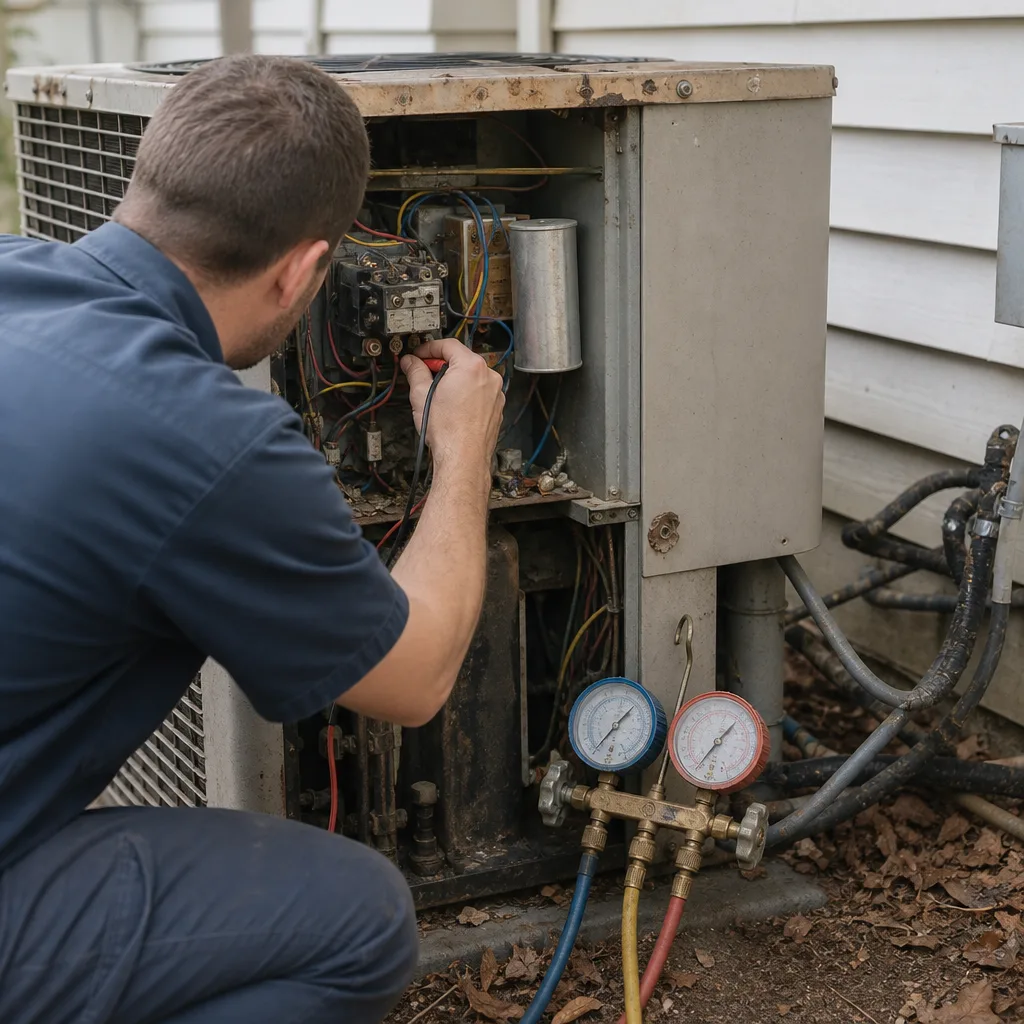 Before
 After
After Before
 After
After Before
 After
After